用于极端工业用途的硼硅玻璃
在材料科学的世界里, 玻璃常常被刻板印象化为脆弱的, 精致的, 和敏感的. 虽然这对你在厨房窗户或饮料瓶中常见的普通苏打灰玻璃可能成立, 但有一类专门设计的工业玻璃旨在打破这些限制: 硼硅玻璃.
- 硼硅玻璃在标准玻璃配方中部分替代为大约 13% 三氧化二硼 (大约 81% 二氧化硅), 形成比苏打灰玻璃更紧密, 更互联的原子网络.
- 其三大特点为: 卓越的热冲击性能 (热膨胀系数约为 3.3 x 10^-6/K, 约为普通玻璃的三分之一), 几乎完全的化学惰性, 以及更高的机械强度和硬度.
- 它是化学和制药工艺的黄金标准, 防爆照明外壳, aerospace windows and precision metrology plates.
- Machining it is the bottleneck: thick blades cause micro-chipping, waste up to 1.5 mm of expensive material per slice, and friction heat can still produce subsurface damage.
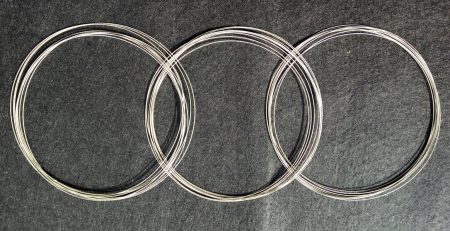
- Diamond wire loops solve this with high-speed micro-grinding at 30-50 米/秒: virtually zero-chipping edges, an ultra-thin 0.25-0.35 毫米切缝, and near pre-polished as-cut surfaces that reduce or skip secondary finishing.
From the highly volatile environments of chemical processing plants and explosion-proof lighting sectors to the pristine laboratories of pharmaceutical giants, borosilicate glass is the gold standard. It is a material trusted where failure is not an option.
But what makes this specific glass formulation so resilient? And how do manufacturers shape and slice this ultra-tough ceramic material into high-precision industrial components without destroying its structural integrity?
在这本综合指南中, we will break down the science behind borosilicate glass, its primary industrial applications, and the advanced machining technologies required to process it.
Borosilicate is more thermal-shock resistant than the optical grades, but the machine settings carry over directly from 光学玻璃切割.
What is Borosilicate Glass? The Chemistry of Resilience
Standard glass is primarily made of silica, soda, and lime. Borosilicate glass alters this fundamental recipe by substituting a significant portion of the ingredients with boron trioxide ($B_2O_3$). 通常, a high-quality industrial borosilicate glass (such as Borofloat® or Pyrex®) consists of roughly 81% silica ($SiO_2$) 和 13% 三氧化二硼.
This chemical modification completely rearranges the material’s atomic matrix. The introduction of boron creates a tighter, more interconnected polymeric network. This unique molecular architecture grants borosilicate glass its three defining industrial characteristics:
1. Exceptional Thermal Shock Resistance
The standout feature of borosilicate glass is its incredibly low Coefficient of Thermal Expansion (CTE). At approximately $3.3 \times 10^{-6}\文本{ K}^{-1}$, its expansion rate is about one-third that of ordinary soda-lime glass.
When ordinary glass is exposed to sudden temperature spikes, different areas of the material expand at different rates, creating internal stress that leads to immediate shattering. Borosilicate glass expands so minutely and evenly that it can transition from freezing cold to scorching heat without cracking.
2. 高化学耐久性和抗水解性
硼硅玻璃几乎化学惰性. 它能抵抗水, 酸, 盐溶液, 有机物, 以及卤素. 即使在高温下长时间暴露于强腐蚀性化学品中, 其表面仍保持不被腐蚀和不浑浊. 这防止了任何化学物质的渗出, 保持其所含物质的绝对纯净.
3. 高机械强度和硬度
由于具有高莫氏硬度等级和高弹性模量, 硼硅玻璃在机械上比普通玻璃更坚韧. 它抗划伤, 承受更高的冲击力, 在重结构负载下保持其几何稳定性.
硼硅玻璃的主要工业应用
由于其卓越耐久性, 硼硅玻璃被应用于广泛的重工业领域:
Chemical and Pharmaceutical Processing: Used for industrial pipelines, distillation columns, reaction vessels, and high-visibility sight glasses. Its chemical inertness ensures that pharmaceutical compounds remain untainted during synthesis.
High-Intensity Lighting and Explosion-Proof Enclosures: Commonly found in heavy-duty floodlights, stage lighting, and hazardous area viewports where high-wattage bulbs generate intense, localized thermal energy.
Aerospace and Defense: Utilized in optical windows for high-altitude aircraft, satellite components, and thermal imaging viewports that must survive rapid atmospheric pressure and temperature shifts.
Home Appliances and Metrology: From high-end oven doors and microwave trays to precision optical flat plates used in industrial calibration laboratories.
The Precision Cutting Hurdle: Machining a Hard Ceramic
While the extreme hardness and brittleness of borosilicate glass make it a phenomenal end-product, they make the initial manufacturing and raw-material slicing stages incredibly challenging.
Traditional cutting methods—such as CNC milling tools, high-pressure waterjets, or thick abrasive grinding wheels—frequently run into costly bottlenecks when processing high-purity borosilicate plates:
- Micro-Chipping and Edge Breakage: Because the material has zero plasticity, the high localized impact force of a traditional thick blade shears the glass violently, causing severe micro-fractures and chipping along the exit cut.
- Severe Raw Material Waste: Industrial-grade borosilicate glass ingots are expensive to produce. Thick cutting blades can easily grind away up to $1.5\text{ 毫米}$ of material per slice into useless waste slurry.
- Thermal Stress Fractures: Ironically, even though borosilicate handles thermal shock exceptionally well, the massive friction heat generated by slow, heavy grinding blades can still exceed localized tolerances, resulting in sub-surface damage (固态硬盘).
The Modern Manufacturing Solution: Endless Diamond Wire Loops
To solve these high-precision manufacturing bottlenecks, advanced glass fabrication facilities have transitioned to a revolutionary micro-grinding technology: the endless 金刚石线环.
一个 无尽的金刚石线环 is an ultra-thin, high-tensile steel wire welded into a continuous, 无缝环, with its outer surface permanently electroplated with microscopic industrial diamond abrasives. Unlike legacy open-loop wire saws that must constantly decelerate, stop, and reverse direction, the endless wire loop rotates continuously in a single direction at staggering linear velocities—often between $30\text{ 米/秒}$ and $50\text{ 米/秒}$.
This continuous, high-speed one-way motion completely redefines the mechanics of cutting brittle borosilicate glass:
1. Zero-Chipping through Micro-Grinding
Because the wire moves at such immense speeds, the contact force between each individual diamond crystal and the glass is reduced to a microscopic level. Instead of fracturing or shearing the glass, the endless loop performs a high-speed micro-grinding action. This eliminates the mechanical shock associated with traditional sawing, resulting in razor-sharp, crisp edges with virtually zero chipping or micro-cracking.
2. Maximizing Material Yield (Ultra-Thin Kerf)
Because an endless wire loop maintains exceptional stability under high tension without vibrating or bucking, the core steel wire can be engineered to be incredibly thin—frequently down to just $0.25\text{ 毫米}$ to $0.35\text{ 毫米}$. 这种极窄的切割路径最大限度地减少了切缝损耗. 适用于高产量制造生产线, 在每次切割中节省几毫米的材料积少成多,在一次生产过程中可以节省数千美元的原材料.
3. 接近预抛光的表面质量
闭环系统的连续, 稳定张力完全消除了 “往复刀片典型的锯痕” 和深表面划痕. 由此产生的表面粗糙度 ($R_a$) 非常低. 对于工业零件如视窗或光学窗口, 这种干净的 “原切” 表面加工大幅减少甚至完全替代了二次精磨和抛光阶段所需的时间和人工.
结论: 工程未来的工业光学
随着各行业迈向更高的自动化, 更严格的几何公差, 在更苛刻的操作环境下, 像硼硅玻璃这样的高端材料的作用只会不断扩大. 然而, 这种材料的真正价值只有在能够以其化学配方所达到的相同精度进行加工时才能发挥出来.
通过采用像无尽这样的先进切割技术 金刚石线环, 现代制造工程师正在成功克服陶瓷脆性这一历史性挑战. 这种材料科学与机械工程的完美结合确保了从实验台到发射台, 我们最关键的高科技系统保持清晰的聚焦和安全保护.
常见问题
硼硅玻璃由什么制成?
高品质工业硼硅玻璃大约由 81% silica (二氧化硅) 和 13% 三氧化二硼 (B2O3). Substituting boron into the recipe rearranges the atomic matrix into a tighter polymeric network, which is the source of its thermal, chemical and mechanical advantages.
Why is borosilicate glass so resistant to thermal shock?
Its coefficient of thermal expansion is about 3.3 x 10^-6/K — roughly one third that of ordinary soda-lime glass. It expands so little and so evenly under sudden temperature swings that the internal stress which shatters ordinary glass never builds up.
What is the best way to cut borosilicate glass?
A diamond wire loop. The ultra-thin diamond-coated wire runs continuously in one direction at 30-50 m/s and micro-grinds the glass instead of shearing it, producing crisp edges with virtually zero chipping, a kerf of just 0.25-0.35 毫米, and a surface finish close to pre-polished.
How much material does conventional cutting waste on borosilicate glass?
Thick abrasive blades can grind away up to 1.5 mm of material per slice into waste slurry — costly on high-purity borosilicate ingots. A diamond wire loop’s 0.25-0.35 mm kerf cuts that loss dramatically, which scales into significant savings over a production run.
由Ensoll工程团队审查.