了解钕磁铁: 完整指南
在现代材料科学领域, 很少有创新能像钕铁硼一样产生深远影响 (钕铁硼) 永磁材料. 自从在 1982 由住友特殊金属的佐川正人发现以来, 这些卓越的材料已经彻底改变了从消费电子到可再生能源的各个行业 . 作为所有商业可用磁铁中磁能积最高的磁铁, 钕磁铁赢得了“ “磁铁之王”的称号” 并继续推动全球经济中的技术进步 .
- 钕 (钕铁硼) 是最强的商业永久磁铁, 其能量积可达 52 MGOe,由其Nd2Fe14B四方晶体结构 — “磁铁之王”.
- 存在两种类型: 烧结NdFeB (性能最高, 需要镍/锌/环氧涂层) 以及粘结NdFeB (isotropic and corrosion-resistant, but limited to about 16 MGOe).
- Key limits: 脆性, corrosion susceptibility, and rapid strength loss above 80 degC unless heavy-rare-earth grades are used (为止 230 degC).
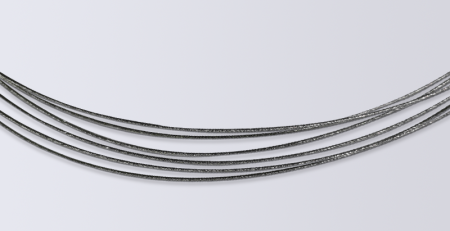
- Diamond wire saw machining reaches Sa 0.32 micrometer surfaces and ±0.05 mm tolerances, and has produced micro-magnets just 80 micrometers thick — all without thermal damage to magnetic properties.
- NdFeB is 5-10 times stronger than ferrite but roughly ten times more expensive; the right choice depends on performance versus cost.
Sintered NdFeB is brittle and heat-sensitive, so anyone machining it should read up on how to cut neodymium magnets before choosing between grinding, EDM and wire cutting.
 Part 1: 了解钕磁铁
钕磁铁, formally known as neodymium-iron-boron (钕铁硼) magnets, are composed of a tetragonal crystal structure of Nd₂Fe₁₄B . This specific crystalline formation is responsible for the material’s exceptional magnetic properties, including high remanence, 高矫顽力, and an extraordinarily high maximum energy product (BHmax) that can reach up to 52 MGOe or higher
There are two primary types of neodymium magnets: sintered and bonded. Sintered NdFeB magnets are produced through a powder metallurgy process, where alloy powders are melted, pulverized, pressed in a magnetic field, and then sintered in inert gas or vacuum to achieve densification . These magnets offer superior magnetic performance but require surface protection through coatings such as nickel, 锌, or epoxy due to their susceptibility to corrosion . Bonded NdFeB magnets, by contrast, are created by mixing NdFeB powder with polymer binders, offering isotropic magnetic properties and excellent corrosion resistance, though with lower magnetic energy products typically not exceeding 16 MGOe .
The magnetic strength of neodymium magnets is truly remarkable—they can lift objects up to 640 times their own weight . This exceptional performance is quantified through various grades, from N35 to N52, with higher numbers indicating greater magnetic energy product. Special grades incorporating heavy rare earth elements like dysprosium and terbium extend operating temperatures from standard 80°C up to 230°C for demanding applications .
然而, neodymium magnets have certain limitations. They are brittle and susceptible to chipping or cracking upon impact . Their Curie temperature ranges from 320°C to 460°C, and magnetic performance degrades rapidly at elevated temperatures unless specially formulated with heavy rare earth additions . These characteristics make the processing and application of NdFeB materials a sophisticated engineering challenge.
Part 2: Applications and Precision Machining with 金刚石绳锯

Perhaps the most significant growth driver for neodymium magnets today is the clean energy transition. In electric vehicles, each permanent magnet synchronous motor requires 2-5 kg of sintered NdFeB magnets, improving drive efficiency by 15% compared to conventional motors . With China’s new energy vehicle sector alone consuming over 35% of rare earth magnet production, the demand trajectory remains steep . 同样地, offshore wind turbines increasingly employ permanent magnet direct-drive generators, with a single 16 MW turbine requiring up to 30 tons of neodymium magnets .
Emerging applications include humanoid robotics, where joint motors demand high power density and precision control—each robot may require 15-20 kg of NdFeB magnets, three times that of industrial robots . Aerospace applications leverage these magnets in radar systems, microwave isolators, circulators, and magnetic bearings for gyroscopes and turbines .
The Critical Role of Diamond Wire Saw Machining
The processing of neodymium magnets presents unique challenges due to their hardness, 脆性, and sensitivity to thermal damage. Traditional machining methods can induce microcracks, cause surface degradation, and even compromise magnetic properties. This is where 金刚石线锯 technology has emerged as a game-changing solution.
Recent research published in Precision Engineering demonstrates the efficacy of diamond wire sawing for NdFeB micromachining . The study systematically investigated the effects of wire cutting speed (vc) and feed rate (vf) on surface integrity and magnetic performance. Results showed that higher cutting speeds favor surface morphologies dominated by microgrooving and microcutting, while increasing feed rates tend to produce more crater formations .
Remarkably, the diamond wire saw process achieved minimum surface roughness values as low as Sa = 0.32 微米, Sq = 0.41 微米, and Sz = 5.93 微米, demonstrating exceptional surface quality . The technique successfully produced micro-magnets as thin as 80.4 ± 4.6 在保持强磁性能的同时达到μm级精度, 具有内在矫顽力 (Hcj) 之 1209.5 kA/m及最大能量积 (BH)max为 217.3 kJ/m³ .
金刚石线锯在NdFeB加工中具有几个显著优势:
最小的表面下损伤: 虽然会出现一些晶粒脱落和晶间微裂纹, 但没有热损伤的迹象, 保持磁性完整性
高精度: 该技术可实现±0.05 mm的尺寸公差
减少材料浪费: 细锯缝可最大限度减少材料损失——在加工昂贵的稀土材料时尤其重要
多面性: 金刚石线锯可适应各种磁体几何形状和尺寸, 从大型烧结块到微米级组件
对于生产用于医疗设备的微型磁体制造商而言, 微机电系统 (MEMS), 或微型传感器, diamond wire saw technology represents the optimal balance between productivity, 精度, and magnetic property preservation.
Part 3: Neodymium Magnets vs. Ferrite Magnets—A Comparative Analysis
 While neodymium magnets dominate high-performance applications, 铁素体 (陶瓷) magnets remain the most widely produced permanent magnets globally due to their cost-effectiveness and unique property profile . Understanding the differences between these two material families is essential for proper material selection.
Magnetic Performance
The most dramatic difference lies in magnetic strength. Neodymium magnets achieve maximum energy products up to 52 MGOe, while ferrite magnets typically range from 1.1 自 5.2 MGOe—making NdFeB approximately 5-10 times stronger magnetically . This means that for applications requiring high field strength in compact volumes, such as EV motors or miniaturized electronics, neodymium is the only viable choice.
Composition and Manufacturing
Ferrite magnets are composed primarily of iron oxide (Fe₂O₃) combined with strontium or barium carbonate, making them essentially ceramic materials . They are produced through conventional ceramic processing methods, resulting in hard, brittle products with limited machinability. 钕磁铁, by contrast, contain rare earth elements (approximately 29-32.5% 钕) along with iron (64-68%) 和硼 (1-1.2%), with possible additions of dysprosium, praseodymium, or other elements for property modification . Their production involves sophisticated powder metallurgy techniques .
Corrosion Resistance and Environmental Stability
Ferrite magnets excel in environmental resistance. They possess excellent inherent corrosion resistance and require no protective coating, making them suitable for outdoor or humid environments . Their operating temperature range extends to 250°C, and they resist demagnetization well .
钕磁铁, however, are highly susceptible to corrosion due to the chemical reactivity of rare earth elements. They require surface treatments such as nickel-copper-nickel plating, zinc coating, or epoxy protection for use in demanding environments . Their maximum operating temperatures vary by grade from 80°C to 230°C, with high-temperature grades requiring costly heavy rare earth additions .
Cost Considerations
Ferrite magnets offer a dramatic cost advantage, typically being nearly ten times less expensive than equivalent neodymium magnets . Their raw materials are abundant and not subject to the geopolitical supply risks associated with rare earth elements. 这使得铁氧体成为成本敏感且中等磁性能足够的应用的默认选择.
可加工性和公差
由于脆性,两种材料在加工上都有挑战, 但钕铁硼磁体提供更优越的可加工性. NdFeB的尺寸公差可达到±0.05毫米, 相比之下,铁氧体的典型公差为±0.1毫米 . 两种材料都可以使用金刚石工具加工, 但钕铁硼组件的更高价值和更严格的要求推动了在精密应用中采用如金刚石线切割之类的先进技术 .
应用领域
钕铁硼磁体主导高性能应用: 电动车牵引电机, 风力发电机, 硬盘驱动器, 核磁共振成像(MRI)设备, 以及航空航天组件 . 铁氧体磁铁在对成本敏感和要求中等的应用中找到了自己的定位: 扬声器, 冰箱磁铁, 小型直流电动机, 磁选机, 以及玩具 .
在这些材料之间的选择最终取决于应用需求: 当在最小体积中追求最大性能以证明较高成本合理时, 钕磁铁占优势; 当成本优化和环境耐受性优先时, 铁氧体仍是主力.
结论
钕铁硼磁铁代表了20世纪末最重要的材料创新之一, 使无数定义现代生活的技术成为可能. 从我们口袋里的智能手机,到正在改变交通运输的电动汽车,再到产生清洁能源的风力涡轮机, 这些卓越的材料提供了以前难以想象的性能.
NdFeB材料的精密加工, 尤其是通过像金刚石线切割这样的先进技术, 仍在不断发展, 在保持这些材料极具价值的卓越磁性能的同时,实现越来越小且更复杂的组件的可能性. 随着研究推动重稀土含量的降低和可回收性的提高, 钕磁铁将继续处于全球向可持续发展高效技术过渡的核心地位, 高效技术.
理解钕磁铁与铁氧体磁铁的相对优势,使工程师和设计师能够做出明智的材料选择, 在性能需求与经济及环境考虑之间取得平衡. 在快速发展的现代制造业格局中, 这 “磁铁之王”的称号” 在工程应用的适当智慧背景下,它占据主导地位.
常见问题
什么是钕磁铁由什么制成?
钕合金 (关于 29-32.5%), 铁 (64-68%) 和硼 (1-1.2%) 形成 Nd2Fe14B 晶体结构, 有时加入镝或铽以提高工作温度.
烧结 NdFeB 和粘结 NdFeB 磁铁有什么区别?
烧结 NdFeB 是通过粉末冶金制成,提供最高的磁性能, 但它很脆,需要保护涂层. 粘结 NdFeB 将磁粉与聚合物粘合剂混合: 它耐腐蚀,可以模制成复杂形状, 但其能量积要低得多 (最高约 16 MGOe).
钕磁铁与铁氧体磁铁 —— 你应该选择哪一种?
当在最小体积中获得最大强度能证明其成本合理时选择钕磁铁 —— 电动汽车电机, 微型电子设备, 风力发电机. 对于成本敏感的选择铁氧体, 适度要求的用途,如扬声器, 小型直流电机和分离器; 即使不涂覆也能抗腐蚀.
钕磁铁可以切割而不失去磁性吗?
是的, 如果加工过程中保持低温和低应力. 金刚石线切割保持切割区域凉爽且无热损伤, 在实现±0.05毫米的公差的同时保持矫顽力和能量积.
技术内容由Ensoll工程团队审核——一家金刚线环制造商 10+ 多年生产经验.