Meteoriten gehören zu den wertvollsten Materialien auf der Erde – nicht nur in Bezug auf den Geldwert, aber für die wissenschaftlichen Geheimnisse, die sie bergen. Diese außerirdischen Gesteine enthalten Hinweise zur Entstehung unseres Sonnensystems, zur Zusammensetzung ferner Asteroiden, und sogar zu den Ursprüngen des Lebens selbst. Aber, Die Arbeit mit Meteoriten stellt eine einzigartige Herausforderung dar: sie sind selten, wissenschaftlich wertvoll, und oft strukturell komplex. Sie richtig zu schneiden erfordert ein Werkzeug, das Präzision, minimaler Materialverlust, und Probenerhalt in Einklang bringt.
Zuletzt überprüft: September 2026
Das Diamantdraht-Schlaufe—also known as an endlessDiamantdrahtsäge—has emerged as the preferred cutting solution for meteorite preparation. This article explores why this technology is ideal for cutting meteorites, which types benefit most, and how it compares to traditional methods.
Meteorite is unpredictable, but the low-force approach is the same one described inhow to cut jade.
What is a Diamond Wire Loop?
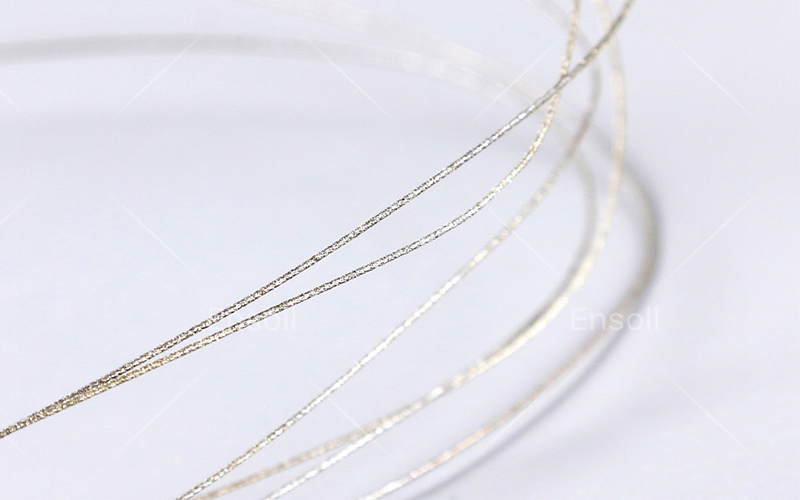
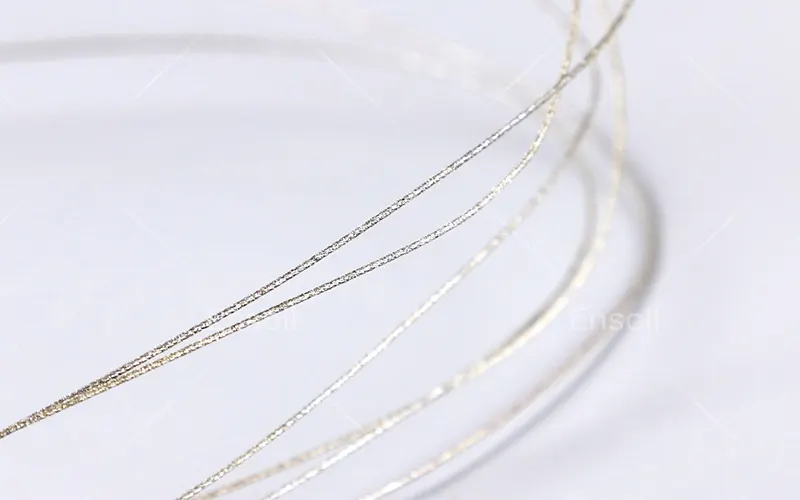
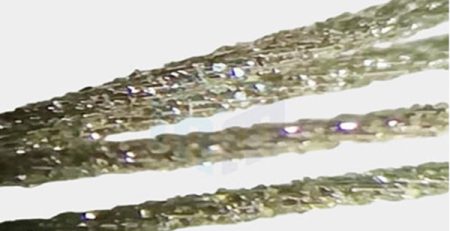
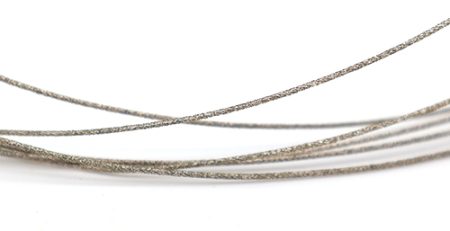
Ein Diamantdraht-Kreis ist ein kontinuierlicher, endless wire coated with diamond particles. Unlike traditional wire saws that use a long wire spooling back and forth, the loop design allows for continuous one-direction cutting, which improves efficiency and surface quality. The wire diameter can be as fine as 0.25mm to 0.6mm, enabling extremely narrow kerfs (cut widths) und minimaler Materialverlust.
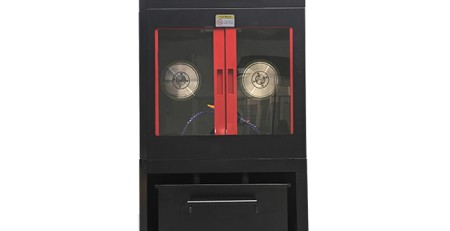
These diamond-coated loops are mounted on specialized cutting machines that control wire tension, Geschwindigkeit, and feed rate. The cutting action is a grinding process—diamond particles abrade the material rather than shearing or tearing it—which is critical for brittle or heterogeneous samples.
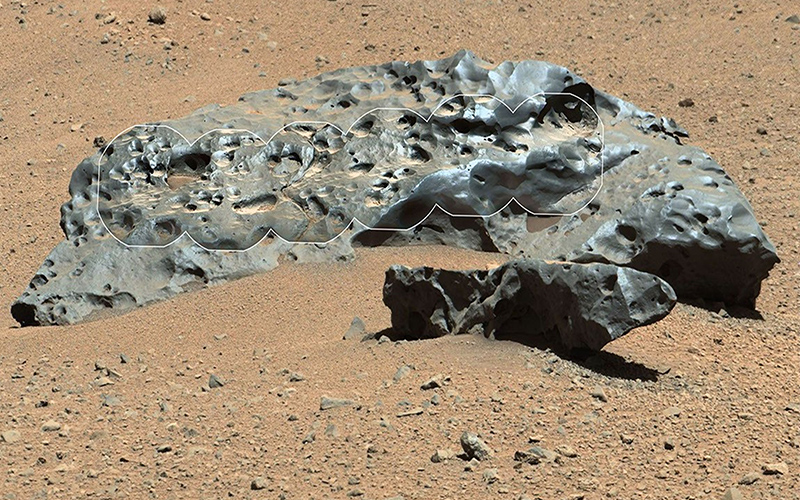
Meteorites are not homogeneous. They fall into three main categories, each with distinct physical properties:
Meteorite Type
Zusammensetzung
Schneid-Herausforderung
Iron Meteorites
Iron-nickel alloy (hart, metallic)
Hohe Härte; heat generation can alter metallurgical structure
Stony-Iron Meteorites
Silicate minerals + metal matrix (zum Beispiel., Pallasites)
Brittle silicates bonded to ductile metal—risk of interface cracking
Stony Meteorites (Chondrites, Achondrites)
Silicate minerals, some with chondrules
Porös, friable, prone to crumbling or fracturing
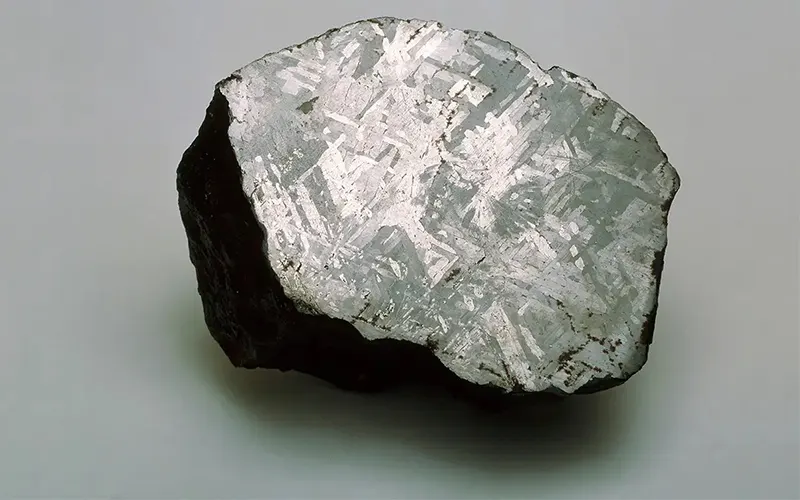
Traditional cutting methods—such as abrasive saws, band saws, or even laser cutters—often introduce heat-affected zones, microfractures, or contamination. For iron meteorites, excessive heat can alter the Widmanstätten pattern, a crystalline structure valuable for classification. For carbonaceous chondrites (which contain organic compounds and pre-solar grains), heat or fluid contamination can destroy irreplaceable scientific information.
Advantages of Diamond Wire Loop for Meteorite Cutting
1. Minimaler Materialverlust (Narrow Kerf)
Meteorites are irreplaceable. Every gram lost during cutting is a permanent loss to science. Diamond wire loops produce a kerf as narrow as 0.3–0.6mm, significantly less than traditional saw blades (which can remove 1.5–3mm of material). For a rare lunar meteorite or Martian sample, this difference preserves substantial volume for analysis.
2. Kaltschnittverfahren (No Heat-Affected Zone)
The diamond grinding action generates minimal heat compared to friction-based cutting. Because the wire is continuously moving and only a small contact area engages the sample, heat dissipates quickly. This cold cutting property preserves:
– Metallurgical structures in iron meteorites (zum Beispiel., Widmanstätten patterns)
– Organic compounds in carbonaceous chondrites
– Delicate mineral interfaces in stony-iron meteorites
3. Low Vibration and Mechanical Stress
Meteorites—especially chondrites and achondrites—can be friable (easily crumbled). The steady, smooth motion of a diamond wire loop transmits far less vibration than a reciprocating saw or abrasive wheel. This reduces the risk of:
– Fracturing along pre-existing cracks
– Dislodging chondrules or inclusions
– Creating unintended cleavage planes
4. Compatibility with All Meteorite Types
The diamond wire loop is exceptionally versatile. Whether cutting a dense iron meteorite, a brittle chondrite, or a heterogeneous pallasite, the same basic setup works with adjustments to speed and tension. Manufacturers specifically list “meteoriten” as a core application alongside ceramics, Silizium, Glas, and precious stones.
5. Clean Cutting Environment
Diamond wire loops can be used dry or with minimal coolant. This is critical for scientific samples where:
– Water or oil could leach soluble elements
– Cutting fluids could contaminate isotopic analyses
– Drying samples after wet cutting could introduce cracking
Some setups incorporate vacuum collection of cutting dust, which can itself be retained for analysis.
Which Meteorites Benefit Most from Diamond Wire Loop Cutting?
WhileDie Diamantdrahtschleifeworks well for all meteorite types, certain categories derive exceptional benefit:
Maximizes material preservation; avoids heat damage
Hoch
Iron meteorites (for Widmanstätten display)
Cold cutting preserves etching response
Hoch
Pallasites (olivine + Metall)
Prevents interface separation
Norm
Ordinary Chondrites
Reduces crumbling; clean surfaces
Practical Considerations for Laboratory Use
When implementing diamond wire loop cutting for meteorites, Mehrere Faktoren sollten berücksichtigt werden:
– Small diameter (0.25–0.45mm) : For precious small samples or thin sections
– Larger diameter (0.6Mm) : For larger iron meteorites or faster cutting
Speed and Feed Rate
– Slower speeds for brittle, friable samples
– Higher tension for dense metallic meteorites
– Always start conservatively and adjust based on results
Sample Mounting
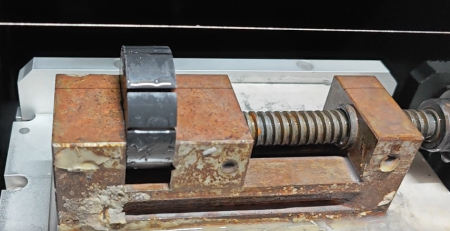
Secure the meteorite firmly to a vibration-free work surface. For irregularly shaped specimens, custom fixtures or embedding in a low-melting-point alloy may be appropriate.
Comparison: Diamond Wire Loop vs. Alternative Methods
Methode
Schnittfuge Breite
Heat Risk
Vibration
Material Loss
Am besten geeignet für
Diamant-Drahtschlaufe
0.3–0,6 mm
Minimal
Niedrig
Minimal
All meteorites
Abrasive Saw (Tile Saw)
1.5–2,5 mm
Hoch
Hoch
Hoch
Rough cutting only
Band Saw (with diamond blade)
1.0–1,5 mm
Mäßig
Mäßig
Mäßig
Iron meteorites only
Laserschneiden
0.2–0,5 mm
Very High
Keine
Minimal
Not recommended (Hitzeschäden)
Real-World Applications
The value of diamond wire loop cutting is already recognized in both commercial and scientific settings:
– Museum specimen preparation: The Smithsonian Institution has used wire saw technology for cutting large iron meteorites like Mundrabilla (6.1 tonnes), though historical methods used steel wire with abrasive slurry—modern diamond loops are far more efficient.
– Research laboratories: Facilities preparing lunar samples (zum Beispiel., Chang’E-5 returned samples) employ diamond wire cutting to minimize sample loss and contamination.
– Collector and enthusiast use: Smaller diamond wire loops can be attached to hand-held drills or benchtop machines, making precision cutting accessible to serious collectors.
Schlussfolgerung
For anyone working with meteorites—whether in a world-class research laboratory, a university geology department, or a serious private collection—the diamond wire loop represents the gold standard for cutting precision. Its combination of minimal kerf, cold operation, low vibration, and material versatility directly addresses the core challenges of meteorite preparation: preserving scientific value while enabling access to internal structures.
As planetary science continues to advance, and as missions return increasingly precious samples from asteroids, Mars, and the Moon, the demand for gentle, precise cutting tools will only grow. The diamond wire loop is not merely a tool for today—it is an enabler of tomorrow’s discoveries, allowing us to unlock the secrets of the cosmos one clean cut at a time.
Die Bearbeitung von optischem Glas erfordert Submikron-Präzision, um die Anforderungen von Industrien wie Luft- und Raumfahrt, Photonik, und Unterhaltungselektronik zu erfüllen. Mit mehr lesen
Die Optikindustrie verlangt extreme Präzision, sei es für die Produktion von Wafer-Optik, Mikroskop-Objektträgervorbereitung, oder kundenspezifische optischer Glasschnitt... mehr lesen
Wichtige Erkenntnisse
NdFeB (Neodym-Eisen-Bor) ist der stärkste kommerzielle Seltene-Erden-Magnet, verwendet in allen Bereichen der Elektronik, selbstfahrend, medizinisch und erneuerbare Energie —... mehr lesen
Wichtige Erkenntnisse
Diamantgeschleifte Drahtschneidtechnologie bietet hohe Präzision und feine Bearbeitung, unverzichtbar für die Herstellung von hochpräzisen optischen Komponenten wie Linsen,... mehr lesen
Wichtige Erkenntnisse
Diamantdraht-Schleifführungen führen einen diamantbeschichteten Draht, der zu einer ununterbrochenen Schleife über die Linsenoberfläche gewickelt ist, modelliert komplizierte... mehr lesen
In der Landschaft der modernen industriellen Fertigung, die Fähigkeit, Materialien sauber zu trennen, ist eine grundlegende Voraussetzung für die nachfolgende Verarbeitung... mehr lesen
Wichtige Erkenntnisse
Gummiblöcke mit eingebetteten Metalldrähten (wie reifenabgeleitete Blöcke) sind mit herkömmlichen Klingen extrem schwer zu schneiden, weil... mehr lesen