Corte de materiales magnéticos con sierra de hilo diamantado continuo
Test scope: Precision straight slicing of a cylindrical magnetic-material sample supplied by a European customer, using an Ensoll ESO-GM endless diamond wire saw.
- Five 3.780 mm slices cut from a 15 mm magnetic-material cylinder held within-slice TTV of 0.008-0.011 milímetro, averaging 0.009 milímetro.
- Average surface roughness stayed between Ra 0.71-0.88 micrometers and maximum edge chipping was 9.2 micrometers — a stable, finishing-ready cut.
- Average slice thickness drifted downward across the sequence (-0.083 mm by slice five), so batch production needs thickness-offset or wire-bow compensation.
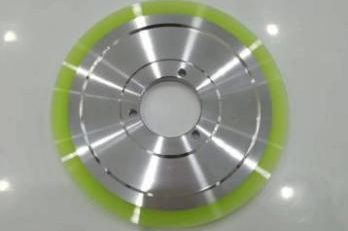
- The result came from a matched system: a rigid gantry machine with real-time tension control, un 0.5 mm fully coated diamond wire loop and cutting-oil cooling.
Magnetic materials are hard and brittle, con una tenacidad a la fractura relativamente baja. During slicing, cutting force, frictional heat, and internal stress can cause edge chipping, microcracks, thickness variation, and surface damage. This test evaluated whether an endless diamond wire process could maintain stable slice geometry and surface integrity while cutting a 15 mm diameter sample.
Where the workpiece is NdFeB rather than ferrite, the settings in our cómo cortar imanes de neodimio guide are the safer starting point.
Measured Results at a Glance
- Workpiece: Magnetic material, approximately Mohs 6-7
- Sample dimensions: 15 mm diameter x 103 mm length
- Nominal slice thickness: 3.780 milímetro
- TTV: 0.008-0.011 mm across five slices; promedio 0.009 milímetro
- Average surface roughness (Ra): 0.71-0.88 micrómetros
- Maximum measured edge chipping: 6.7-9.2 micrometers by slice
The results show good thickness uniformity within each individual slice and consistently low surface roughness. The gradual change in average thickness across the five slices also identifies an important process-control opportunity: tighter multi-slice batch consistency would require offset or feed compensation during production.
1. Test Objective and Process Strategy
El cliente requería un corte recto de alta precisión con variación de espesor controlada, Rugosidad superficial, y daño en los bordes. Ensoll seleccionó la sierra de alambre de diamante continuo ESO-GM, cutting oil, y un lazo de alambre de diamante totalmente recubierto como un sistema de proceso combinado.
Se utilizó aceite de corte para mejorar la lubricación y la eliminación de calor en la zona de corte. El alambre totalmente recubierto proporciona una distribución abrasiva estable y una remoción de material consistente, mientras que el sistema de control de tensión de la máquina ayuda a reducir la fluctuación de la posición del alambre durante el corte.

2. Equipo y parámetros de corte
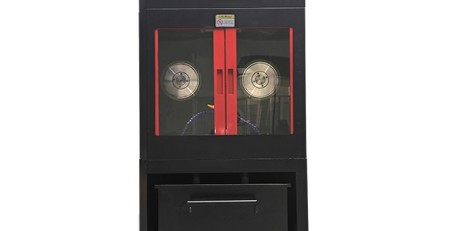
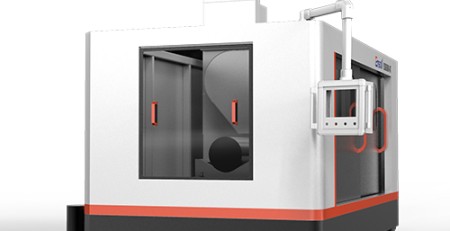
El ESO-GM utiliza una estructura de pórtico rígido con alimentación vertical de arriba hacia abajo. Su estructura integral de hierro fundido está diseñada para limitar la vibración y la deformación estructural durante ciclos prolongados de corte. El sistema también incluye control de tensión en tiempo real, memoria de posición de rotura del alambre, y extracción de niebla para el procesamiento con enfriamiento por aceite.
| Parámetro | Configuración de prueba |
|---|---|
| Máquina | sierra de alambre de diamante continuo ESO-GM |
| Diámetro del alambre | 0.50 milímetro |
| Longitud del lazo del alambre de diamante | 1930 milímetro |
| Configuración de la velocidad de avance | 2 / 1 mm/min |
| Ancho de corte | 15 milímetro |
| Tensión del alambre | 180 N |
| Velocidad lineal del alambre | 26 M/s |
| Tiempo de curvado del alambre | 100 s |
| Carga de corte registrada | 25 N·m |
| Enfriamiento y lubricación | Aceite de corte |
Los clientes que evalúan componentes similares duros y frágiles también pueden revisar las máquinas de corte de materiales magnéticos de Ensoll y Bucles de alambre de diamante.


3. Variación del espesor total (TTV)
Cada rebanada se midió en nueve posiciones utilizando un sistema de sujeción al vacío, Método de medición de espesor con sonda dual. El valor TTV es la diferencia entre el espesor máximo y mínimo medido en la misma sección.
| Muestra | Mediciones de espesor de nueve puntos (milímetro) | Tmax | Tmin | TTV |
|---|---|---|---|---|
| S01 | 3.784, 3.781, 3.786 / 3.779, 3.782, 3.785 / 3.780, 3.783, 3.778 | 3.786 | 3.778 | 0.008 |
| S02 | 3.792, 3.788, 3.790 / 3.786, 3.789, 3.791 / 3.787, 3.793, 3.785 | 3.793 | 3.785 | 0.008 |
| S03 | 3.775, 3.778, 3.781 / 3.772, 3.776, 3.779 / 3.774, 3.780, 3.773 | 3.781 | 3.772 | 0.009 |
| S04 | 3.741, 3.745, 3.748 / 3.739, 3.743, 3.746 / 3.740, 3.744, 3.742 | 3.748 | 3.739 | 0.009 |
| S05 | 3.695, 3.699, 3.703 / 3.692, 3.696, 3.701 / 3.694, 3.698, 3.697 | 3.703 | 3.692 | 0.011 |
Interpretación: El TTV se mantuvo entre 0.008 y 0.011 milímetro, con un promedio de 0.009 milímetro. Esto indica una uniformidad de espesor local estable dentro de cada sección.
4. Espesor promedio y deriva dimensional
El espesor nominal de la sección era 3.780 milímetro. El espesor promedio se calculó a partir de las nueve mediciones para cada muestra.
| Muestra | Espesor promedio (milímetro) | Desviación respecto a 3.780 milímetro |
|---|---|---|
| S01 | 3.782 | +0.002 milímetro |
| S02 | 3.789 | +0.009 milímetro |
| S03 | 3.776 | -0.004 milímetro |
| S04 | 3.743 | -0.037 milímetro |
| S05 | 3.697 | -0.083 milímetro |
Interpretación: Las desviaciones observadas oscilaron entre -0.083 Para +0.009 milímetro. Aunque el TTV dentro de la sección se mantuvo estable, el espesor promedio disminuyó a lo largo de la secuencia. Para aplicaciones con una tolerancia de espesor estricta a nivel de lote, esta tendencia debe abordarse mediante compensación programada del desplazamiento de espesor, ajuste de alimentación, o compensación de curvatura del hilo.
5. Rugosidad de la superficie
Surface roughness was measured with a stylus profilometer at three representative positions on each cut surface, following the Ra definition in ISO 4287.
| Muestra | Ra-1 | Ra-2 | Ra-3 | Average Ra (micrómetros) |
|---|---|---|---|---|
| S01 | 0.81 | 0.85 | 0.79 | 0.82 |
| S02 | 0.74 | 0.78 | 0.76 | 0.76 |
| S03 | 0.69 | 0.73 | 0.71 | 0.71 |
| S04 | 0.86 | 0.91 | 0.88 | 0.88 |
| S05 | 0.77 | 0.82 | 0.79 | 0.79 |
Interpretación: Average Ra remained within 0.71-0.88 micrómetros. The narrow range indicates a stable abrasive cutting state and a consistent surface suitable for subsequent precision finishing.
6. Resultados de Astillado de Bordes
Edge chipping was measured at four positions on each slice using an optical tool microscope.
| Muestra | Posición 1 | Posición 2 | Posición 3 | Posición 4 | Maximum Chipping (micrómetros) |
|---|---|---|---|---|---|
| S01 | 5.2 | 7.1 | 4.6 | 6.3 | 7.1 |
| S02 | 4.8 | 6.5 | 5.6 | 7.4 | 7.4 |
| S03 | 4.1 | 5.8 | 5.0 | 6.7 | 6.7 |
| S04 | 6.3 | 9.2 | 5.8 | 8.6 | 9.2 |
| S05 | 5.1 | 7.6 | 6.2 | 8.1 | 8.1 |
Interpretación: The largest measured chip was 9.2 micrómetros, and the average of the five maximum values was 7.7 micrómetros. The edges remained visually intact with limited brittle-fracture damage.

7. Conclusión de Ingeniería
Esta prueba demuestra que el proceso de hilo de diamante continuo ESO-GM puede producir rebanadas de material magnético con bajo TTV dentro de la rebanada, valores de Ra consistentes en submicrómetros, y astillado limitado en los bordes. La combinación de una estructura de máquina rígida, control de tensión en tiempo real, un lazo de hilo de diamante totalmente recubierto, y enfriamiento con aceite apoyó una condición de corte estable.
Los datos también deben interpretarse con cuidado: TTV describe la uniformidad dentro de cada rebanada, mientras que los valores promedio de grosor muestran una tendencia a la baja a lo largo de la secuencia de cinco rebanadas. Antes de la producción en volumen, el proceso debería, por lo tanto, validarse contra la tolerancia de dibujo del cliente y, cuando sea necesario, complementarse con compensación automática de grosor o curvatura del hilo.
Para un requisito diferente de mecanizado de material magnético, see Ensoll’s prueba de corte de material magnético de perfil irregular.
Citation permission: If you find this article helpful, Ensoll authorizes you to quote or reference it, provided that you include a link to this page as the original source.
Preguntas Frecuentes
¿Qué es el TTV en el corte de precisión y por qué es importante?
TTV (variación total de espesor) es la diferencia entre los puntos más gruesos y más delgados de una rebanada. Un TTV bajo significa rebanadas uniformes, lo que reduce el esmerilado posterior y mantiene estrictas las tolerancias de los componentes magnéticos. Esta prueba mantuvo el TTV entre 0.008 y 0.011 milímetro.
¿Por qué varía el grosor de la rebanada durante la producción de múltiples rebanadas?
A medida que avanza el corte, el desgaste del alambre y la curvatura del alambre cambian lentamente la posición efectiva del corte, por lo que las rebanadas posteriores pueden salir más delgadas o más gruesas. La solución es la compensación programada de desviación de grosor, ajuste de alimentación, o la compensación de la curvatura del alambre antes de la producción en volumen.
¿Qué nivel de astillado de los bordes es aceptable al cortar materiales duros, y frágiles?
Depende del plano, pero se consideran limpias las de unos pocos micrómetros. En esta prueba, la astilla más grande medida fue 9.2 micrómetros y los bordes permanecieron visualmente intactos con daño limitado por fractura frágil.
Why use cutting oil when slicing magnetic materials?
Cutting oil improves lubrication and heat removal in the cutting zone and helps evacuate swarf, which keeps the wire cutting stable and the workpiece cool throughout long slicing cycles.
Contenido técnico revisado por el equipo de ingeniería de Ensoll — un fabricante de bucles de hilo de diamante con 10+ años de experiencia en producción.