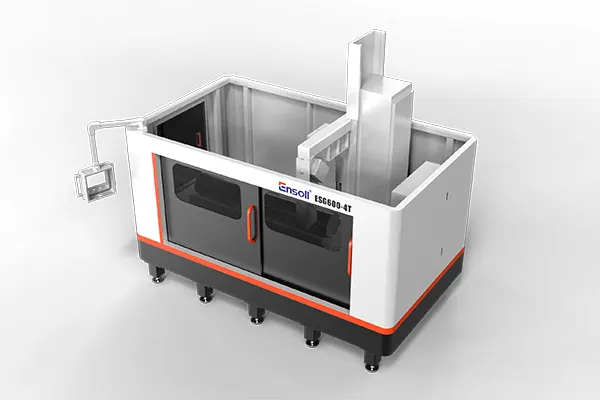
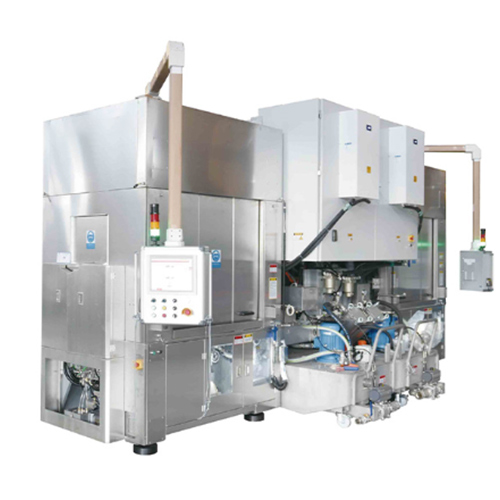
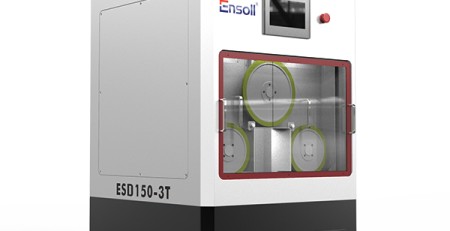
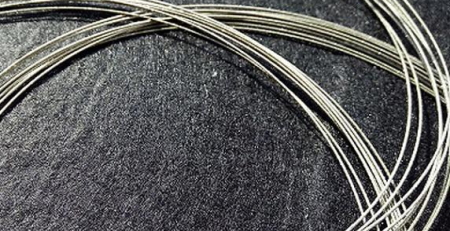
A single-arm diamond wire saw carries one diamond wire on one arm: flexible for small batches and multi-specification work, simple to operate, and cheap to build and maintain.
A multi-arm machine cuts multiple silicon rods simultaneously for high output, but its complex structure makes maintenance, debugging and downtime significantly worse.
Multi-arm machines struggle in automated production: synchronization across arms is hard, material handling integration is difficult, and adapting to new specifications is cumbersome.
For automated production lines, the single-arm design integrates seamlessly and offers the best balance of efficiency, flexibility and total cost of ownership.
Diamond wire saw cutting machinesare essential tools for processing hard and brittle materials like silicon rods and sapphire. Parmi les différents types, Les machines de découpe de tiges de silicium à un ou plusieurs bras se distinguent par leurs différences structurelles et fonctionnelles. Voici une comparaison détaillée et une explication des raisons pour lesquelles les machines de découpe de scie à fil diamanté à un bras sont mieux adaptées à la production automatisée.
1.Single-Arm Diamond Wire Saw Cutting Machine
Structure:
Dispose d’un seul bras équipé d’un fil diamanté.
Avantages:
Grande flexibilité: Idéal pour la découpe en petits lots ou à spécifications multiples, allowing easy adjustments.
Simple Operation: The straightforward design makes maintenance and debugging easier.
Automation-Friendly:Its simple structure enables seamless integration into automated production lines.
Cost-Effective: Lower manufacturing and maintenance costs compared to multi-arm machines.
2.Multi-Arm Diamond Wire Saw Cutting Machine
Structure:
Consists of multiple arms, each equipped with an independent diamond wire.
Avantages:
Haute efficacité: Capable of cutting multiplesilicon rodssimultaneously, suitable for large-scale production.
High Output: Significantly boosts productivity, meeting high-demand scenarios.
Disadvantages:
Complex Structure: Difficult to maintain and debug, leading to higher downtime.
Poor Automation Compatibility**: Challenges in synchronization and integration with automated systems.
High Costs: Higher manufacturing and maintenance expenses compared to single-arm machines.
3. Why Multi-Arm Machines Are Less Suitable for Automated Production
While multi-arm diamond wire saw cutting machines excel in efficiency, they face several challenges in automated production environments:
1.Complex Synchronization: Coordinating multiple arms for precise and consistent cutting is difficult, leading to potential quality issues.
2.High Maintenance: The intricate design requires frequent maintenance, increasing operational costs and downtime.
3.Integration Challenges: Automated production lines demand seamless material handling, which is harder to achieve with multi-arm designs.
4.Limited Flexibility: Adapting to different product specifications is more cumbersome due to the complex structure.
5.Higher Costs: The overall cost of ownership is higher, making single-arm machines a more economical choice for automation.
Conclusion
Single-Arm Machines: Offer flexibility, simplicity, et une rentabilité, making them ideal for automated production.
Multi-Arm Machines: While efficient for large-scale manual production, their complexity and high costs limit their suitability for automation.
For industries seeking a balance between efficiency, flexibility, and automation, the single-arm diamond wire saw cutting machine emerges as the superior choice. Its ability to integrate seamlessly into automated systems while maintaining high performance makes it a game-changer in modern manufacturing.
Questions fréquemment posées
What is the difference between single-arm and multi-arm diamond wire saw machines?
A single-arm machine has one arm equipped with one diamond wire, offering high flexibility, simple operation and low costs. A multi-arm machine has multiple arms each with an independent diamond wire, so it can cut several silicon rods simultaneously for high output, but its structure is far more complex.
Why are single-arm diamond wire saws better suited for automated production?
Their simple structure enables seamless integration into automated production lines. Multi-arm machines face complex synchronization across arms, challenging material-handling integration, frequent maintenance and limited flexibility when product specifications change – all of which fight against automation.
When does a multi-arm diamond wire saw make sense?
Multi-arm machines excel in large-scale manual production where cutting multiple rods simultaneously and maximizing output matters more than automation compatibility, flexibility or maintenance cost.
Are single-arm machines cheaper to run than multi-arm machines?
Oui. Single-arm machines have lower manufacturing and maintenance costs, and their simpler design means less downtime. Multi-arm machines carry higher overall cost of ownership due to their intricate structure, more frequent maintenance and integration difficulties.
Dans le monde précis et exigeant de la fabrication de matériaux avancés, la coupe est tout. Que vous travailliez avec du silicium pour.... Lire la suite
À l’invitation du comité d’organisation, Monsieur. Chen Futian, Directeur général de Zhengzhou EnsollTools, a assisté au 15e China Superhard... Lire la suite
Traditional solar cell production process
Key Takeaways
Traditional solar cell production starts with silicon wafer manufacturing and proceeds through texturing, diffusion, gravure,... Lire la suite
La technologie de coupe en fil de diamant est une technologie de coupe avancée pour remplacer la coupe traditionnelle au mortier libre, qui est largement utilisé dans... Lire la suite
Types of Optical Glass
Key Takeaways
Optical glass comes in six main types: colorless optical glass, anti-radiation optical glass, radiation-resistant optical glass,... Lire la suite
Points clés
Céramiques avancées (alumine, la zircone, le nitrure de silicium, Sic) se développent dans les applications des semi-conducteurs, nouvelles énergies, et médicales.
Leur dureté et leur fragilité.... Lire la suite
Points clés à retenir
Les tailles de plaquettes de silicium photovoltaïques ont évolué à partir des formats de plaquettes de semi-conducteurs, avec le photovoltaïque ayant historiquement pris du retard sur les semi-conducteurs en matière de normes de dimensions.
Les dimensions du wafer restent... Lire la suite
Key Takeaways
Alumina ceramics are the most common advanced precision ceramics, valued for electrical insulation, conductivité thermique élevée, chemical resistance, wear... Lire la suite
Key Takeaways
Industrial ceramics are fine ceramics used in industrial production, fournissant des fonctions mécaniques, thermiques et chimiques dans les applications.
Haute température, corrosion,... Lire la suite