Avantages de la coupe par fil diamanté par rapport à la coupe à boue abrasive
La technologie de coupe en fil de diamant est une technologie de coupe avancée pour remplacer la coupe traditionnelle au mortier libre, qui est largement utilisé dans le domaine de la découpe de plaquettes de silicium dans les industries photovoltaïque et des semi-conducteurs.
Dernière révision: Septembre 2026

Son processus de développement est le suivant:
Phase Un: L'ère du monopole de la coupe à boue abrasive libre
Avant la maturation de la technologie du fil diamanté, la coupe des cellules solaires et des plaquettes de silicium pour semi-conducteurs dépendait principalement de la coupe à boue abrasive libre (FASC). Cette méthode impliquait des fils en acier rapide transportant une boue — un mélange d'abrasifs tels que le carbure de silicium ou le corindon de zirconium avec du polyéthylène glycol — pour trancher les lingots de silicium via un “abrasion à trois corps” mécanisme.
Toutefois, cette technique présentait des inconvénients importants:
- Faible efficacité et perte importante de matériau: La vitesse de coupe était lente, et la fente résultante était large (souvent dépassant 200 Microns), entraînant le gaspillage de plus de 40% du précieux matériau en silicium pendant le processus.
- Pollution sévère et coûts élevés: Elle a généré de grands volumes de boue résiduelle difficiles à manipuler, entraînant des coûts élevés de nettoyage et d'élimination par la suite.
- Dommages profonds à la surface: Le processus de coupe incontrôlé provoquait souvent des couches profondes de dommages sur et sous la surface de la plaquette, affectant négativement le traitement ultérieur et la performance des cellules solaires finales.
Deuxième phase: Application pionnière du fil diamant par les entreprises japonaises
Les entreprises japonaises, notamment Asahi Diamond Industrial Co., Ltée. et Nakamura Choukou Co., Ltd., ont réalisé une percée technologique. Elles ont utilisé un processus de galvanoplastie pour fixer solidement “planter” des particules de diamant de taille micronique sur des substrats de fil en acier à haute résistance, créant un fil diamant avec “des abrasifs fixes.”
Le mécanisme fondamental de coupe est passé de “abrasion à trois corps” À “l'abrasion à deux corps”: les particules de diamant, agissant comme des arêtes de coupe fixes, directly engaged with the material without rolling. This innovation increased cutting efficiency severalfold compared to the free abrasive method. In the early 2000s, this technology was primarily used for precision cutting of high-value, dur, and brittle materials like sapphire and optical glass. The wires were relatively thick and represented a specialized, high-end tool.
Phase Three: The Breakthrough of Thinner Wires and the Dawn of Photovoltaic Application
As the photovoltaic (PV) industry’s demand for cost reduction grew more urgent, the sector recognized that “wire diameter directly determines silicon material loss.” To achieve narrower kerfs and increase yield (more wafers per kilogram of silicon ingot), “thinner wire” development became the core focus of technological advancement.
Japanese companies continued to lead this progression, réduire progressivement le diamètre du fil diamanté des centaines de microns initiaux à des niveaux de 17,5 mm et même 14,5 mm. Chaque réduction de diamètre nécessitait des techniques de galvanoplastie plus précises et des substrats de fil plus résistants. Cette phase a marqué l'expansion de la technologie du fil diamanté des applications de niche comme la découpe du saphir vers le domaine de la découpe de grandes plaquettes de silicium photovoltaïque, démontrant un immense potentiel de réduction des coûts.
Phase Quatre: L'essor des entreprises chinoises et l'adoption industrielle mondiale
Bien que la technologie soit originaire du Japon, l'adoption mondiale généralisée et la réduction significative des coûts de la découpe au fil diamanté dans l'industrie photovoltaïque ont été principalement entraînées par les entreprises chinoises. Des entreprises telles que Diamond Wire Technology Co., Ltée. et DaLee New Materials Co., Ltée. achieved key technological breakthroughs and scaled up production in the mid-to-late 2010s.
The contributions of Chinese manufacturers are mainly reflected in:
- Scale and Cost: Through massive capacity expansion and technological optimization, they brought down the high cost of diamond wire to a level widely acceptable for the PV industry.
- Technological Advancement: They persistently drove the “thinner wire” competition, pushing the mainstream diameter to 80μm, 60μm, and currently to the mass-produced 35μm level, drastically reducing silicon material costs.
- Process Integration: Through close collaboration with major Chinese wafer manufacturers (Par ex., LONGi, TCL Zhonghuan), they jointly perfected the complete set of cutting processes, establishing it as the industry standard.
The market landscape was consequently transformed. By 2017, diamond wire cutting had completely replaced slurry cutting, becoming the mainstream process for crystalline silicon wafering, with a penetration rate exceeding 95%. Aujourd'hui, China holds the vast majority of the global diamond wire production capacity. En outre, it is propelling the application of this technology into broader semiconductor and precision machining fields, y compris le carbure de silicium, saphir, et matériaux magnétiques.
Les avantages de boucle de fil diamant la coupe comprend principalement——Vitesse de coupe, Rendement élevé, high productivity.
Précision accrue et couche de dommages réduite, perte de matière et brûlure lors de la découpe de tôles minces, ce qui est propice à la découpe de plaquettes de silicium plus fines ou d’autres matières premières de grande valeur.
Contrôle qualité, faible coût par pièce.
L’utilisation d’un fluide de broyage à base d’eau est propice à l’amélioration de l’environnement de travail et à la simplification des procédures de post-traitement telles que le nettoyage, qui est simple et respectueux de l’environnement.
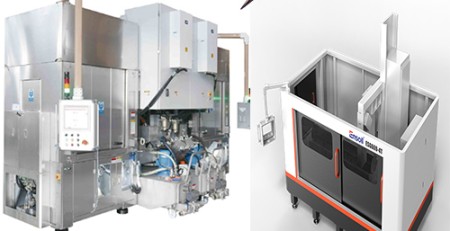
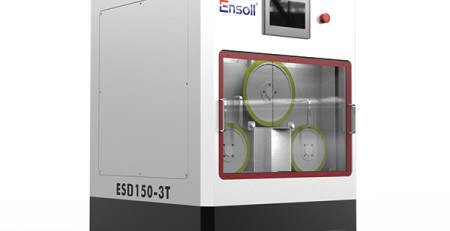
Donc, La découpe en boucle diamantée est devenue le processus de coupe courant pour le tranchage du silicium cristallin dans l’industrie photovoltaïque. Depuis 2015, Ensolltools Technology Co., Ltée. a commencé à cultiver en profondeur le domaine de la coupe à la scie à fil diamanté, La compétitivité des produits continue de s’améliorer, et la part de marché augmente d’année en année.

En termes de boucle de diamant, L’entreprise continue d’être le chef de file de l’industrie en matière d’amendes, a franchi les barrières techniques de la boucle de diamant de 0,3 mm, et développer activement les réserves et la production d’essai de boucles de diamant de plus petit diamètre, Avec le Équipement de coupe en boucle diamantée Développé par nos soins, Un diamètre de fil plus mince permet de réduire les pertes de coupe des matières premières, Des matériaux particulièrement rares et précieux, tout en améliorant la précision et l’efficacité de la coupe. Réduire la consommation d’énergie de coupe.