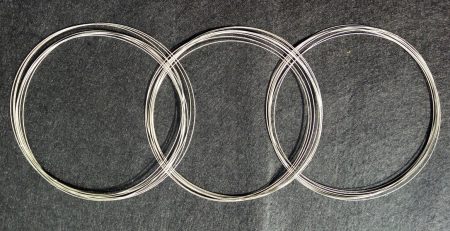
Taglio di Materiali Ultra-Duri con Filo di Diamante a Loop
Materiali ultra-duri come il Diamante, Diamante CVD (Diamante da Deposizione Chimica da Vapore), e Nitruro di Boro Cubico (cBN) are revolutionizing industries ranging from aerospace to semiconductor manufacturing. Tuttavia, their extreme hardness (Mohs 10 for diamond, ~9.5 for cBN) makes them incredibly difficult to machine using conventional methods.
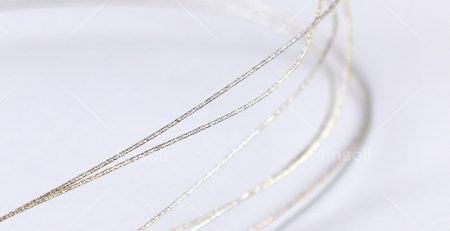
Ciclo di filo per taglio diamantato technology has emerged as the most efficient solution for precision cutting of these materials. A differenza delle seghe tradizionali, diamond wire loops provide minimal kerf loss, finitura superficiale superiore, and reduced thermal damage, making them ideal for processing ultra-hard coatings and bulk materials.
In questa guida completa, we will explore:
✔ Why diamond wire loops are ideal for cutting ultra-hard materials
✔ Key differences between natural diamond, CVD diamond, and cBN
✔ Best practices for optimizing cutting performance
✔ Industry applications and future trends
1. Perché Anello di filo diamantato is the Best Cutting Tool for Ultra-Hard Materials
1.1 Unmatched Cutting Precision
– Diamond wire loops use micron-sized diamond abrasives embedded in a high-strength wire to slice through ultra-hard materials with sub-micron accuracy.
– Unlike blade saws, which cause chatter and micro-cracks, diamond wire cutting ensures smooth, senza difetti.
1.2 Minimo spreco di materiale
– Traditional grinding wheels lose 30-50% of material due to wide kerfs.
– Diamond wire loops achieve kerf widths as narrow as 0.1mm, maximizing yield from expensive CVD diamond and cBN.
1.3 Reduced Thermal & Mechanical Stress
– Continuous wire motion prevents localized heat buildup, critical for CVD diamond coatings, which can delaminate under thermal stress.
– Low cutting force minimizes subsurface damage, preserving material integrity.
1.4 Cost Efficiency & Lunga durata dell'utensile
– Diamond wire loops last 10x longer than conventional abrasive blades.
– Multi-wire systems enable batch processing, reducing production time.
2. Cutting Different Ultra-Hard Materials: Sfide & Solutions
2.1 Natural & CVD Diamond Cutting
Proprietà:
– Hardest known material (Mohs 10)
– CVD Diamond is synthetic but equally hard, used in coatings for cutting tools and optics.
Optimal Cutting Parameters:
✔ Wire diameter: 0.35millimetro
✔ Diamond grit size: 5–15µm (finer for polished edges)
✔ Cutting speed: 0.3–1.0 mm/min
✔ Coolant: Deionized water with anti-wear additives
Applications of Diamond Wire Loop Cutting in Ultra-Hard Materials
1.Utensili da taglio (CVD Diamond-Coated Inserts)
The manufacturing of high-performance cutting tools relies heavily on CVD diamond coatings due to their exceptional hardness and wear resistance. Diamond wire loop technology enables:
✔ Precision shaping of tungsten carbide inserts before diamond coating
✔ Clean edge finishing on coated tools without delamination
✔ Cost-effective production of complex geometries for:
– PCB micro-drills
– Automotive machining tools
– Aerospace-grade cutting inserts
Caso di studio: A leading tool manufacturer reduced grinding time by 40% while improving edge quality by implementing diamond wire loop cutting for their CVD diamond-coated end mills.
2. Optical Windows (Laser-Resistant Components)
Advanced optical systems require flawless CVD diamond windows capable of withstanding high-power laser irradiation. Diamond wire cutting provides:
✔ Superior surface finish (Ra < 0.1μm) for minimal light scattering
✔ Stress-free edges critical for:
– CO₂ laser output couplers
– Synchrotron beamline components
– Military-grade IR windows
✔ Custom geometries including:
– Concave/convex surfaces
– Precision beveled edges
– Micro-structured optical elements
Riferimento del settore: Il telescopio spaziale James Webb utilizza finestre in diamante CVD tagliate a diamante per i suoi strumenti a medio infrarosso, dimostrando la prontezza della tecnologia per i voli spaziali.
3. Dissipatori termici per semiconduttori
Con l'aumento delle densità di potenza dei chip, i dissipatori termici in diamante CVD sono diventati essenziali per la gestione termica in:
✔ Dispositivi RF ad alta potenza (5Stazioni base G)
✔ Packaging di LED e diodi laser
✔ Informatica avanzata (Processori AI, HPC)
Applicazione emergente: Le principali aziende di semiconduttori ora integrano dissipatori termici in diamante CVD tagliati con filo diamantato nel packaging 3D-IC per affrontare le sfide termiche nei nodi sub-3nm.
3. Ottimizzazione delle prestazioni del filo di diamante
3.1 Parametri chiave del processo
| Fattore | Impostazione ottimale |
| Diametro del filo | 0.35millimetro |
| Granulometria del diamante | 5–30µm (dipendente dal materiale) |
| Tensione | 15–40N |
| Velocità di taglio | 0.2–1,5 mm/min |
| Tipo di refrigerante | A base di acqua o olio |
3.2 Prevenzione dei problemi comuni di taglio
– Wire Breakage → Check tension & alignment
– Edge Chipping → Reduce feed rate, use finer grit
– Poor Surface Finish → Optimize coolant flow
4. Industry Applications
✔ Tool Manufacturing (CVD diamond-coated cutters)
✔ Aerospace (cBN grinding of turbine blades)
✔ Semiconductors (Diamond heat sinks)
✔ Optics (Laser-grade diamond windows)
5. Future Trends in Ultra-Hard Material Cutting
– AI-driven adaptive cutting for real-time adjustments
– Hybrid laser-wire cutting for faster processing
– Eco-friendly diamond wire coatings
Conclusione
Diamond cutting wire loops provide the most efficient, preciso, and cost-effective method for machining ultra-hard materials like CVD Diamond and cBN. By optimizing cutting parameters, manufacturers achieve higher yields, superior surface quality, and longer tool life.
Looking for the best diamond wire solution? Contattaci for expert recommendations!