Crack-Free Glass Machining: ダイヤモンドワイヤーソー
- Optical glass is brittle and sensitive to thermal shock; cracks usually start at the exit edge of the cut.
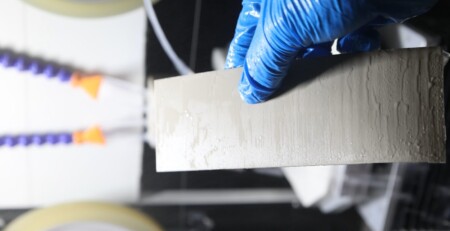
- Diamond wire machining keeps cutting force low and constant, producing crack-free edges.
- Coolant and feed control matter far more than cutting speed.
Why Crack-Free Cutting Matters in Optical Glass Machining
光学ガラス, such as SCHOTT B270, N-BK7, and fused silica, is widely used in high-precision applications like camera lenses, レーザー光学, medical imaging, and aerospace components. しかし, traditional cutting methods—such as diamond blade sawing, レーザー切断, or ultrasonic machining—often introduce micro-cracks, subsurface damage, or thermal stress. These defects degrade optical performance, increase polishing costs, and lead to higher rejection rates.
To achieve true crack-free optical glass machining, manufacturers must adopt advanced cutting technologies that minimize mechanical and thermal damage. This is where diamond wire saw cutting machines excel, offering unparalleled precision and edge quality.
How Diamond Wire Saw Cutting Machines Ensure Crack-Free Results
Unlike conventional methods, diamond wire saw cutting machines use a thin, diamond-coated wire (typically 0.1–0.3mm in diameter) running at high speed under controlled tension. This unique cutting mechanism provides several key advantages for optical glass:
1. Ultra-Low Subsurface Damage
– Traditional diamond blades create micro-fractures due to high-impact cutting.
– Laser cutting generates heat-affected zones (ハズ), leading to stress-induced cracks.
– Diamond wire saws use a gentle abrasive action, producing near-zero subsurface cracks—critical for high-performance optics.
2. Superior Surface Finish (Ra < 0.2µm)
– The fine-grit diamond wire ensures a mirror-like edge, reducing the need for extensive polishing.
– Ideal for lenses, プリズム, and precision optics where surface roughness must be minimized.
3. No Thermal Distortion (Cold Cutting Process)
– Laser and waterjet cutting generate heat, risking stress birefringence and material warping.
– Diamond wire saws operate at room temperature, preserving the glass’s structural integrity.
4. Minimal Kerf Loss (As Low as 0.15mm)
– Saves expensive 光学ガラス material, improving yield and reducing costs.
– Perfect for wafer-level optics and micro-optics arrays where material conservation is crucial.
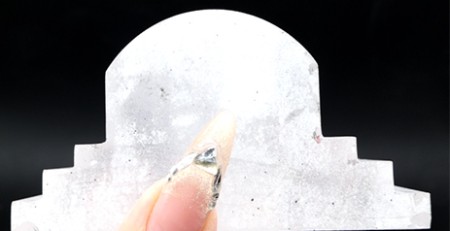
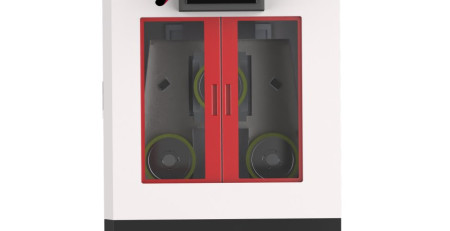
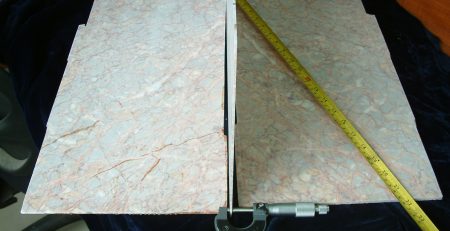
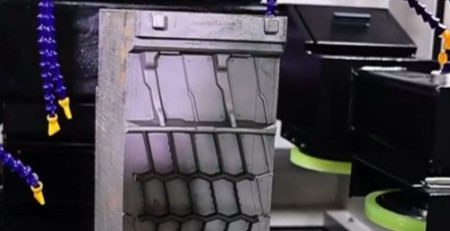
Cutting video display:
Applications of Diamond Wire Saws in Optical Glass Machining
- Camera Lenses & Prisms
– Requires chip-free edges to prevent light scattering.
– Reduces post-polishing time by 30–50%, lowering production costs.
- Telescope Mirrors & High-Precision Optics
– Maintains tight tolerances (±0.02mm ) for SCHOTT Zerodur and other low-expansion glass.
– Ensures long-term durability with no hidden cracks.
- Semiconductor & Medical Optics
– Kerf widths as narrow as 0.15mm maximize material utilization.
– No thermal damage means higher reliability for critical components
Why Choose Our Diamond Wire Saw Cutting Machine?
When investing in crack-free optical glass machining, our diamond wire saw cutting machine stands out with:
✔ CNC Precision Control – Ensures repeatable, high-accuracy cuts.
✔ Advanced Coolant System – Prevents glass chipping and extends wire life.
✔ Automation Compatibility – Ideal for high-volume production.
✔ Customizable Wire Speeds – Optimized for different glass types (B270, N-BK7, fused silica).
結論: Upgrade to Crack-Free Optical Glass Cutting
For manufacturers of precision optics, diamond wire saw cutting machines deliver:
✅ No subsurface cracks – Stronger, more reliable components.
✅ Superior surface finish – Less polishing, faster production.
✅ Material savings – Narrow kerf reduces waste.
✅ No thermal damage – Preserves optical clarity.
Interested in achieving flawless optical glass cuts? [Contact us today for a free cutting test] and experience the difference of true crack-free machining!
よくある質問
How do you cut optical glass without cracking it?
Low, steady cutting force with continuous coolant. Diamond wire machining avoids the point loading that starts cracks.
Why does optical glass crack when machined?
Concentrated stress and local heating. Brittle materials fail at the point of highest tension — usually the exit edge.
Is a diamond wire saw better than a blade for optical glass?
For precision work, yes: チッピングなし, no thermal shock, and a much narrower kerf.
Does optical glass cutting need coolant?
はい. Water-based coolant removes heat and swarf; dry cutting risks micro-cracks that only appear later.
Technical content reviewed by the Ensoll engineering team — a diamond wire loop manufacturer with 10+ years of production experience.