첨단세라키소재산업발전(二)
- 첨단 세라믹 (알루미나, 지르코니아, 질화규소, 원문대로) 반도체 전반에 걸쳐 성장 중, 신에너지, 의료 응용 분야.
- 이들의 경도와 취성으로 인해 정밀 가공이 핵심 병목이 되며 — 다이아몬드 와이어 루프 절단 채택의 원동력이 된다.
- 중국의 첨단 세라믹 산업은 원자재 공급에서 고부가가치 정밀 부품으로 이동하고 있다.
첨단세라키소재산업발전(二)
다공성 세라믹
다공성 세라믹은 서로 연결되거나 폐쇄된 많은 기공을 가진 세라믹 소재의 일종이다, 고온 저항의 장점이 있습니다., 내식성, 열충격 저항, 구조 설계 다양성, 환경 보호에 널리 사용됩니다, 화학공학, 에너지, 야 금 술, 건축, 전자 및 기타 분야.
다공성 도예 미국과 일본에서 처음으로 대규모로 사용되었다. 그 제조 및 응용 기술이 급속히 발전하여 성숙해졌다. 다공성 세라믹의 종류는 다양하다. 현재, 허니콤 세라믹, 폼 세라믹, 세라믹 멤브레인, 폼 세라믹, 등. 주요 응용 분야이다. 그 중, 허니콤 세라믹과 폼 세라믹은 국제 시장에서 매우 큰 점유율을 차지하고 있다.
투명 세라믹
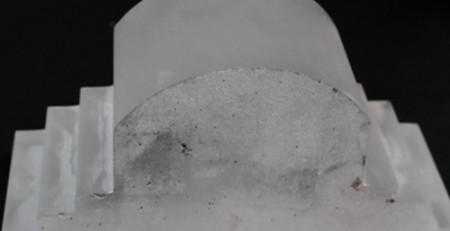
The transparent ceramic is opaque, but the optical ceramic is as transparent as glass, so it is called transparent ceramic. Because of its high strength, 내식성, high temperature resistance and other properties of ceramic materials, as well as its excellent optical properties, the transparent ceramic material industry has developed rapidly in recent years, and the industrial scale has been expanding. 통계에 따르면, the global value of transparent ceramics is up to US $10 billion.
The transparent 질그릇의 material industry has formed a multi-level echelon competition pattern, and each country’s industrial development has its own advantages. The first tier is developed countries and regions such as the United States and Japan, which have absolute advantages in economic strength, core technology, R&D capacity, market share, 등.
The second tier is represented by China, Russia and other countries. The transparent ceramic material industry is in a period of rapid development. Globally, the monopoly of transparent ceramic material industry has intensified, and high-end technical barriers have become increasingly apparent. 예를 들어, WordLab of Japan, Hitachi of Japan, General Electric Company (GE) of the United States, Surmet of the United States, Dow Chemical of the United States, Samete Ceramics Co., 주식 회사. of the United States, Siemens of Germany, 등. have occupied a leading position in most transparent ceramic products with high technology content and high added value by virtue of technological research and development, capital, talent and other advantages, with technology and patents as barriers.
Nuclear ceramics
After nearly 80 years of development, the nuclear industry has become a focus industry worldwide, 국방 및 에너지 개발 분야에서 필수적인 위치를 차지하고 있다. 응용 요구에 따라 추진, 핵물질이 지속적으로 최적화되고 개발되어 왔으며, 핵기술의 반복적 진보를 위한 중요한 보장과 동력이 되었다.
첨단 핵세라믹 재료는 높은 강도로 인해 핵산업에서 널리 사용되고 있다, 고온 저항성이 우수하다, 방사선 및 화학 부식, 독특한 중성자 흡수 특성, 원자로의 핵심 기본 재료가 되고, 방위산업 및 군사 산업. 현재, 전체 핵물질 산업은 초기 단계에 있으며, 일부 연구 결과는 아직 상용되지 않았다, 거대한 시장 잠재력을 지녔다.
고품질 원자력 서브마이크론 분말, 고성능 섬유와 같은 핵심 기술, composite materials and corresponding molding and densification are important areas for the development of nuclear ceramic materials industry.
The application of special ceramic fibers and ceramic matrix composites in the field of nuclear energy has always attracted huge investment from technologically developed countries.
Nuclear cells are also one of the key development directions of nuclear ceramics in the future. Isotopic thermal photovoltaic systems have unique advantages in deep space exploration, but the research and development are still in the laboratory prototype stage.
Research institutes and universities in the United States, 일본, Switzerland and other countries have carried out a series of research and development of ceramic-based selective emitter materials and achieved good results, but they have not yet reached the practical level.
At the present stage, the hypersonic vehicle is still in the core technology breakthrough and the experimental stage of the model machine. It is the main arena for various scientific and technological and military powers to compete, and has a milestone significance for the revolutionary development of aerospace and national defense military in the future.
그러므로, heat-resistant materials and their preparation technologies are the key technologies and core materials required for reusable vehicle and hypersonic vehicle, and have extremely important strategic significance.
Ceramic substrate
Ceramic substrates mainly include aluminum oxide substrates, aluminum nitride substrates, silicon nitride substrates and beryllium oxide substrates. 이들은 주로 집적회로 및 고출력 반도체 장치에 사용됩니다.. 금속 기판 및 인쇄회로기판(PCB)과 비교했을 때 (PCB), 세라믹 기판은 높은 열전도성을 가지고 있습니다., 높은 절연성과 높은 내열성.
열전도율은 금속 기판 및 PCB의 수 배에서 수십 배에 달하며, 압축강도는 3 받는 사람 5 금속 기판의 몇 배입니다., 사용 온도는 수백에서 수천 도까지 도달할 수 있어, 따라서 제작된 장치는 더 높은 집적도, 더 높은 전력, 더 작은 패키지 크기 및 더 넓은 사용 온도 범위를 가집니다..
전자회로 장치 및 전력 반도체의 부피와 열전도율에 대한 요구가 증가함에 따라, 세라믹 기판의 비중이 증가할 것입니다.. 세라믹 기판은 많은 분야에서 핵심 기본 소재입니다., and its related devices and products have been widely used in the fields of power transmission, 의료 장비, microwave communication, land and water transportation, aerospace and aviation. It is an indispensable key material in various related fields.
Electronic ceramics
Electronic ceramics have a wide variety of applications. Ferroelectric materials with optical, electrical and optoelectronic properties have been widely used in memory, detection, sensor, communication and military; Semiconductor ceramic material is the key of sensor technology and sensitive components, which is closely related to communication and computer technology.
Component manufacturers all over the world have invested heavily in research and development of new products, new technologies, new processes, new materials and new equipment of electronic ceramics and its components, of which the United States and Japan have been in the leading position.
Semiconductor ceramics have a very significant feature, 말하자면, its conductivity is very sensitive to external conditions such as pressure, temperature, humidity, atmosphere, and can change the physical quantity of the external environment into electrical signals. Semiconductor ceramics include thermosensitive ceramics, photosensitive ceramics, gas sensitive ceramics, pressure sensitive ceramics and humidity sensitive ceramics.
그러므로, semiconductor ceramic is the key material of sensitive components and sensor technology, and plays a very important role in modern industrial technology, especially in computer, artificial intelligence and robot pattern recognition technology.
The research, development and even production of semiconductor ceramics involve many disciplines, such as physics, chemistry, material science and engineering. 그러므로, semiconductor ceramics are technology-intensive and knowledge-intensive industries. Japanese products occupy an absolute dominant position in the world market, and the United States and Europe also occupy part of the market.
Japan has obvious advantages in the field of microwave dielectric ceramics. It devotes its industrialization advantages to promoting the standardization and high quality of microwave dielectric ceramics. The United States focuses on nonlinear microwave dielectric ceramics and high dielectric constant microwave ceramics. Europe focuses on fixed frequency resonator materials. South Korea has also developed rapidly in this field.
Bioceramics
Bioceramics is an emerging field of materials in recent years, which has received widespread attention from all countries in the world. Bioceramics refers to a class of ceramic materials used for specific biological or physiological functions, and biological, medical, biochemical and other ceramic materials directly used for or directly related to the human body.
They need not only high strength and toughness, but also biocompatibility, mechanical compatibility, antibacterial and other characteristics. 현재, bioceramic enterprises are mainly multinational manufacturers, accounting for about 2/3 of the global bioceramic market, and the rest is mainly divided by hundreds of smaller competitors.
The global dental implant market is highly competitive, and there are only a few major companies in the market, namely Zimmer, Dentsply, Straumann and Nobel Biocare. The increase of the world’s aging population, lower tooth transplant rate and longer life span are the main market drivers, while the increase of urban population and consumption level is another market driver.
The largest application market of bioceramics is bioceramics for transplantation and medical equipment with analytical and scientific instruments. Bioceramics for transplantation include bone materials necessary for surgery such as teeth, artificial joints, bones, sensors, 등.
In order to ensure that bioceramics can coexist in the human body for a long time without secondary harm, it is necessary to ensure that the mechanical properties, stability, elastic modulus, 등. of the materials and human bones are not significantly different. 예를 들어, zirconia and alumina ceramics can withstand the unfriendly environment of human body, and silicon nitride has good biocompatibility and antibacterial properties, which are the main research fields of bone materials.
나노 세라믹 복합재는 골재료 분야에서 중요한 개발 잠재력을 가지고 있다. 시험관 내 실험에서 나노 세라믹 입자와 코팅으로 구성된 기질 위에서 골세포가 증식할 수 있음이 입증되었다.
그렇지만, 일부 연구에서는 이러한 복합재료가 특정 생물학적 독성을 가지고 있어 염증이나 면역 반응을 일으켜 이식 거부를 유발할 수 있음, 따라서 당분간 실제로는 적용되지 않았다, 앞으로 이 문제를 해결하기 위한 추가 실험 연구가 필요하다.
기타
첨단 세라믹 재료는 높은 비강도, 높은 인성, 높은 화학적 안정성, 낮은 밀도, 금속 재료에 비해 높은 경도 및 기타 장점. 장갑 재료 분야에서의 큰 응용 잠재력을 보인다, and become protective materials for many military equipment such as bullet-proof vests, bullet-proof vehicles, fighter aircraft, 등.
During the Second World War, the protective materials of equipment were mainly metal materials. 그렇지만, with the improvement of weapon lethality and material development level, traditional materials could not meet the requirements of modern military development. Armor materials should meet the requirements of high hardness, 고강도, high toughness and low density as much as possible, namely “three high and one low”.
As early as the middle of the 20th century, B4C materials were used in the field of bulletproof vests, and subsequently in the seat of fighter aircraft. In the 1970s, military powers such as Europe and the United States applied ceramic matrix composites in personnel carriers, tanks, and military aircraft. 예를 들어, the British Challenger tank, EE-T1 Osorio main battle tank, 등. 현재, a large number of armor ceramics have been used on ships abroad.
The United States has used ceramic composite armor on the antenna and turret of ships, and it is expected that its AAAV amphibious attack ships under research will also use ceramic composite armor;
Armor materials in the new era mainly develop in the direction of resistance to multiple strikes, improvement of protection and mobility, and reduction of self-weight.
The single ceramic material has low density, good compression resistance, good wear resistance and chemical resistance, but it is easy to break and brittle. These shortcomings also limit its application to a certain extent. 그러므로, the light composite armor is a multi-layer structure, with ceramic plate as the main body and other composite materials.
Breaking through the structural design of traditional heavy composite armor, replacing the armor steel panel with high hardness ceramic panel, giving full play to the high hardness and high compressive strength of ceramics, can improve the ballistic performance of ceramic composite armor.
Within this family, alumina is the highest-volume grade — the process detail sits in precision cutting of alumina.
자주 묻는 질문
What are advanced ceramic materials?
Engineered ceramics such as alumina, 지르코니아, 질화규소, and silicon carbide, valued for extreme hardness, heat resistance, and chemical stability in semiconductor, 에너지, 항공 우주, and medical uses.
Why are advanced ceramics difficult to machine?
They are extremely hard yet brittle: conventional cutting causes chipping and cracking. 다이아몬드 와이어 루프 절단은 저강도 적용, 다이아몬드 연마재와 연속 힘, 가장자리 손상 최소화.
첨단 세라믹 수요 촉진 요인?
반도체 장비 부품, 태양광 및 배터리 부품, 의료 임플란트는 가장 빠르게 성장하는 수요 분야.
첨단 세라믹 부품은 일반적으로 어떻게 절단되는가?
슬라이싱 및 윤곽 성형을 위한 다이아몬드 와이어 연삭, 마감용 다이아몬드 연삭, 일부 얇은 부면에는 레이저 — 두꺼운 부품에 다이아몬드 와이어가 점점 선호되고 있음, 고부가가치 부품.
엔솔 엔지니어링 팀이 검토한 기술 내용 — 다이아몬드 와이어 루프 제조업체 10+ 다년간의 생산 경험을 가진 회사.