알 루미나 (알₂O₃) 단단하다, 마모에 강하고 부서지기 쉬운다; 중요한 결함은 절단의 입구와 출구에서 발생하는 깎임입니다.
다이아몬드 와이어는 집중적인 전단이 아니라 분산 연삭으로 절단합니다, 이로 인해 모서리가 깨지지 않고 그대로 유지됩니다.
그린 (소결되지 않은) 바디와 완전히 소결된 알루미나는 서로 다른 와이어 그릿과 공급 속도 설정이 필요하며 — 이를 동일하게 취급하는 것이 파손의 일반적인 원인입니다.
결과를 결정하는 네 가지 변수: 와이어 그릿과 결합 강도, 냉각수 여과, 장력 제어, 그리고 공급 속도.
소개: 타일 커터를 넘어서 – 세라믹 절단의 새로운 시대
사람들이 검색할 때 “세라믹을 자르는 방법,” 결과는 종종 수동 타일 커터나 앵글 그라인더에 대한 튜토리얼이 지배적입니다. 이 도구들은 가정용 개조에는 완벽하지만, 세라믹 세계의 한 측면만 나타냅니다. 엔지니어들을 위해, 연구자들, and manufacturers working with advanced technical ceramics—such as alumina, 지르코니아, 실리콘 카바이드, or piezoelectric materials—these conventional methods are utterly inadequate. They lead to micro-cracks, chipping, and catastrophic failure in high-performance applications.
This begs the question: “How do you cut ceramic when precision, structural integrity, and a flawless finish are non-negotiable?” The answer lies in a advanced machining process:다이아몬드 와이어 루프 커팅.This guide delves deep into why this technology is the superior choice for cutting advanced ceramics, positioning it as the most critical of modernceramic cuttingtools.
Why Advanced Ceramics Demand a Superior Cutting Method
Technical ceramics are prized for their exceptional properties: extreme hardness, 내마모성, high-temperature stability, and electrical insulation. 그렇지만, these very properties make them notoriously difficult to machine using traditional methods.
취 성: Ceramics fail with little plastic deformation. Any uneven stress concentration causes cracking.
높은 경도:They are harder than most conventional cutting materials, like high-speed steel or even carbide, leading to rapid tool wear.
Sensitivity to Thermal Shock:Sudden temperature changes during processes like laser cutting can introduce thermal stresses and micro-fractures.
Conventional ceramic cutting tools like diamond blades on a saw generate significant vibration and lateral force, inevitably causing subsurface damage. This is where diamond wire cutting technology shines.
다이아몬드 와이어 루프 절단이란 무엇입니까??
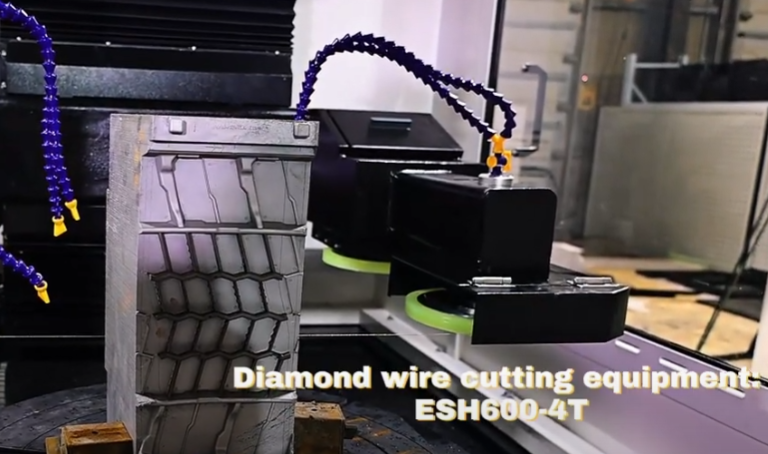
Diamond Wire Loop Cutting is a precision machining process that uses a continuous loop of wire, typically made of steel, coated with diamond particles. This “다이아몬드 와이어 루프” 공작물에 실이 나사처럼 끼워져 두 개 이상의 홈이 있는 스핀들에 의해 구동된다 다이아몬드 와이어 톱 절단기. 와이어가 고속으로 이동함에 따라, 파편을 제거하고 열을 분산시키기 위해 냉각제가 적용된다.
기본 원리는 정밀 연마에 있다. 절단이나 충격력 대신에, 와이어 위의 다이아몬드 입자가 최소 간극으로 재료를 부드럽게 연마한다 (절단 너비), 종종 그보다 작다 0.5 밀리미터.
세라믹용 다이아몬드 와이어 루프 사용의 비할 데 없는 장점
세라믹용 다이아몬드 와이어 톱 절단기를 선택하면 재료의 문제를 직접적으로 해결하는 다양한 이점이 있다.
초저손상 및 균열 없는 절단:
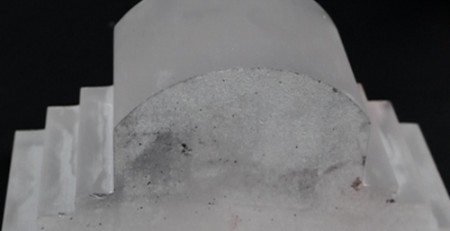
주요 장점은 절단면의 탁월한 품질. 와이어가 균일한, 전방향 압력을 가하여, 부스러기를 유발하는 점하중을 제거한다. This results in a crack-free diamond wire saw finish with minimal subsurface damage, which is critical for components subject to high stress.
Exceptional Precision and Accuracy:
These machines offer unparalleled control. They can achieve tolerances within a few microns and produce surfaces with remarkably low roughness, often eliminating the need for secondary grinding or polishing. This is essential for applications like seals, 베어링, and electronic substrates.
Superior Brittle Material Yield Improvement:
By virtually eliminating breakage from cutting stress, diamond wire cutting dramatically increases production yield. This is a crucial cost-saving factor when working with expensive advanced ceramics. You get more usable parts from each blank, directly improving your bottom line.
Ability to Cut Complex Shapes:
Unlike a rigid blade, the flexible wire can be guided to cut complex contours, 곡선, and even multiple pieces simultaneously when stacked. This flexibility opens up design possibilities that are impossible with other methods.
냉간 절단 공정:
The continuous coolant flow ensures the workpiece and the wire remain cool, preventing thermal alteration of the ceramic’s microstructure. This is vital for maintaining the material’s engineered properties.
최소한의 절단 손실:
The thin wire means very little material is turned into waste. This is especially important when cutting expensive materials, as it maximizes material utilization.here다이아몬드 와이어 루프Cutting Excels
This technology is indispensable in high-tech industries:
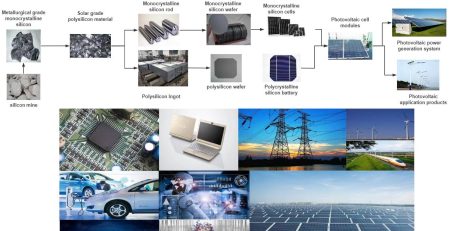
Electronics and Semiconductors: Dicing silicon wafers, cutting ceramic substrates (AlN, 알₂O₃) for circuits, and singulating piezoelectric components.
Advanced Optics: Precision cutting of fused silica and other optical ceramics for lenses and windows, a process closely related to camera lens array dicing.
Medical Devices: Manufacturing precise components from biocompatible ceramics like zirconia for implants and surgical tools.
Research and Development: Prototyping new ceramic components where precision and integrity are paramount.
How to Cut Ceramic with a Diamond Wire Saw: A Step-by-Step Process
Understanding the operational workflow is key to appreciating this technology.
Workpiece Preparation: The ceramic material is firmly mounted on the machine’s worktable using a specialized fixture or wax.
Wire Threading: The diamond wire loop is threaded through the workpiece, either through pre-drilled pilot holes or from the edge.
Parameter Setting: The operator sets critical parameters on the diamond wire saw cutting machine, including wire speed, 장력, 그리고 공급 속도. These are optimized for the specific type of ceramic being cut.
Initiation of Cutting: The machine is started. The wire begins moving at high speed, and the coolant system is activated.
The Cutting Cycle: The workpiece is fed into the wire (or vice versa) at a controlled rate. The diamond-impregnated wire abrasively grinds through the ceramic with minimal force.
Completion and Unloading: Once the cut is complete, the machine stops. The workpiece is unloaded, revealing a clean, 정확한, and damage-free edge.
Choosing the Right Machine: Factors to Consider
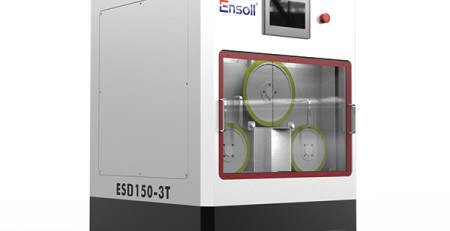
Investing in a diamond wire saw cutting machine requires careful consideration:
Material Type and Thickness: Harder, thicker ceramics require a machine with higher wire tension capabilities.
Required Precision: Determine the necessary tolerances and surface finish for your application.
Production Volume: Systems range from manual, R&D-focused models to fully automated production lines for high-volume optics production or wafer-level optics production.
Automation Needs: Consider if you need features like automatic wire threading, CNC control for complex paths, and in-process monitoring.
알루미나 절단의 과제
다이아몬드 와이어 톱 기술에 대해 논의하기 전에, 알루미나 가공이 어려운 이유를 이해하는 것이 중요합니다:
-극한의 경도 (9 모스 규모)**: 다이아몬드 기반 공구만이 과도한 마모 없이 효과적으로 절단할 수 있습니다.
– 취 성**: 부적절한 절삭 부하에 노출될 경우 치핑 및 미세 균열이 발생하기 쉽습니다..
– 열 감도**: 고속 연마 방법은 열 응력을 유발할 수 있습니다., 골절로 이어짐.
전통적인 가공 기법, 연삭과 같은, 레이저 절단, 또는 초음파 가공, 종종 다음과 같은 결과가 발생합니다.:
For anyone asking “how do you cut ceramic” in a context where failure is not an option, diamond wire loop technologyis the definitive answer. It transcends the limitations of traditional ceramic cutting tools, offering a combination of precision, 품질, and material savings that is unmatched.
While it represents a significant investment, the return in terms of brittle material yield improvement, reduced secondary processing, and the ability to manufacture highly reliable components makes it an essential technology for any serious operation working with advanced ceramics. As materials science continues to push boundaries, diamond wire saw cutting will undoubtedly remain at the forefront of precision manufacturing.
자주 묻는 질문
How do you cut alumina ceramic without chipping it?
Use a diamond wire saw with a grit size matched to the alumina hardness, keep tension stable, and control the feed rate so the wire grinds rather than impacts. Support the workpiece right up to the cut line, since most chipping happens at entry and exit.
Can alumina be cut after sintering?
예, but sintered alumina is far harder and more brittle than green bodies, so it needs a different wire grit and a slower, more controlled feed. 소결 전 그린 바디를 절단하는 것은 쉽지만 소성 중 부품이 수축할 수 있다.
알루미나 절단에서 가장자리 칩핑의 원인?
집중된 기계적 힘과 열응력. 연마나 레이저 절단과 같은 고속 연마 방법은 갑자기 날에 하중을 가하고 열을 발생시키며, 취성 알루미나는 출구에서 균열을 일으킨다.
다이아몬드 와이어가 알루미나에 다이아몬드 블레이드보다 더 좋은가?
정밀 작업에 적합한가, 네. 칼날은 집중된 전단과 넓은 절단을 가한다, 다이아몬드 와이어는 연마 작용을 분산시키고 훨씬 적은 재료를 제거한다, 완전한 가장자리와 더 나은 치수 정확도를 제공한다.
알루미나 절단에 어떤 그릿 크기를 사용해야 하는가?
그립과 결합 강도를 알루미나 등급과 녹색인지 소결인지에 맞추기. 굵은 입자가 더 빠르게 절단되지만 가장자리가 더 거친다; 소결 재료에는 와이어 마모가 느리기 때문에 더 단단한 결합체가 적합합니다.
알루미나 절단에 냉각수가 필요한가요?
예, 여과가 유량만큼 중요합니다. 깨끗한, 여과된 냉각수는 막힘을 방지하고, 와이어 수명을 연장하며, 열 스트레스에 민감한 재료에서 열을 제거합니다.
녹색 (소결되지 않은) 알루미나를 다이아몬드 와이어로 절단할 수 있나요?
예. 그린 바디는 훨씬 부드러워서 빨리 절단되지만, 와이어가 소성되지 않은 재료를 찢지 않도록 더 거친 입자와 낮은 장력이 필요합니다. 소결 중에 부품이 수축한다는 것을 기억하세요, 그러므로 그린 치수는 이를 감안해야 합니다.
알루미나에 가장 적합한 이송 속도는 무엇인가요?
단일 수치는 없으며 — 이송 속도는 절단 속도와 표면 마감의 균형점입니다. 너무 빠르게 밀면 칩핑과 미세 균열이 발생하고; 너무 느리면 와이어 수명이 낭비됩니다. 보수적으로 시작하고 출구 가장자리를 보면서 단계적으로 진행하세요.
엔솔 엔지니어링 팀이 검토한 기술 내용 — 다이아몬드 와이어 루프 제조업체 10+ 다년간의 생산 경험을 가진 회사.
붐 오브 실리콘 웨이퍼in the photovoltaic industry
Key Takeaways
Carbon-neutrality goals worldwide have made photovoltaics the fastest-growing source of... 자세히보기
Application of precision ceramics in semiconductor and new energy fields
Today's world has witnessed unprecedented changes and accelerated evolution. 새로운... 자세히보기

 Why Advanced Ceramics Demand a Superior Cutting Method