Magnetic Materials: Properties & Applications Guide

Magnetic Materials: Properties & Applications Guide

주요 요점

  • Magnetic materials fall into three families: permanent magnets (NdFeB, 에스엠코, AlNiCo, 페라이트), soft magnetics (silicon steel, soft ferrite, amorphous and nanocrystalline alloys, permalloy) and functional materials (magnetostrictive, recording media, spintronics).
  • Each family fails differently under cutting: NdFeB microcracks and demagnetizes, ferrite crumbles at the edges, amorphous ribbons are extremely hard (up to 900 HV) and thin, and nanocrystalline alloys degrade above 150 degC.
  • End-use magnetic performance depends on edge quality (flux leakage), dimensional accuracy (air gaps) and freedom from heat- or stress-damaged zones.
  • Diamond wire loop cutting addresses all three requirements at once: cutting temperatures below 50 degC, tolerances to ±2 micrometers and material yields above 95%.

1.소개: The Critical Role of Magnetic Materials in Modern Technology

Magnetic materials form the backbone of countless technologies, from electric vehicles to medical imaging systems. 하지만, their unique properties—including hardness, 취 성, and thermal sensitivity—make them notoriously difficult to machine without compromising performance.


This guide explores all major categories of magnetic materials, their post-processing applications, and the cutting challenges they present. For manufacturers requiring precision machining, advanced solutions like diamond wire loop cutting (offered by specialists such as [Ensoll Tools](https://www.ensolltools.com/)) are often indispensable.

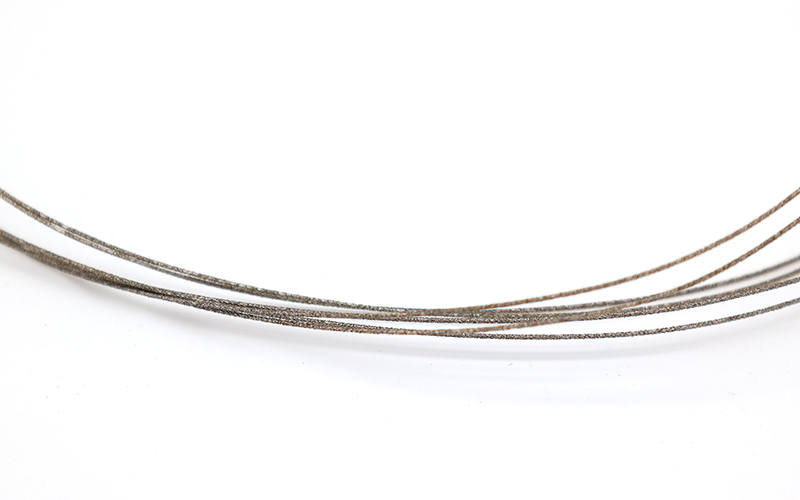
다이아몬드 커팅 와이어 루프 0.65 1 2. Permanent Magnets: High-Strength Workhorses

에이. NdFeB Magnets (Neodymium Iron Boron)

Neodymium iron boronPost-Cutting Applications:

EV motor rotors (enabling high torque density)

MRI scanner components (requiring stable magnetic fields)

High-performance speakers (for precise sound reproduction)

Cutting Challenges:

Extreme brittleness leads to microcracks with conventional methods

Heat from lasers/EDM can demagnetize localized zones

Material waste exceeds 20% with abrasive cutting

B. SmCo Magnets (Samarium Cobalt)

SmCo Magnets Samarium Cobalt

Post-Cutting Applications:

Aerospace actuators (must withstand 300°C+)

Pacemaker components (demand corrosion resistance)

Satellite guidance systems (stable in radiation environments)

Cutting Challenges:

Cobalt content accelerates tool wear in grinding

Thermal stress alters magnetic anisotropy

Costly material makes kerf loss unacceptable

기음. AlNiCo Magnets

Post-Cutting Applications:

Guitar pickups (for warm analog sound)

Flow meters (reliable field stability)

Vintage motor designs (where temperature fluctuates)

Cutting Challenges:

Ductility causes burring with mechanical methods

Anisotropic grades require orientation-sensitive cutting

디.Ferrite Magnets

Post-Cutting Applications:

Refrigerator door seals (low-cost magnetic closure)

DC motor stators (high resistivity reduces eddy currents)

Microwave circulators (for 5G base stations)

Cutting Challenges:

Porosity causes edge crumbling during sawing

Low fracture toughness demands near-zero vibration cutting


E. Rare Earth Cobalt Magnets

Post-Cutting Applications:

Downhole drilling sensors (extreme pressure/temperature)

Gyroscope bearings (minimal magnetic decay)

Cutting Challenges:

Similar to 에스엠코 but with tighter grain structure

Cobalt evaporation during laser cutting contaminates chambers

3. Soft Magnetic Materials: Flux Control Specialists


에이. Silicon Steel

Post-Cutting Applications:

Transformer cores (reducing eddy current losses)

EV traction motor stators (thin laminations reduce hysteresis)

Cutting Challenges:

Insulation coating damage during stamping

Burr formation between laminations increases core loss

B. Soft Ferrites (MnZn/NiZn)

Post-Cutting Applications:

Switch-mode power supplies (high-frequency operation)

NFC antennas (precise inductance control)

Cutting Challenges:

MnZn ferrites chip easily due to coarse grains

NiZn grades abrade cutting tools rapidly

기음. Amorphous Alloys

Post-Cutting Applications:

Smart meter current sensors (near-zero hysteresis)

High-efficiency distribution transformers

Cutting Challenges:

Extreme hardness (up to 900 HV) dulls conventional tools

Thin ribbons (<25μm의) require tension-controlled processing

D.Nanocrystalline Alloys

Post-Cutting Applications:

EV wireless charging pads (minimizing eddy losses)

High-speed motor sensors (fast magnetic response)

Cutting Challenges:

Nanograins demand sub-micron cutting precision

Heat above 150°C destroys nanocrystalline structure

E. Pure Iron & Permalloy

Post-Cutting Applications:

Magnetic shielding for MRI rooms

Flux concentrators in sensors

Cutting Challenges:

Pure iron’s ductility causes galling during machining

Permalloy work-hardens rapidly during cutting

4.기능성 Magnetic Materials: Enabling Next-Gen Tech

  1. Magnetostrictive Alloys (Terfenol-D)

Post-Cutting Applications:

Sonar transducers (high-energy density conversion)

Nano-positioning stages (sub-nm resolution)

Cutting Challenges:

Brittle intermetallic phases cause cleavage fractures

Cutting fluids can contaminate active surfaces

B. Magnetic Recording Media (CoCrPt)

Post-Cutting Applications:

HDD platters (high areal density storage)

Cutting Challenges:

Requires atomically smooth cut surfaces

Cobalt smearing during mechanical cutting

기음. Magnetic Refrigeration Alloys

Post-Cutting Applications:

Eco-friendly cooling systems (replacing compressors)

Cutting Challenges:

Gadolinium oxidation during thermal processes

Intermetallic phase control during machining

디.Spintronics Materials (GMR/TMR)

Post-Cutting Applications:

MRAM memory cells (non-volatile storage)

Quantum computing components

Cutting Challenges:

Multilayer structures delaminate easily

Nanoscale features require ion beam precision

5.Why Precision Cutting Matters

Every magnetic material’s end-use performance depends on:

✔ Edge quality (affects flux leakage)

✔ Dimensional accuracy (critical for air gaps)

✔ Material integrity (no degraded zones)


다이아몬드 와이어 루프 cutting solves these challenges by:

Maintaining <50°C temperatures

Achieving ±2μm tolerances

Enabling 95%+ material yield

For mission-critical applications, partnering with experts like [EnsollTools]ensures optimal results.

자주 묻는 질문

What are the main types of magnetic materials?

Three broad families: permanent (hard) magnets such as NdFeB, 에스엠코, AlNiCo and ferrite; soft magnetic materials such as silicon steel, soft ferrites, amorphous and nanocrystalline alloys and permalloy; and functional materials such as magnetostrictive alloys, magnetic recording media and spintronics materials.

What is the difference between hard and soft magnetic materials?

고경도 (permanent) magnetic materials have high coercivity and retain their magnetization after the external field is removed. Soft magnetic materials magnetize and demagnetize easily, making them ideal for transformer cores, inductors and flux-control components.

Why are magnetic materials difficult to machine?

They combine hardness with brittleness and thermal sensitivity: conventional cutting introduces microcracks, edge chipping, burrs or heat that can locally demagnetize the part or destroy delicate structures such as nanocrystalline phases and multilayers.

Which cutting method works across all magnetic material types?

Diamond wire loop cutting is the most universal option. Its cold (below 50 degC), low-force micro-grinding preserves magnetic properties across hard magnets, soft ferrites and advanced alloys, while achieving micrometer-level tolerances and material yields above 95%.

엔솔 엔지니어링 팀이 검토한 기술 내용 — 다이아몬드 와이어 루프 제조업체 10+ 다년간의 생산 경험을 가진 회사.