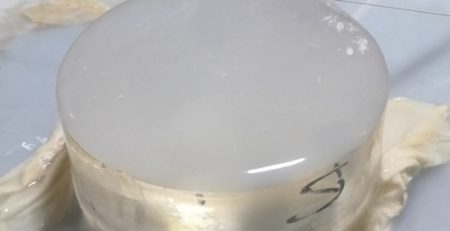
네오디뮴 자석 이해하기: 완전 가이드
현대 재료 과학의 영역에서, 니오디뮴-철-붕소보다 더 깊은 영향을 준 혁신은 거의 없습니다 (NdFeB) 영구 자석. Since their discovery in 1982 by Masato Sagawa at Sumitomo Special Metals, these remarkable materials have revolutionized industries ranging from consumer electronics to renewable energy . With the highest magnetic energy product of any commercially available magnet, neodymium magnets have earned their title as the “King of Magnets” and continue to drive technological advancement across the global economy .
- 네오디뮴 (NdFeB) is the strongest commercial permanent magnet, with energy products up to 52 MGOe from its Nd2Fe14B tetragonal crystal structure — the ‘King of Magnets’.
- Two types exist: 소결 NdFeB (highest performance, needs nickel/zinc/epoxy coating) and bonded NdFeB (isotropic and corrosion-resistant, but limited to about 16 MGOe).
- Key limits: 취 성, corrosion susceptibility, and rapid strength loss above 80 degC unless heavy-rare-earth grades are used (up to 230 degC).
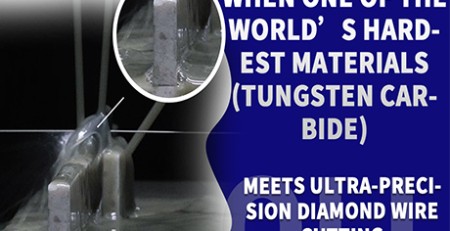
- Diamond wire saw machining reaches Sa 0.32 micrometer surfaces and ±0.05 mm tolerances, and has produced micro-magnets just 80 micrometers thick — all without thermal damage to magnetic properties.
- NdFeB is 5-10 times stronger than ferrite but roughly ten times more expensive; the right choice depends on performance versus cost.
Sintered NdFeB is brittle and heat-sensitive, so anyone machining it should read up on 네오디뮴 자석 절단 방법 before choosing between grinding, EDM and wire cutting.
 Part 1: 네오디뮴 자석 이해하기
네오디뮴 자석, formally known as neodymium-iron-boron (NdFeB) 자석, are composed of a tetragonal crystal structure of Nd₂Fe₁₄B . This specific crystalline formation is responsible for the material’s exceptional magnetic properties, including high remanence, high coercivity, and an extraordinarily high maximum energy product (BHmax) that can reach up to 52 MGOe or higher
There are two primary types of neodymium magnets: sintered and bonded. Sintered NdFeB magnets are produced through a powder metallurgy process, where alloy powders are melted, pulverized, pressed in a magnetic field, and then sintered in inert gas or vacuum to achieve densification . These magnets offer superior magnetic performance but require surface protection through coatings such as nickel, zinc, or epoxy due to their susceptibility to corrosion . Bonded NdFeB magnets, by contrast, are created by mixing NdFeB powder with polymer binders, offering isotropic magnetic properties and excellent corrosion resistance, though with lower magnetic energy products typically not exceeding 16 MGOe .
The magnetic strength of neodymium magnets is truly remarkable—they can lift objects up to 640 times their own weight . This exceptional performance is quantified through various grades, from N35 to N52, with higher numbers indicating greater magnetic energy product. Special grades incorporating heavy rare earth elements like dysprosium and terbium extend operating temperatures from standard 80°C up to 230°C for demanding applications .
그렇지만, neodymium magnets have certain limitations. They are brittle and susceptible to chipping or cracking upon impact . Their Curie temperature ranges from 320°C to 460°C, and magnetic performance degrades rapidly at elevated temperatures unless specially formulated with heavy rare earth additions . These characteristics make the processing and application of NdFeB materials a sophisticated engineering challenge.
Part 2: Applications and Precision Machining with 다이아몬드 와이어 톱
Perhaps the most significant growth driver for neodymium magnets today is the clean energy transition. In electric vehicles, each permanent magnet synchronous motor requires 2-5 kg of sintered NdFeB magnets, improving drive efficiency by 15% compared to conventional motors . With China’s new energy vehicle sector alone consuming over 35% of rare earth magnet production, the demand trajectory remains steep . 마찬가지로, offshore wind turbines increasingly employ permanent magnet direct-drive generators, with a single 16 MW turbine requiring up to 30 tons of neodymium magnets .
Emerging applications include humanoid robotics, where joint motors demand high power density and precision control—each robot may require 15-20 kg of NdFeB magnets, three times that of industrial robots . Aerospace applications leverage these magnets in radar systems, microwave isolators, circulators, and magnetic bearings for gyroscopes and turbines .
The Critical Role of Diamond Wire Saw Machining
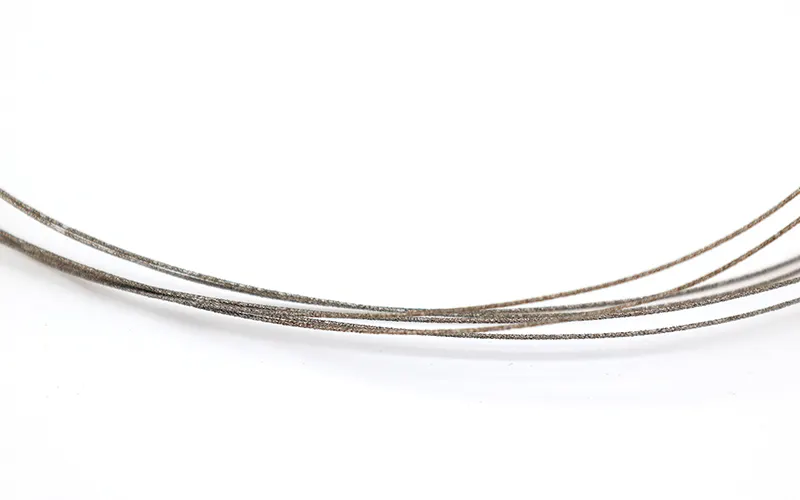
The processing of neodymium magnets presents unique challenges due to their hardness, 취 성, and sensitivity to thermal damage. Traditional machining methods can induce microcracks, cause surface degradation, and even compromise magnetic properties. 여기가 있습니다 다이아몬드 와이어 톱 technology has emerged as a game-changing solution.
Recent research published in Precision Engineering demonstrates the efficacy of diamond wire sawing for NdFeB micromachining . The study systematically investigated the effects of wire cutting speed (vc) 그리고 공급 속도 (vf) on surface integrity and magnetic performance. Results showed that higher cutting speeds favor surface morphologies dominated by microgrooving and microcutting, while increasing feed rates tend to produce more crater formations .
Remarkably, the diamond wire saw process achieved minimum surface roughness values as low as Sa = 0.32 μm의, Sq = 0.41 μm의, and Sz = 5.93 μm의, demonstrating exceptional surface quality . The technique successfully produced micro-magnets as thin as 80.4 ± 4.6 μm while maintaining strong magnetic properties, with intrinsic coercivity (Hcj) 의 1209.5 kA/m and maximum energy product (BH)max of 217.3 kJ/m³ .
The diamond wire saw offers several distinct advantages for NdFeB processing:
Minimal subsurface damage: While some grain pullout and intergranular microcracks occur, there is no evidence of thermal damage, preserving magnetic integrity
높은 정밀도: The technique enables dimensional tolerances as tight as ±0.05 mm
재료 낭비 감소: The thin kerf minimizes material loss—particularly important when processing expensive rare earth materials
다재: Diamond wire sawing can accommodate various magnet geometries and sizes, from large sintered blocks to micro-scale components
For manufacturers producing micro-magnets for medical devices, micro-electromechanical systems (MEMS), or miniature sensors, diamond wire saw technology represents the optimal balance between productivity, 정밀, and magnetic property preservation.
Part 3: Neodymium Magnets vs. Ferrite Magnets—A Comparative Analysis
 While neodymium magnets dominate high-performance applications, 페라이트 (질그릇의) magnets remain the most widely produced permanent magnets globally due to their cost-effectiveness and unique property profile . Understanding the differences between these two material families is essential for proper material selection.
Magnetic Performance
The most dramatic difference lies in magnetic strength. Neodymium magnets achieve maximum energy products up to 52 MGOe, while ferrite magnets typically range from 1.1 받는 사람 5.2 MGOe—making NdFeB approximately 5-10 times stronger magnetically . This means that for applications requiring high field strength in compact volumes, such as EV motors or miniaturized electronics, neodymium is the only viable choice.
Composition and Manufacturing
Ferrite magnets are composed primarily of iron oxide (Fe₂O₃) combined with strontium or barium carbonate, making them essentially ceramic materials . They are produced through conventional ceramic processing methods, resulting in hard, brittle products with limited machinability. 네오디뮴 자석, by contrast, contain rare earth elements (approximately 29-32.5% 네오디뮴) along with iron (64-68%) 그리고 붕소 (1-1.2%), with possible additions of dysprosium, praseodymium, or other elements for property modification . Their production involves sophisticated powder metallurgy techniques .
Corrosion Resistance and Environmental Stability
Ferrite magnets excel in environmental resistance. They possess excellent inherent corrosion resistance and require no protective coating, making them suitable for outdoor or humid environments . Their operating temperature range extends to 250°C, and they resist demagnetization well .
네오디뮴 자석, however, 희토류 원소의 화학 반응성으로 인해 부식에 매우 취약하다. 니켈-구리-니켈 도금, 아연 코팅, 까다로운 환경에서 사용할 경우 에폭시 보호와 같은 표면 처리가 필요하다 . 등급별 최대 작동 온도는 80°C에서 230°C까지 다양하다, 고온 등급은 비용이 많이 드는 중량 희토류 첨가가 필요하다 .
비용 고려사항
페라이트 자석은 극적인 비용 이점을 제공한다, 일반적으로 동급 네오디뮴 자석보다 거의 10배 저렴하다 . 원자재가 풍부하며 희토류 원소와 관련된 지정학적 공급 위험에 노출되지 않는다. 이로 인해 페라이트는 중간 정도의 자기 성능만으로 충분한 비용 민감 응용 분야에서 기본 선택이 된다.
가공 가능성 및 공차
Both materials present machining challenges due to their brittleness, but neodymium magnets offer superior machinability. Dimensional tolerances can reach ±0.05 mm for NdFeB, compared to ±0.1 mm typical for ferrites . Both materials may be machined using diamond tooling, but the higher value and more stringent requirements of neodymium components have driven the adoption of advanced techniques like diamond wire sawing for precision applications .
Application Domains
Neodymium magnets dominate high-performance applications: EV traction motors, wind turbine generators, hard disk drives, MRI machines, and aerospace components . Ferrite magnets find their niche in cost-sensitive and moderately demanding applications: loudspeakers, 냉장고 자석, small DC motors, 자기 분리기, and toys .
The choice between these materials ultimately depends on application requirements: when maximum performance in minimal volume justifies higher cost, neodymium prevails; when cost optimization and environmental robustness take priority, ferrite remains the workhorse.
결론
Neodymium-iron-boron magnets represent one of the most significant materials innovations of the late 20th century, enabling countless technologies that define modern life. From the smartphones in our pockets to the electric vehicles transforming transportation and the wind turbines generating clean energy, these remarkable materials deliver performance previously unimaginable.
The precision machining of NdFeB materials, particularly through advanced techniques like diamond wire saw, continues to evolve, 점점 더 작고 정교한 부품을 가능하게 하면서 이러한 소재를 매우 가치 있게 만드는 뛰어난 자기적 특성을 유지하는 것. 연구가 희토류 함량을 줄이고 재활용성을 개선하는 방향으로 나아가면서, 네오디뮴 자석은 지속 가능한 전환을 향한 전 세계적인 노력의 중심에 남을 것입니다, 고효율 기술.
네오디뮴 자석과 페라이트 자석의 비교 우위를 이해하면 엔지니어와 디자이너가 정보에 기반한 소재 선택을 할 수 있습니다, 성능 요구 사항과 경제적·환경적 고려 사항의 균형을 맞추는 것. 빠르게 변화하는 현대 제조 환경에서, 이 “King of Magnets” 최고의 위치를 차지하지만—항상 적용에 적합한 공학적 지혜라는 맥락 속에서.
자주 묻는 질문
네오디뮴 자석은 무엇으로 만들어졌는가?
네오디뮴 합금 (약 29-32.5%), 철 (64-68%) 그리고 붕소 (1-1.2%) Nd2Fe14B 결정 구조 형성, sometimes with dysprosium or terbium added to raise the operating temperature.
What is the difference between sintered and bonded NdFeB magnets?
Sintered NdFeB is made by powder metallurgy and offers the highest magnetic performance, but it is brittle and needs a protective coating. Bonded NdFeB mixes magnetic powder with polymer binders: it resists corrosion and can be molded into complex shapes, but its energy product is much lower (up to about 16 MGOe).
Neodymium vs ferrite magnets — which should you choose?
Choose neodymium when maximum strength in minimum volume justifies the cost — EV motors, miniaturized electronics, wind generators. Choose ferrite for cost-sensitive, moderately demanding uses such as loudspeakers, small DC motors and separators; it also resists corrosion without any coating.
Can neodymium magnets be cut without losing their magnetism?
예, if the process stays cold and low-stress. Diamond wire sawing keeps the cut zone cool with no thermal damage, preserving coercivity and energy product while achieving tolerances as tight as ±0.05 mm.
엔솔 엔지니어링 팀이 검토한 기술 내용 — 다이아몬드 와이어 루프 제조업체 10+ 다년간의 생산 경험을 가진 회사.