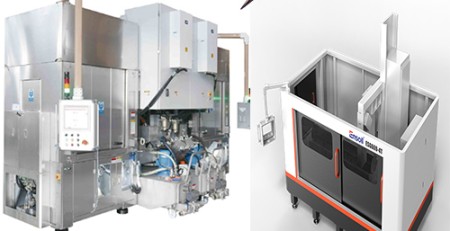
Fio de diamante serra cortada ímã NdFeB
Íman NdFeB de corte de serra em laço de diamante
- Ímanes NdFeB são cristais tetragonais Nd2Fe14B — os ímanes permanentes comerciais mais fortes atualmente em uso e o íman de terras raras mais comum em eletrónica, motores, equipamentos médicos e aeroespacial.
- Existem dois tipos: NdFeB ligado, que é magneticamente isotrópico e resistente à corrosão, e NdFeB sinterizado, que é mais resistente mas corroe facilmente e tem de ser placado (zinco, níquel, ou revestimentos de níquel-cobre-níquel).
- As vias tradicionais de corte incluem serras de fio longo alternativo para ímanes grandes e de diâmetro interno (ID) máquinas de corte para os pequenos; máquinas de identificação são precisas mas lentas.
- serras de laço de arame diamantado cortam NdFeB cerca de 3 vezes mais rápido do que máquinas de corte de ID, é por isso que os fabricantes de ímanes as estão a adotar rapidamente.
Ímãs de neodímio, também conhecidos como ímãs NdFeB, são cristais tetragonais formados pelo neodímio, ferro, e boro (Nd2Fe14B). Este tipo de íman é o segundo íman permanente mais magnético depois do íman de holmium a zero absoluto hoje em dia, e também é o íman de terras raras mais comum.

NdFeB é dividido em dois tipos: NdFeB sinterizado e NdFeB ligado. O NdFeB ligado tem magnetismo em todas as direções e é resistente à corrosão;
O NdFeB sinterizado é fácil de corroer, e a superfície precisa ser revestida. Geralmente, existem galvanizado, níquel, zinco amigo do ambiente, níquel amigo do ambiente, níquel-cobre-níquel, e níquel-cobre-níquel amigo do ambiente. O NdFeB sinterizado é geralmente dividido em magnetização axial e magnetização radial, que são determinados de acordo com a superfície de trabalho necessária.
Para cortar grandes ímanes NdFeB, muitos fabricantes usam corte long-wire recíproco, enquanto um pequeno íman NdFeB é cortado com uma máquina de corte de diâmetro interno. A eficiência de corte da máquina de diâmetro interno é baixa, mas por vezes cortar uma pequena quantidade de íman NdFeB não requer ligar uma máquina grande. Com a ascensão da serra de fio de diamante em laço, alguns fabricantes começaram a usar a serra de fio de diamante em laço para cortar NdFeB, a eficiência de corte é 3 vezes a da máquina de diâmetro interno, o que tem sido bem recebido por muitos fabricantes na China.
Os materiais de ímã permanente NdFeB sinterizado têm excelentes propriedades magnéticas e são amplamente utilizados em eletrónica, máquinas elétricas, Equipamento médico, brinquedos, empacotamento, máquinas de ferragens, aeroespacial e outros campos.
Os mais comuns são motores de íman permanente, altifalantes, separadores magnéticos, discos rígidos de computadores, equipamentos de ressonância magnética e medidores.
Abaixo do vídeo de corte NdFeB para referência:
If you want to know more, contact me or leave a message!
The full process for this material is documented in como cortar ímanes de neodímio.
Perguntas Frequentes
What is the best way to cut NdFeB magnets?
For small NdFeB magnets, a diamond wire loop saw is currently the best option: it cuts about 3 times faster than an inner-diameter slicing machine while handling the hard, brittle sintered material cleanly. Large magnets have traditionally been cut on reciprocating long-wire machines, but wire loop saws are taking over there as well.
Qual é a diferença entre ímanes NdFeB sinterizados e ligados?
Bonded NdFeB has magnetism in all directions and resists corrosion. Sintered NdFeB delivers higher magnetic performance but corrodes easily, so its surface must be plated. Os graus sinterizados também se dividem em magnetização axial e radial dependendo da superfície de trabalho requerida.
Porque os ímanes NdFeB sinterizados necessitam de revestimento superficial?
Porque o material sinterizado corrói facilmente quando exposto. Os revestimentos protetores comuns incluem zinco, níquel, zinco e níquel ambientalmente amigos, e revestimento multicamada de níquel-cobre-níquel.
Onde são comuns os ímanes NdFeB?
As aplicações típicas incluem motores de ímanes permanentes, altifalantes, separadores magnéticos, discos rígidos de computadores, equipamentos de ressonância magnética e medidores — abrangendo eletrónica, máquinas elétricas, dispositivos médicos, brinquedos, empacotamento, hardware e aeroespacial.
Revisado pela equipa de engenharia da Ensoll.