Боросиликатное стекло для экстремального промышленного применения
В мире материаловедения, стекло часто стереотипно воспринимается как хрупкое, деликатное, и чувствительное. Хотя это может быть верно для стандартного содово-известкового стекла, которое встречается в кухонных окнах или бутылках для напитков, существует элитный класс промышленного стекла, специально разработанного для преодоления этих ограничений: Боросиликатное стекло.
- Боросиликатное стекло заменяет часть стандартного рецепта стекла примерно на 13% триоксид бора (приблизительно 81% SiO2), создавая более плотную, более взаимосвязанную атомную сеть, чем у содово-известкового стекла.
- Его три определяющих черты: исключительная стойкость к термическому удару (коэффициент температурного расширения около 3.3 x 10^-6/К, примерно треть обычного стекла), почти полная химическая инертность, и повышенная механическая прочность и твердость.
- Это золотой стандарт для химической и фармацевтической обработки, взрывозащищенные светильники, окна для аэрокосмической отрасли и прецизионные измерительные плиты.
- Механическая обработка является узким местом: толстые лезвия вызывают микротрещины, потери до 1.5 mm of expensive material per slice, and friction heat can still produce subsurface damage.
- Diamond wire loops solve this with high-speed micro-grinding at 30-50 М / сек: virtually zero-chipping edges, an ultra-thin 0.25-0.35 mm kerf, and near pre-polished as-cut surfaces that reduce or skip secondary finishing.
From the highly volatile environments of chemical processing plants and explosion-proof lighting sectors to the pristine laboratories of pharmaceutical giants, borosilicate glass is the gold standard. It is a material trusted where failure is not an option.
But what makes this specific glass formulation so resilient? And how do manufacturers shape and slice this ultra-tough ceramic material into high-precision industrial components without destroying its structural integrity?
В этом подробном руководстве, we will break down the science behind borosilicate glass, its primary industrial applications, and the advanced machining technologies required to process it.
Borosilicate is more thermal-shock resistant than the optical grades, but the machine settings carry over directly from Резка оптического стекла.
What is Borosilicate Glass? The Chemistry of Resilience
Standard glass is primarily made of silica, soda, and lime. Borosilicate glass alters this fundamental recipe by substituting a significant portion of the ingredients with boron trioxide ($B_2O_3$). Типично, a high-quality industrial borosilicate glass (such as Borofloat® or Pyrex®) consists of roughly 81% silica ($SiO_2$) и 13% триоксид бора.
This chemical modification completely rearranges the material’s atomic matrix. The introduction of boron creates a tighter, more interconnected polymeric network. Эта уникальная молекулярная структура придает боросиликатному стеклу три его определяющие промышленные характеристики:
1. Исключительная термостойкость
Выдающейся особенностью боросиликатного стекла является его чрезвычайно низкий коэффициент температурного расширения (КТР). Приблизительно $3.3 \раз 10^{-6}\текст{ K}^{-1}$, его скорость расширения составляет около трети от обычного содового стекла.
Когда обычное стекло подвергается резким скачкам температуры, разные участки материала расширяются с разной скоростью, создавая внутреннее напряжение, которое приводит к мгновенному разрушению. Боросиликатное стекло расширяется настолько незначительно и равномерно, что может переходить от ледяного холода к палящей жаре без трещин.
2. Высокая химическая стойкость и гидролитическая устойчивость
Боросиликатное стекло практически химически инертно. Оно устойчиво к воде, кислотам, соляным растворам, органическим веществам, и галогенам. Even during prolonged exposure to aggressive chemicals at elevated temperatures, его поверхность остается некорродированной и прозрачной. Это предотвращает любой химический выщелачивание, сохраняя абсолютную чистоту любого содержимого.
3. Высокая механическая прочность и твердость
Благодаря высокой твердости по шкале Мооса и высокому модулю упругости, боросиликатное стекло механически прочнее обычного стекла. Оно устойчиво к царапинам, выдерживает более сильные удары, и сохраняет свою геометрическую стабильность при больших нагрузках.
Ключевые промышленные применения боросиликатного стекла
Благодаря своей исключительной прочности, боросиликатное стекло используется в самых различных тяжелых отраслях промышленности:
Химическая и фармацевтическая переработка: Используется для промышленных трубопроводов, дистилляционных колонн, реакторов, и смотровых стекол с высокой видимостью. Его химическая инертность обеспечивает сохранение чистоты фармацевтических соединений во время синтеза.
Освещение высокой интенсивности и взрывозащищённые корпуса: Часто встречается в мощных прожекторах, сценическом освещении, и смотровых окнах для опасных зон, где лампы высокой мощности создают интенсивную, локализованную тепловую энергию.
Аэрокосмическая и оборонная отрасли: Используется в оптических окнах для высокопотных самолетов, компонентов спутников, и тепловизионных смотровых окон, которые должны выдерживать резкие изменения атмосферного давления и температуры.
Бытовая техника и метрология: От дверей высококлассных печей и лотков микроволновок до прецизионных оптических плоских пластин, используемых в промышленных калибровочных лабораториях.
Проблема точной резки: Обработка твердой керамики
Хотя крайняя твёрдость и хрупкость боросиликатного стекла делают его феноменальным конечным продуктом, они делают начальные стадии производства и нарезки сырья невероятно сложными.
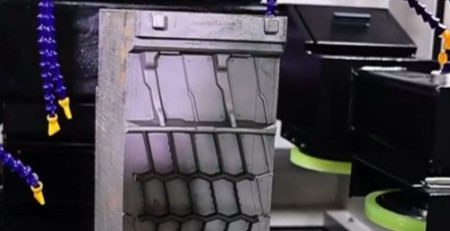
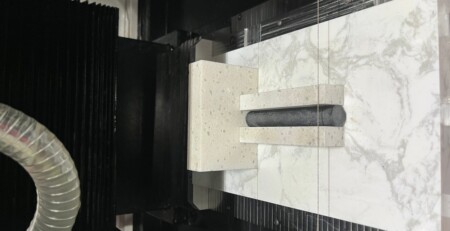
Traditional cutting methods—such as CNC milling tools, high-pressure waterjets, or thick abrasive grinding wheels—frequently run into costly bottlenecks when processing high-purity borosilicate plates:
- Micro-Chipping and Edge Breakage: Because the material has zero plasticity, the high localized impact force of a traditional thick blade shears the glass violently, causing severe micro-fractures and chipping along the exit cut.
- Severe Raw Material Waste: Industrial-grade borosilicate glass ingots are expensive to produce. Thick cutting blades can easily grind away up to $1.5\text{ миллиметр}$ of material per slice into useless waste slurry.
- Thermal Stress Fractures: Ironically, even though borosilicate handles thermal shock exceptionally well, массовое трение и тепло, возникающее от медленных, тяжелых шлифовальных лезвий, все еще может превышать локальные допуски, что приводит к повреждению под поверхностью (Твердотельные накопители).
Современное производственное решение: Бесконечные алмазные проволочные петли
Для решения этих узких мест в высокоточной производственной технологии, передовые стекольные производственные предприятия перешли на революционную микрошлифовальную технологию: бесконечная Петля из алмазной проволоки.
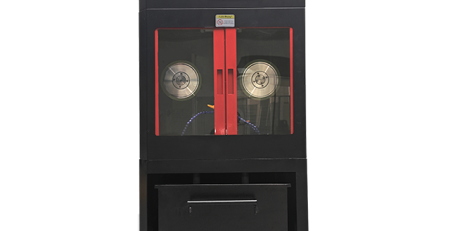
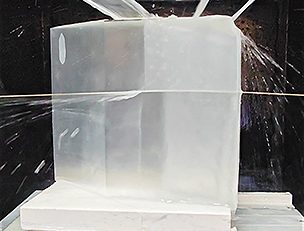
An Бесконечная петля из алмазной проволоки это ультратонкая, высокопрочная стальная проволока, сваренная в непрерывное, безшовное кольцо, с внешней поверхностью, постоянно гальванически покрытой микроскопическими промышленными алмазными абразивами. В отличие от устаревших пил с открытой проволочной петлей, которые должны постоянно замедлять, останавливаться, и менять направление вращения, the endless wire loop rotates continuously in a single direction at staggering linear velocities—often between $30\text{ М / сек}$ and $50\text{ М / сек}$.
Эта непрерывная, high-speed one-way motion completely redefines the mechanics of cutting brittle borosilicate glass:
1. Zero-Chipping through Micro-Grinding
Because the wire moves at such immense speeds, the contact force between each individual diamond crystal and the glass is reduced to a microscopic level. Instead of fracturing or shearing the glass, the endless loop performs a high-speed micro-grinding action. This eliminates the mechanical shock associated with traditional sawing, resulting in razor-sharp, crisp edges with virtually zero chipping or micro-cracking.
2. Maximizing Material Yield (Ultra-Thin Kerf)
Потому что бесконечная петля проволоки сохраняет исключительную стабильность при высоком натяжении, не вибрируя и не изгибаясь, the core steel wire can be engineered to be incredibly thin—frequently down to just $0.25\text{ миллиметр}$ to $0.35\text{ миллиметр}$. Этот чрезвычайно узкий путь резки минимизирует потери материала из-за пропила. Для производственных линий с большим объёмом выпуска, экономия долей миллиметра на каждом отдельном разрезе в сумме составляет тысячи долларов за один производственный цикл.
3. Почти полированная поверхность
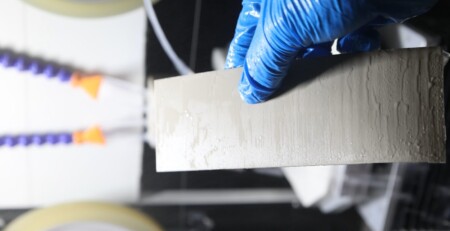
Непрерывное, постоянное натяжение замкнутой системы полностью устраняет “следы пилы” и глубокие царапины на поверхности, характерные для пил с возвратно-поступательным движением. С resulting шероховатость поверхности ($R_a$) чрезвычайно низкая. Для промышленных компонентов, таких как смотровые стекла или оптические окна, эта чистая “как нарезанная” отделка поверхности значительно сокращает — или полностью заменяет — время и трудозатраты, необходимые для вторичной мелкой шлифовки и полировки.
Заключение: Проектирование будущего промышленной оптики
По мере того как отрасли стремятся к большей автоматизации, более строгие геометрические допуски, и более требовательные эксплуатационные условия, роль премиальных материалов, таких как боросиликатное стекло, будет только расширяться. Однако, Истинная ценность этого материала раскрывается только тогда, когда его можно обработать с той же точностью, с которой разрабатывалась его химическая формула.
Применяя передовые технологии резки, такие как бесконечная Петля из алмазной проволоки, Современные инженеры-производственники успешно преодолевают исторические проблемы хрупкости керамики. Это идеальное сочетание науки о материалах и машиностроения гарантирует, что от лабораторного стола до стартовой площадки, наши наиболее критически важные высокотехнологичные системы остаются четко ориентированными и надежно защищенными.
Часто задаваемые вопросы
Из чего состоит боросиликатное стекло?
Качественное промышленное боросиликатное стекло состоит примерно из 81% silica (SiO2) и 13% триоксид бора (B2O3). Замещение бора в рецептуре перестраивает атомную матрицу в более плотную полимерную сеть, что является источником её термических, химических и механических преимуществ.
Почему боросиликатное стекло так устойчиво к термошоку?
Его коэффициент термического расширения составляет примерно 3.3 x 10^-6/К — примерно треть от обычного стекла из соды и известняка. Оно расширяется настолько мало и равномерно при резких перепадах температуры, что внутренние напряжения, которые разрушают обычное стекло, никогда не накапливаются.
Как лучше всего резать боросиликатное стекло?
Алмазная проволочная петля. Ультратонкая проволока с алмазным покрытием непрерывно движется в одном направлении со скоростью 30-50 м/с и микрошлифует стекло вместо того, чтобы резать его,, создавая четкие края с практически нулевым скалыванием, шириной всего в 0.25-0.35 миллиметр, и поверхностью, близкой к предварительно отполированной.
Сколько материала теряется при обычной резке боросиликатного стекла?
Толстые абразивные диски могут сточить до 1.5 мм материала с каждой нарезки в отходы — дорого для слитков высокочистого боросиликата. Пропил алмазной проволочной петли 0.25-0.35 мм сокращает эти потери драматически, что приводит к значительной экономии в процессе производства.
Проверено инженерной командой Ensoll.