Precision Cutting of Ferrite Magnets: 指南
- Ferrite (陶瓷) magnets are sintered iron oxide with strontium or barium carbonate: cheap, corrosion-resistant and stable up to 250 degC, but hard and brittle — so cutting method directly decides yield.
- Grinding leaves 50-100 micrometer micro-cracks and runs slowly; laser adds a heat-affected zone that alters magnetic properties; waterjet leaves Ra >3 micrometer edges needing polishing.
- Diamond wire saw cutting is the best fit: 一个 0.1-0.3 mm diamond-coated wire gives chip-free edges (Ra <0.5 micrometers), no heat damage, ±0.02 mm tolerances and kerf under 0.2 毫米.
- 关于 80% of Japanese ferrite manufacturers already use diamond wire saws, cutting production cost by roughly 30% versus grinding in high-volume runs.
1. What Are Ferrite Magnets?
Ferrite magnets, also known as ceramic magnets, are a type of permanent magnet composed primarily of iron oxide (Fe₂O₃) combined with strontium or barium carbonate. They are sintered under high temperatures to form a hard, brittle ceramic material with moderate magnetic strength (0.2–0.4 Tesla).
Key Properties
– Cost-Effective: Cheaper than rare-earth magnets (NdFeB/SmCo)
– High Resistivity: Low electrical conductivity reduces eddy current losses
– Temperature Stability: Maintain performance up to 250°C
– Corrosion Resistance: Do not require coating like NdFeB
应用
– 电子学: Speakers, 传感器, and microwave devices
– Automotive: ABS sensors, electric motor components
– Industrial: Magnetic separators, holding systems
Due to their brittleness, ferrite magnets require specialized cutting methods to avoid chipping and cracking.
2.How Are Ferrite Magnets Processed?
Ferrite magnets are manufactured through sintering, producing blocks or discs that must be cut into precise shapes. Common machining methods include:
一个. Diamond Wire Loops (Traditional Method)
– Uses resin-bonded diamond wire loop wheels
– Suitable for simple shapes (blocks, discs)
– Limitations:
– Generates micro-cracks (depth: 50–100μm)
– Slow processing (5–10mm/min)
– High tool wear (wheel dressing required)

B. 激光切割
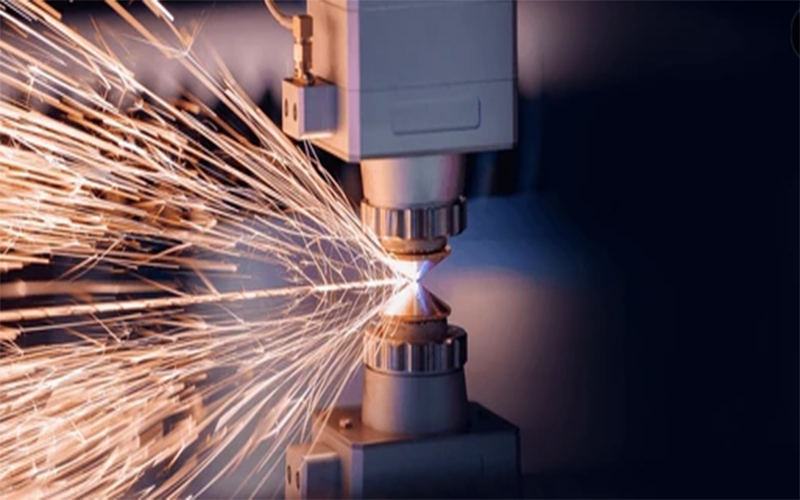
– CO₂ or fiber lasers vaporize material
– 优势: No mechanical force, good for thin sheets (<3毫米)
– Drawbacks:
– 热影响区 (HAZ 系列) alters magnetic properties
– Limited to straight cuts (complex shapes difficult)
C. 水射流切割
– High-pressure abrasive water (Garnet/SiC)
– 优点: No thermal damage, versatile for thick materials
– 缺点:
– Rough edges (Ra >3微米) require secondary polishing
– High operating costs (abrasive consumption)
金刚石线锯切割 (Best Solution)
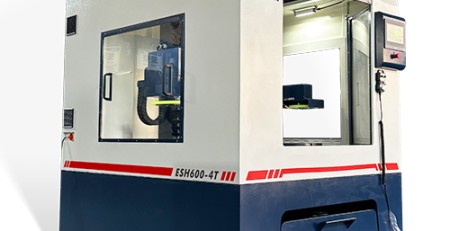
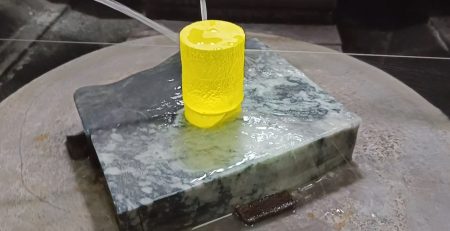
这 金刚石绳锯切割机 uses a thin, diamond-coated wire (Ø0.1–0.3mm) to slice ferrite with minimal kerf loss.
Why It’s Superior
✔ Chip-Free Cutting – No edge fractures (Ra <0.5微米)
✔ Cold Process – No thermal stress or HAZ
✔ High Precision – Tolerances ±0.02mm
✔ Material Savings – Kerf width <0.2毫米 (与. 1mm with grinding)
How It Works
- Wire Motion: Continuous loop at 10–60m/min
- 冷却液: Prevents overheating (去离子水 + additives)
- CNC Control – Cuts complex shapes (arcs, slots, trapezoids)
Industry Adoption:
– 80% of Japanese ferrite manufacturers use diamond wire saws
– 30% lower production cost vs. grinding for high-volume runs
3. Choosing the Right Diamond Wire Saw Machine
For optimal ferrite cutting, consider:
Machine Specifications
– 线速: Adjustable (10–80m/min for different thicknesses)
– Tension Control: Auto-adjustment (±1N) for consistent cuts
– Multi-Wire Systems: Cut 50–100 pieces simultaneously
线材选择
1. 标准 金刚石线环
– Delivers ultra-fine surface finishes (表面粗糙度 Ra 0.2μm)
– Ideal for applications requiring mirror-quality edges
2. Enhanced Resin-Bonded Diamond Wire Loop
– Engineered for extended service life
– Optimized for cutting thicker material sections
– Maintains cutting precision throughout prolonged use
Applications in Production
– Speaker Magnets: Smooth edges improve sound quality
– Sensor Components: Precision slots for Hall-effect devices
– Custom Shapes: Trapezoidal/arc cuts for motors
结论
Ferrite magnets demand precision cutting to maintain performance. While grinding and laser methods have limitations, diamond wire saw cutting machines deliver the best balance of accuracy, surface quality, and cost efficiency.
For manufacturers seeking zero-defect ferrite components, upgrading to diamond wire technology reduces waste by 20% and boosts productivity by 3×.
Need a cutting solution? [联系我们] for a free sample test with your ferrite material!
Compared with how to cut neodymium magnets, ferrite allows a higher feed rate, 但是出口边缘的崩边仍然是需要注意的缺陷.
常见问题
切割铁氧体磁体的最佳方法是什么?
金刚石线锯切割. 薄的镀金刚石线 (0.1-0.3 毫米) 以非常低的力将脆性陶瓷磨削穿过, 产生无崩边的边缘,表面粗糙度在 0.5 微米以下,公差约为±0.02毫米——没有磨削的微裂纹或激光切割的热损伤.
为什么铁氧体磁体在切割时会崩边?
铁氧体是烧结陶瓷,抗拉强度非常低. 刚性刀片和砂轮会将机械应力集中在切割边缘, 材料在刀具退出时断裂. 低力金刚石线微磨削在很大程度上消除了这种失效模式.
可以用激光切割铁氧体磁体吗?
只能切割薄片 (厚度在……以下 3 毫米) 并且只能进行直线切割. The laser’s heat-affected zone alters the magnetic properties near the cut, so for production parts a cold process like diamond wire saw cutting is preferred.
Does cutting affect ferrite’s magnetic performance?
Yes if the process adds heat or stress. Laser and hot grinding can alter properties near the cut; diamond wire saw cutting is a cold, coolant-controlled process, so the ferrite keeps its rated performance with no heat-affected zone.
Reviewed by the Ensoll engineering team.