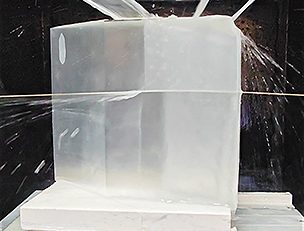
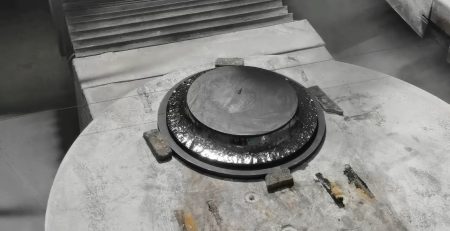
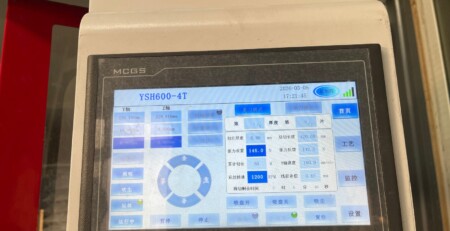
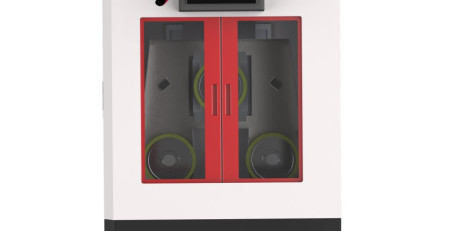
用于切割陶瓷的环形金刚石线锯
- Hard-and-brittle material cutting suffers from low efficiency, 材料产量低, 表面完整性差, 高工具成本和污染; thick circular saw blades waste material in wide kerfs, and free-abrasive wire saws contaminate with diamond slurry.
- Wire saws are classified by abrasive type (free vs bonded) and motion (reciprocating vs unidirectional); reciprocating multi-wire free-abrasive saws still dominate semiconductors and optoelectronics.
- The bonded-abrasive unidirectional annular (圈) diamond wire saw fixes diamond grains on the wire, enabling simple machine structure, high-speed one-direction wire movement and shaped cutting.
- Four documented advantages: narrow kerf and high yield (0.175-0.180 mm wires from Sumitomo Electric and Lid, 0.19 mm actual kerf in sodium glass); faster cutting because fixed abrasive needs no slurry entry; smooth gentle cutting without reciprocating grooves; and minimal pollution with water coolant or even dry cutting.
- Open research gaps remain in wire manufacturing, cutting mechanisms, wire failure modes, and posture and motion control for precision shaping cuts.
现在, 硬脆材料的锯切过程受到加工效率低等问题的困扰, 材料产量低, 表面质量和完整性差, 工具成本高, 和环境污染. When using circular saws to cut materials like stone and 陶瓷, 锯片需要具有一定的厚度以确保刚性. 这会导致宽裂缝, 材料产量低, 和严重的污染. 此外, 圆锯无法进行异形表面加工, leading to inferior surface quality when cutting ceramic materials. In the semiconductor industry, the use of free abrasive wire cutting methods to process silicon crystals results in significant surface and environmental contamination by diamond abrasive slurry, thereby increasing the costs associated with subsequent processing and waste treatment.

(1) 窄切缝, high material yield. By using high-strength steel wire as the base material, 可以生产直径低于1毫米的各种金刚石线锯. 日本的住友电工和Lid等公司已经制造出平均直径从 0.175 到0.180毫米,使用直径为 0.130 和0.155毫米的钢丝作为基材的金刚石线锯, 在钠玻璃切割实验中实现了0.19毫米的实际切缝损耗.
(2) 切割速度快, 高效率. 结合磨料的环形金刚石线锯在切割过程中呈单向运动, 磨料颗粒固定在线锯上, 消除了磨料进入长深切缝的难题. 相比往复结构和使用自由磨料的线锯, 更容易实现更高的切割速度, 从而具有高加工效率.
(3) 切割过程平稳, 片材表面质量好. During the cutting process with a diamond wire saw, the cutting force is small and gentle, without the unique grooves generated on the workpiece surface due to reciprocating wire saw movement.
(4) Minimal environmental pollution. Bonded abrasive diamond wire saws typically use water as the standard coolant, and dry cutting methods can even be employed at lower wire speeds. This results in low or no need for wastewater treatment due to the use of bonded abrasives.

Annular saws suit certain shapes; for flat precision work the reference is 精密切割氧化铝.
常见问题
What is an annular diamond wire saw?
It is a bonded-abrasive wire saw in which diamond grains are fixed on a wire loop that moves unidirectionally at high speed. The simple structure allows high wire speeds and shaped cutting of hard, brittle materials such as ceramics — an alternative to reciprocating free-abrasive wire saws.
What advantages does a bonded-abrasive wire saw have over free-abrasive sawing?
Because the diamond grains are fixed on the wire, there is no abrasive slurry that must enter long, deep kerfs, so higher cutting speeds are achievable. It also produces a narrow kerf with high material yield, a smooth cut surface without reciprocating grooves, and far less contamination.
金刚石线锯的切缝宽度有多窄?
Manufacturers such as Sumitomo Electric Industries and Lid in Japan have produced wire saws averaging 0.175-0.180 mm in diameter on steel cores of 0.130-0.155 毫米, achieving an actual kerf loss of about 0.19 mm in sodium glass cutting experiments.
Is diamond wire sawing environmentally friendly?
Relatively yes. 结合磨料金刚石线锯通常使用普通水作为冷却液, 在较低的线速下甚至可以进行干切割. 由于没有游离磨料浆料, 几乎不需要废水处理——与基于浆料的硅片切割形成鲜明对比.
由Ensoll工程团队审查.