Graphit ist eine nichtmetallische Form von Kohlenstoff — eine seiner Allotrope, neben Diamant und Fullerenen. It is the exception among non-metals in that it conducts both electricity and heat, because each carbon atom bonds to only three others in its layer, leaving one electron free to move. Natural graphite is a mineral; synthetic graphite is manufactured from petroleum coke or coal-tar pitch. This page covers what graphite is, its key properties, how it is used, and how it is machined — including diamond wire loop cutting of graphite blocks.
Wesentliche Erkenntnisse
Graphite is a non-metal — an allotrope of carbon, not a metal. It conducts electricity and heat, which is why it is used for electrodes.
Its layered hexagonal structure gives it lubricity, Chemische Inertheit, and a sublimation point of about 3,900 K (ungefähr 3,627 °C) at standard pressure.
It begins to oxidise in air above about 450 °C, so the real service limit depends on atmosphere, not temperature alone.
Machining graphite is harder than its softness suggests: it is soft, brittle and abrasive at the same time, and its dust is electrically conductive.
What Graphite Is
Graphite is one of the allotropes of carbon. Its carbon atoms are arranged in hexagonal lattices that stack into flat sheets, commonly called graphene layers. Within a layer the atoms are held together by strong covalent bonds; between layers only weak Van der Waals forces act. That single structural fact explains most of graphite’s behaviour — the layers slide over one another, which is lubricity, and the delocalised electron in each layer carries current, which is conductivity.
Diamond is also pure carbon, but its atoms are bonded into a three-dimensional tetrahedral network. Same element, opposite properties: diamond is the hardest natural material, while graphite is soft enough to mark paper.
Einleitung:
Graphit, eine kristalline Form von Kohlenstoff, nimmt aufgrund seiner einzigartigen Eigenschaften und vielseitigen Anwendungen einen zentralen Platz in verschiedenen Branchen ein. In diesem umfassenden Leitfaden, Wir gehen auf die Eigenschaften von Graphit ein, seine vielfältigen Einsatzmöglichkeiten in verschiedenen Branchen, und der komplizierte Prozess der Bearbeitung von Graphit, einschließlich des Schneidens von Graphit mittels Diamantdrahtsägetechnik.
1. Eigenschaften von Graphit:
Graphit zeichnet sich durch seine außergewöhnlichen Eigenschaften aus, die ihn von anderen Materialien abheben:
Struktur: Graphit weist eine Schichtstruktur mit hexagonal angeordneten Kohlenstoffatomen auf, was ihm gleitfähige und rutschige Eigenschaften verleiht.
Leitfähigkeit: Es weist eine hohe thermische und elektrische Leitfähigkeit auf, Dies macht es zu einem wertvollen Material für Anwendungen, die Wärme- und Stromleitung erfordern.
Schmierung: Die Schichtstruktur von Graphit ermöglicht ein leichtes Gleiten zwischen den Schichten, Dies macht es zu einem hervorragenden Trockenschmierstoff in verschiedenen mechanischen Anwendungen.
Chemische Inertheit: Graphit ist chemisch inert und beständig gegen die meisten Säuren, Basen, und Lösungsmittel, trägt zu seiner Langlebigkeit und Langlebigkeit in rauen Umgebungen bei.
Key Properties at a Glance
Property
Wert / behaviour
Why it matters in practice
Struktur
Hexagonal layers (graphene sheets), weak Van der Waals forces between layers
Lubricity and easy cleavage; anisotropy in almost every property
Sublimation point
Approximately 3,900 K (about 3,627 °C) at standard pressure
It does not melt — it goes straight from solid to gas, so it survives extreme temperature
Oxidation onset in air
Above roughly 450 °C
Sets the real service limit for open-air use; inert atmospheres push it much higher
Strength vs temperature
Increases when heated from room temperature to about 2,500 °C
Unlike most materials, it gets stronger when hot
Thermal expansion
Low coefficient of thermal expansion
Resists thermal shock — the cracking caused by rapid temperature change
Electrical conductivity
Hoch, and anisotropic — much higher parallel to the layers than across them
Enables electrodes; also makes machining dust a contamination hazard
Chemical resistance
Inert to most acids, alkalis and corrosive gases at moderate temperature
Crucibles, Reaktionsgefäße, and components in harsh environments
Härte
Weiche — roughly Mohs 1–2
Easy to mark, yet abrasive to tooling because of how it wears
Is Graphite a Metal?
Nein. Graphite is a non-metal. It is carbon, and carbon is not a metal. Graphite is sometimes described as a semimetal because it conducts electricity, but that describes its behaviour rather than its classification — it does not have metallic bonding, and it is neither malleable nor ductile in the way metals are.
The confusion is understandable. Graphite is the only common non-metal that conducts electricity well, it has a metallic-looking sheen, and it is used in places where metals normally appear: elektroden, brushes, heat sinks. For specification and procurement purposes, treat it as a non-metal with metal-like electrical and thermal behaviour.
Natural Graphite and Synthetic Graphite
Natural graphite is a mineral. It forms in metamorphic rocks and is mined as flake, amorphous (fine-grained) or vein (lump) Material, so its properties vary from deposit to deposit.
Synthetic graphite is not a mineral — it is manufactured by graphitising petroleum coke or coal-tar pitch at high temperature. It is more consistent and purer, which is why battery anodes, electrodes and semiconductor components generally use synthetic grades.
For machining, the distinction matters twice over. Synthetic grades are more uniform, so a proven parameter set transfers from batch to batch. And both families are abrasive and produce conductive dust, so dust control is identical either way.
2. Verwendung von Graphit:
Graphit findet aufgrund seiner einzigartigen Eigenschaften umfangreiche Anwendungen in den unterschiedlichsten Branchen:
Refractories: Graphit wird aufgrund seiner hohen thermischen Stabilität und Hitzebeständigkeit in feuerfesten Materialien verwendet, Damit eignet er sich ideal für die Auskleidung von Öfen und Tiegeln.
Elektroden: Es dient als Elektroden bei der Herstellung von Stahl, Aluminium, und andere Metalle aufgrund seiner hervorragenden Leitfähigkeit und hohen Temperaturbeständigkeit.
Batterien: Graphit ist eine Schlüsselkomponente in Lithium-Ionen-Batterien, Gewährleistung von Stabilität und Leitfähigkeit in Energiespeichersystemen.
Automobilindustrie: Es wird in verschiedenen Automobilkomponenten eingesetzt, wie Dichtungen und Bremsbeläge, für seine selbstschmierenden und thermischen Managementeigenschaften.
3. Verarbeitung von Graphit:
Die Graphitverarbeitung erfordert komplizierte Techniken, um das Material für bestimmte Anwendungen zu formen und zu veredeln. One crucial method iscutting graphitewith diamond wire saw technology:
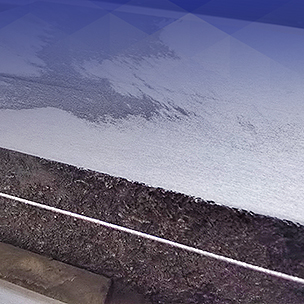
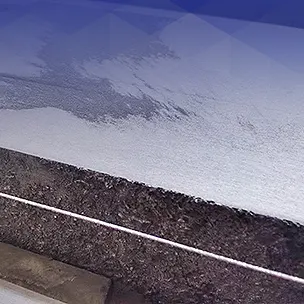
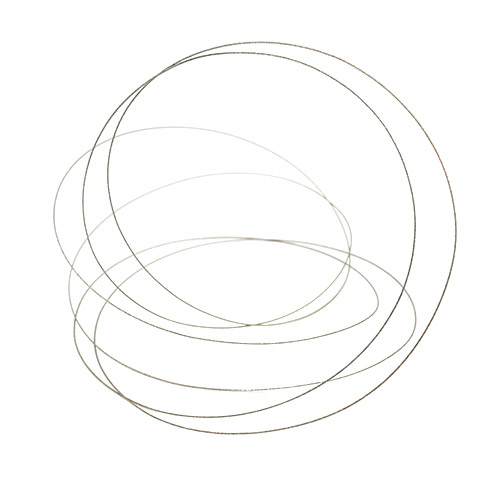
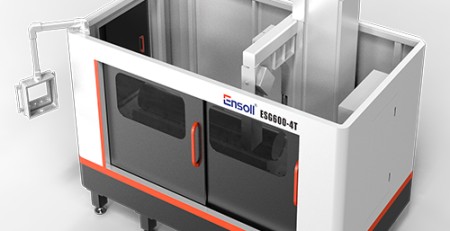
Diamantdrahtsäge Schneiden: Diamantdrahtsägemaschinen, die mit hochwertigen diamantbeschichteten Drähten ausgestattet sind, werden eingesetzt, um Graphitblöcke präzise und effizient zu schneiden. Die Härte und Abriebfestigkeit des Diamantdrahtes sorgen für saubere und präzise Schnitte, ohne die Integrität des Graphitmaterials zu beeinträchtigen.
Vorteile: Das Schneiden von Diamantdrahtsägen sorgt für glatte Kanten, Minimaler Materialabfall, und hohe Schnittgeschwindigkeiten, Dies macht es zu einer bevorzugten Methode für die Verarbeitung von Graphit in Industrien, die präzise Abmessungen und hervorragende Oberflächengüten erfordern.
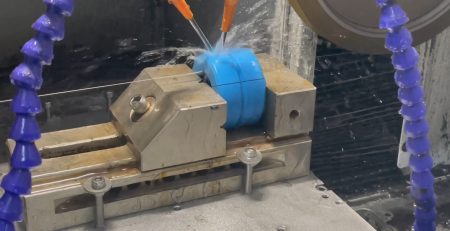
Two practical points govern graphite machining. Zuerst, graphite is soft but brittle and abrasive at the same time: edges crumble under mechanical load, and tooling wears quickly. Zweitens, the dust it produces is electrically conductive — it contaminates spindles, guides and electronics, and it is a health hazard. Water cooling or strong extraction is therefore not optional.
The full comparison of sawing, milling, reibend, wire EDM and diamond wire cutting — with coolant and dust-handling rules — is covered in our graphite cutting methods guide.
Schließlich:
Graphit‘s remarkable properties, Vielfältige Anwendungen, und die fortschrittlichen Bearbeitungstechniken, die bei der Verarbeitung erforderlich sind, inklusive Diamantdrahtsäge Schneiden, unterstreichen seine Bedeutung als Wertstoff in modernen industriellen Prozessen. Das Verständnis der Feinheiten von Graphit öffnet die Türen zu innovativen Lösungen in einer Vielzahl von Branchen, Förderung von Fortschritt und Effizienz in Fertigungs- und Technologiesektoren.
Häufig gestellte Fragen
Is graphite a metal?
Nein. Graphite is a non-metal — an allotrope of carbon, like diamond and fullerenes. It conducts electricity, which is why it is sometimes called a semimetal, but it has none of the metallic properties such as malleability or ductility.
Is graphite a mineral or a manufactured material?
Both exist. Natural graphite is a mineral, mined as flake, amorphous or vein material. Synthetic graphite is manufactured by graphitising petroleum coke or coal-tar pitch.
What is graphite used for?
Refractories and crucibles, electrodes for steel and aluminium production, lithium-ion battery anodes, dry lubricants, and automotive parts such as gaskets and brake linings.
Braucht das Schneiden von Graphit Kühlmittel??
Ja. Wasserkühlung oder starke Extraktion ist unerlässlich. Graphite dust is electrically conductive and damages spindles, guides and electronics, and it is a health hazard.
Can graphite be cut with a diamond wire?
Ja. Diamond wire saws cut graphite blocks, contours and profiles with smooth edges and minimal material loss. Graphite’s abrasiveness wears conventional blades quickly, which is why diamond tooling is preferred.
Technische Inhalte überprüft vom Ensoll-Engineering-Team — ein Hersteller von Diamantdrahtschleifen mit 10+ Jahre der Produktionserfahrung.
Wichtige Erkenntnisse
Ferrit (Keramik) Magneten sind gesintertes Eisenoxid mit Strontium- oder Bariumcarbonat: günstig, korrosionsbeständig und stabil bis 250... mehr lesen
Wichtige Erkenntnisse
Dünnschicht-PV-Materialien wie CdTe, CIGS und a-Si benötigen präzises Schneiden, das sowohl thermische als auch mechanische Schäden vermeidet.
Diamant... mehr lesen
Die Einstellungen für das Schneiden in einer Richtung und das Schneiden in beiden Richtungen sind spezifische Schneidprogramme, die von Einzeldraht Diamant-Drahtsägen... mehr lesen
In der Welt der Edelstein- und Hartstoffbearbeitung, Präzision ist nicht nur ein Luxus – sie ist eine absolute Notwendigkeit. Seit Jahrhunderten,... mehr lesen
Eine umfassende Studie über präzises Schneiden von φ330 mm Siliziumstäben mit der Ensoll ESC600-4T Diamantdraht-Schneidemaschine. Behandelt... mehr lesen
Im Bereich der modernen Materialwissenschaften, haben nur wenige Innovationen einen so tiefgreifenden Einfluss gehabt wie Neodym-Eisen-Bor (NdFeB) Dauermagnete.... mehr lesen
Das diamantgeschlungene Drahtschneiden besitzt mehrere wesentliche Vorteile im Bereich der Bearbeitung von magnetischen Materialien, was es zu einem idealen Steckling macht.. mehr lesen
Die Photovoltaik- und Halbleiterindustrie basiert auf Präzision. Jedes Mikrometer zählt bei der Herstellung von Siliziumwafern, wo die Materialintegrität direkt... mehr lesen
Wichtige Erkenntnisse
Das Schneiden von Halbleiterkristallen verwandelt Rohblöcke in Wafer, und der Schneideschritt bestimmt sowohl Ausbeute als auch nachgelagerte Oberflächenqualität.
Diamant... mehr lesen