Lavorazione di vetro di precisione: Dal prototipo alla produzione
L'industria ottica richiede estrema precisione, sia per la produzione di ottiche a livello di wafer, preparazione di vetrini per microscopi, o su misura taglio ottico del vetro servizi. Manufacturers must balance speed, accuratezza, e convenienza economica rispettando standard rigorosi come ISO 10110 taglio conforme.
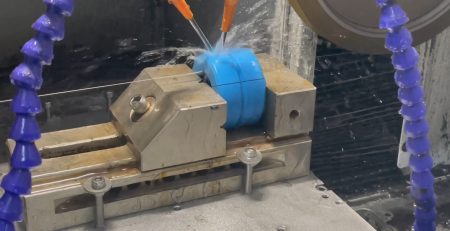
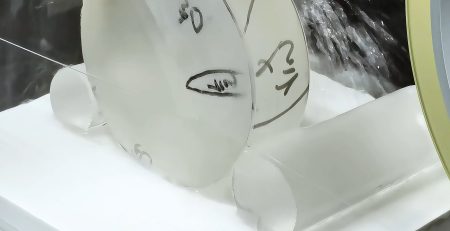
- Wafer-level optics production fabricates many components on a single glass wafer before singulation — the cost-effective route for smartphone cameras, AR/VR lenses and medical imaging, where diamond wire saws deliver chip-free separation.
- Microscope slides and custom optical glass cutting depend on low-stress machining: spessore uniforme, scratch-free edges and fast turnaround without stress fractures.
- For prototype glass machining, diamond wire wins over laser and waterjet because it leaves no heat-affected zone and its parameters adjust to fused silica, borosilicate and other glass types.
- High-volume optics production uses automated diamond wire saw machines to minimize kerf loss, keep batch consistency (critical for automotive LiDAR) and run 24/7 with lower labor cost.
- Glass wafer singulation with diamond wire achieves cuts as narrow as 50 micrometers with minimal chipping, and ISO 10110 compliant cutting keeps optical clarity and dimensional accuracy.
Advanced techniques such as taglio con sega a filo diamantato have revolutionized glass processing, consentendo la lavorazione di prototipi di vetro e la produzione in grande volume di ottiche con minimi sprechi. In questo blog, esamineremo le principali applicazioni, inclusa la singolazione dei wafer di vetro e la subfornitura di componenti ottici, while highlighting the role of diamond cutting wire loops and diamond wire saw cutting machines in achieving superior results.
Scaling from prototype to volume usually exposes the same defects, which is why the process notes on taglio ottico del vetro focus on repeatability.
Wafer-Level Optics Production: Precision at Scale
Wafer-level optics (WLO) manufacturing involves producing multiple optical components on a single glass wafer before separating them. This method is cost-effective for high-volume optics production, especially in smartphone cameras, AR/VR lenses, and medical imaging devices.
Key Challenges & Solutions:
– Glass wafer singulation must be ultra-precise to avoid micro-cracks.
– Diamond wire saw cutting machines provide clean, senza bave.
– ISO 10110 compliant cutting ensures optical clarity and dimensional accuracy.
By using diamond cutting wire loops, manufacturers achieve smooth, chip-free separation, reducing post-processing needs.
Microscope Slide Preparation: Consistency Matters
Microscope slides require flawless surfaces for accurate biological and material analysis. Traditional cutting methods can introduce stress fractures, but low-stress glass machining with diamond wire saws ensures:
✔ Uniform thickness – Critical for imaging precision.
✔ Scratch-free edges – Prevents sample contamination.
✔ Fast processing – Ideal for laboratories and industrial suppliers.
This approach is also used in custom vetro ottico cutting services, where specific dimensions and edge quality are crucial.
Custom Taglio del vetro ottico Servizio: Tailored Solutions
Not all optical applications use standard glass sizes. Prototype glass machining and small-batch production require flexibility, which is where custom optical glass cutting services excel.
Industries That Benefit:
– Aerospaziale (laser windows, sensor covers)
– Medical devices (endoscope lenses, lab equipment)
– Consumer electronics (camera lenses, display panels)
Un macchina da taglio per sega a filo diamantato enables rapid prototyping with high repeatability, ensuring quick turnaround times for specialized orders.
Prototype Glass Machining: Speed Without Sacrificing Quality
Before mass production, optical components often undergo prototype glass machining to test designs. Traditional methods like laser cutting or water jets can cause thermal stress or rough edges.
Why Diamond Wire Saws Are Ideal for Prototyping:
– No heat-affected zones – Maintains material integrity.
– Adjustable cutting parameters – Supports various glass types (silice fusa, borosilicate).
– High precision – Reduces the need for multiple iterations.
This makes them perfect for R&D teams developing next-gen optics.
High-Volume Optics Production: Efficienza & Precisione
Mass-producing optical components requires both speed and accuracy. High-volume optics production leverages automated diamond wire saw cutting machines to:
✔ Minimize kerf loss – Maximizes material usage.
✔ Ensure batch consistency – Critical for industries like automotive LiDAR.
✔ Reduce labor costs – Automation allows 24/7 operation.
Companies specializing in optical component subcontracting rely on this technology to meet large-scale orders efficiently.
Optical Component Subcontracting: Outsourcing Precision
Many OEMs outsource their glass machining needs to specialized suppliers. Optical component subcontracting offers:
– Access to advanced diamond wire cutting technology without heavy capital investment.
– Expertise in ISO 10110 compliant cutting for regulated industries.
– Scalability – From prototypes to millions of units.
This model is particularly useful for startups and tech firms needing high-quality optics without in-house capabilities.
Glass Wafer Singulation: Clean Separation for Optics & Semiconduttori
In both optics and semiconductor industries, glass wafer singulation is a critical step. The process involves cutting individual dies from a larger wafer without damaging them.
Why Diamond Wire Saws Dominate This Process:
– Thin, precise cuts – As narrow as 50µm.
-Minimal chipping – Essential for sensitive optical layers.
– High throughput – Cuts multiple wafers in a single run.
This method is widely used in wafer-level optics production and microelectronics
ISO 10110 Compliant Cutting: Meeting Industry Standards
Manufacturers using diamond wire saw cutting machines consistently meet these requirements, making them preferred partners for high-end optical applications.
Filo diamantato da taglio a loop vs. Metodi Tradizionali
Compared to blades or lasers, diamond cutting wire loops offer:
✅ Thinner kerf – Less material waste.
✅ Longer lifespan – Lower tool replacement costs.
✅ Superior edge quality – No polishing needed.
This makes them indispensable in modern glass wafer singulation and high-volume optics production.
Tagliatrice per sega a filo diamantato: The Future of Precision Glass Machining
The latest diamond wire saw cutting machines feature:
– Automated loading/unloading – For continuous production.
– AI-based process control – Optimizes speed and precision.
– Multi-axis cutting – Enables complex geometries.
These advancements make them ideal for prototype glass machining, custom optical glass cutting services, and large-scale manufacturing.
Conclusione
From wafer-level optics production to microscope slide preparation, precision glass machining has evolved dramatically. Technologies like diamond wire saw cutting machines and ISO 10110 compliant cutting ensure high-quality results in both prototype glass machining and high-volume optics production.
For companies seeking efficiency, outsourcing to optical component subcontracting specialists with advanced diamond wire cutting capabilities is a smart strategy. Whether you need glass wafer singulation or a custom optical glass cutting service, investing in the right technology ensures superior performance and cost savings.
Domande Frequenti
What is wafer-level optics production?
It is a manufacturing method where multiple optical components are produced on a single glass wafer and then separated. This is cost-effective for high-volume products such as smartphone cameras, AR/VR lenses and medical imaging devices, provided the singulation step is ultra-precise to avoid micro-cracks.
Why are diamond wire saws preferred for glass wafer singulation?
They cut as narrow as 50 micrometers with minimal chipping, which is essential for sensitive optical layers, and they can process multiple wafers in a single run for high throughput. The result is clean, burr-free edges that reduce post-processing.
What does ISO 10110 compliant cutting mean?
ISO 10110 is the international standard for optical component specifications. Cutting that complies with it guarantees the optical clarity and dimensional accuracy required by regulated industries such as aerospace, medical devices and defense optics.
When should a company outsource optical glass cutting?
Outsourcing to an optical component subcontracting specialist makes sense when you need prototypes or small batches quickly, want ISO 10110 level quality without heavy capital investment, or need to scale from single prototypes to millions of units.
Revisionato dal team di ingegneria Ensoll.