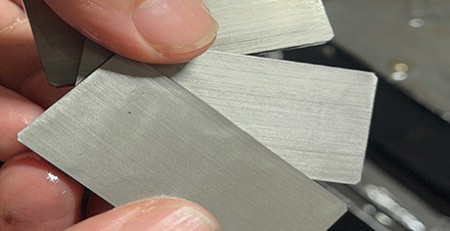
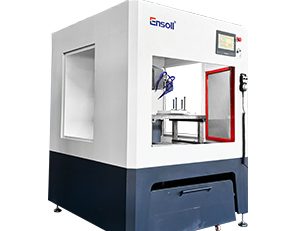
CNCフライス盤で磁性材料を切断できるか?
- CNC milling can cut softer magnetic materials — low-carbon electrical steels, nickel alloys like Permalloy and soft ferrites — but struggles with hard, brittle magnets.
- On NdFeB, hard ferrites and high-carbon steels, milling faces rapid tool wear, heat that can demagnetize the part, and brittle fracture at edges.
- Diamond wire loop cutting is the better route for hard magnetic materials: thin kerf saves expensive material, coolant prevents demagnetization, and tolerances reach ±0.05 mm crack-free.
- Rule of thumb: soft magnetic steels and nickel alloys → CNC milling with carbide tools and coolant; neodymium magnets and ferrite cores → diamond wire loop.
CNC milling machines are highly versatile tools capable of cutting a wide range of materials, 金属を含む, plastics, および複合材料. But when it comes to magnetic materials, particularly hard and brittle ones like neodymium magnets, ferrites, and certain steel alloys, the question arises: Can a CNC mill effectively cut them?
The short answer is yes, but with limitations. While CNC milling can handle some magnetic materials, hard and brittle magnetic substances often require alternative methods like ダイヤモンドワイヤーループ cutting for precision and efficiency.
この記事の内容, we’ll explore:
– The challenges of cutting magnetic materials with CNC milling
– When CNC milling is suitable vs. when diamond wire cutting is better
– Best practices for machining magnetic materials

Wire cutting is usually the better answer here, for the reasons set out in how to cut neodymium magnets.
1. Can a CNC Milling Machine Cut Magnetic Materials?
はい, but with Challenges
CNC milling machines can cut softer magnetic materials such as:
– Low-carbon steels (例えば。, electrical steel laminations)
– Some nickel alloys (例えば。, Permalloy)
– Soft ferrites (for electronics)
しかし, hard and brittle magnetic materials like:
– ネオジム (NdFeB) magnets
– Hard ferrites (ceramic magnets)
– Certain high-carbon steels
…pose significant challenges due to:
✔ Tool Wear – Hard magnetic materials rapidly degrade cutting tools.
✔ Heat Generation – Excessive heat can demagnetize the material.
✔ Brittle Fracture Risk – Chipping and cracking are common.
When CNC Milling Works Best
– For softer magnetic metals where precision machining is needed.
– When cutting slots, holes, or complex shapes in magnetic components.
– For prototyping or low-volume production where diamond wire cutting isn’t cost-effective.
- Why ダイヤモンドワイヤーループ Cutting is Better for Hard Magnetic Materials
For ultra-hard or brittle magnetic materials, diamond wire loop cutting is often the superior choice.
Advantages of Diamond Wire Cutting:
✅ Minimal Material Loss – Thin kerf (cut width) preserves expensive materials.
✅ No Heat Damage – Coolant prevents demagnetization.
✅ Smooth, Crack-Free Cuts – Ideal for brittle magnets.
✅ High Precision – Can achieve tight tolerances (±0.05ミリメートル).
Common Applications:
– Slicing neodymium magnets for motors and sensors.
– Cutting ferrite cores for transformers and inductors.
– 廃棄物を最小限に抑えた希土類磁性合金の加工方法.
3. 磁性材料の切削におけるベストプラクティス
オプション 1: CNCフライス加工 (軟らかい磁石向け)
– 摩耗を減らすためにカーバイドまたはダイヤモンドコーティングエンドミルを使用する.
– 過熱や脱磁を防ぐために冷却液を使用する.
– チッピングを避けるために送り速度を最適化する.
オプション 2: ダイヤモンドワイヤー切断 (硬く脆い磁石向け)
– より滑らかな切断のために細かい粒度のダイヤモンドワイヤーを使用する.
– ワイヤーの破損を防ぐために適切な張力を維持する.
– 切削効率を高めるために水ベースの冷却液を使用する.
結論: どの方法を選ぶべきか?
| 材料の種類 | 最適な切削方法 |
| 軟磁性鋼 | CNCフライス加工 |
| ネオジム磁石 | ダイヤモンドワイヤーループ |
| フェライトコア | ダイヤモンドワイヤーループ |
| ニッケル合金 | CNCフライス加工 (冷却液を使用) |
CNCフライス加工でいくつかの磁性材料を切削できるが, 硬く脆い磁石は最適な結果を得るためにダイヤモンドワイヤー切削が必要なことが多い.
最終推奨:
✔ 軟磁石の精密成形には → カーバイド工具を使ったCNCフライス加工を使用する.
✔ For slicing hard/brittle magnets → Diamond wire loop is the best solution.
✔ For industrial-scale production → Consider automated diamond wire cutting systems.
By choosing the right method, you can maximize efficiency, 廃棄物の削減, and maintain material integrity.
よくある質問
Can a CNC milling machine cut neodymium magnets?
Technically yes, but it is not recommended: NdFeB is hard and brittle, so milling causes rapid tool wear, edge chipping and heat that can locally demagnetize the magnet. Diamond wire loop cutting delivers clean ±0.05 mm cuts without those risks.
Which magnetic materials can be CNC milled safely?
Softer magnetic metals: low-carbon electrical steels, nickel alloys such as Permalloy, and soft ferrites. Use carbide or diamond-coated end mills, flood coolant and conservative feed rates to limit wear and heat.
Why does heat matter when machining magnets?
Every magnet grade has a temperature limit; exceeding it, even locally, permanently reduces magnetic output. Milling generates concentrated heat at the tool tip, while diamond wire cutting flushes the zone with coolant and keeps the magnet safely below its threshold.
When is diamond wire cutting more cost-effective than milling?
Whenever the material is hard, brittle or expensive: the wire’s thin kerf wastes far less rare-earth stock, edges come off crack-free without secondary finishing, and tolerances of ±0.05 mm are routine. For soft steels and quick prototypes, milling remains cheaper and faster to set up.
Ensollエンジニアリングチームによるレビュー.