Graphite is a non-metal form of carbon — one of its allotropes, 다이아몬드 및 풀러렌과 함께. It is the exception among non-metals in that it conducts both electricity and heat, because each carbon atom bonds to only three others in its layer, leaving one electron free to move. Natural graphite is a mineral; synthetic graphite is manufactured from petroleum coke or coal-tar pitch. This page covers what graphite is, its key properties, how it is used, and how it is machined — including diamond wire loop cutting of graphite blocks.
주요 요점
Graphite is a non-metal — an allotrope of carbon, not a metal. It conducts electricity and heat, which is why it is used for electrodes.
Its layered hexagonal structure gives it lubricity, 화학적 불활성, and a sublimation point of about 3,900 K (roughly 3,627 °씨) at standard pressure.
It begins to oxidise in air above about 450 °씨, so the real service limit depends on atmosphere, not temperature alone.
Machining graphite is harder than its softness suggests: it is soft, brittle and abrasive at the same time, and its dust is electrically conductive.
What Graphite Is
Graphite is one of the allotropes of carbon. Its carbon atoms are arranged in hexagonal lattices that stack into flat sheets, commonly called graphene layers. Within a layer the atoms are held together by strong covalent bonds; between layers only weak Van der Waals forces act. That single structural fact explains most of graphite’s behaviour — the layers slide over one another, which is lubricity, and the delocalised electron in each layer carries current, which is conductivity.
Diamond is also pure carbon, but its atoms are bonded into a three-dimensional tetrahedral network. Same element, opposite properties: diamond is the hardest natural material, while graphite is soft enough to mark paper.
소개:
석묵, 탄소의 결정 형태, 고유한 특성과 다양한 응용 분야로 인해 다양한 산업 분야에서 중추적인 위치를 차지하고 있습니다. 이 종합 가이드에서, 흑연의 특성을 탐구합니다, 산업 전반에 걸친 다양한 용도, 그리고 흑연을 가공하는 복잡한 과정, 다이아몬드 와이어 톱 기술을 사용한 흑연 절단 포함.
1. 흑연의 특성:
흑연은 다른 재료와 구별되는 탁월한 특성이 특징입니다:
구조: Graphite features a layered structure with hexagonally arranged carbon atoms, providing it with lubricious and slippery qualities.
Conductivity: It exhibits high thermal and electrical conductivity, making it a valuable material in applications requiring heat and electricity conduction.
Lubrication: Graphite’s layered structure allows for easy slippage between layers, making it an excellent dry lubricant in various mechanical applications.
화학적 불활성: Graphite is chemically inert and resistant to most acids, bases, and solvents, contributing to its durability and longevity in harsh environments.
Key Properties at a Glance
Property
값 / behaviour
Why it matters in practice
구조
Hexagonal layers (graphene sheets), weak Van der Waals forces between layers
Lubricity and easy cleavage; anisotropy in almost every property
Sublimation point
Approximately 3,900 K (약 3,627 °씨) at standard pressure
It does not melt — it goes straight from solid to gas, so it survives extreme temperature
Oxidation onset in air
Above roughly 450 °씨
Sets the real service limit for open-air use; inert atmospheres push it much higher
Strength vs temperature
Increases when heated from room temperature to about 2,500 °씨
Unlike most materials, it gets stronger when hot
Thermal expansion
Low coefficient of thermal expansion
Resists thermal shock — the cracking caused by rapid temperature change
Electrical conductivity
높음, and anisotropic — much higher parallel to the layers than across them
Enables electrodes; also makes machining dust a contamination hazard
Chemical resistance
Inert to most acids, alkalis and corrosive gases at moderate temperature
Crucibles, reaction vessels, and components in harsh environments
경도
Soft — roughly Mohs 1–2
Easy to mark, yet abrasive to tooling because of how it wears
Is Graphite a Metal?
아니요. Graphite is a non-metal. It is carbon, and carbon is not a metal. Graphite is sometimes described as a semimetal because it conducts electricity, but that describes its behaviour rather than its classification — it does not have metallic bonding, and it is neither malleable nor ductile in the way metals are.
The confusion is understandable. Graphite is the only common non-metal that conducts electricity well, it has a metallic-looking sheen, and it is used in places where metals normally appear: 전극, brushes, heat sinks. For specification and procurement purposes, treat it as a non-metal with metal-like electrical and thermal behaviour.
Natural Graphite and Synthetic Graphite
Natural graphite is a mineral. It forms in metamorphic rocks and is mined as flake, amorphous (fine-grained) or vein (lump) material, so its properties vary from deposit to deposit.
Synthetic graphite is not a mineral — it is manufactured by graphitising petroleum coke or coal-tar pitch at high temperature. It is more consistent and purer, which is why battery anodes, electrodes and semiconductor components generally use synthetic grades.
For machining, the distinction matters twice over. Synthetic grades are more uniform, so a proven parameter set transfers from batch to batch. And both families are abrasive and produce conductive dust, so dust control is identical either way.
2. Uses of Graphite:
Graphite finds extensive applications across diverse industries due to its unique properties:
Refractories: Graphite is used in refractory materials for its high thermal stability and resistance to heat, making it ideal for lining furnaces and crucibles.
Electrodes: It serves as electrodes in the manufacturing of steel, 알루미늄, and other metals due to its excellent conductivity and high temperature resistance.
Batteries: Graphite is a key component in lithium-ion batteries, providing stability and conductivity in energy storage systems.
Automotive Industry: It is used in various automotive components, such as gaskets and brake linings, for its self-lubricating and thermal management properties.
3. Processing Graphite:
Graphite processing involves intricate techniques to shape and refine the material for specific applications. One crucial method iscutting graphitewith diamond wire saw technology:
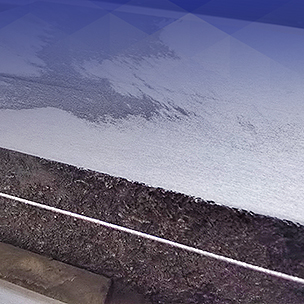
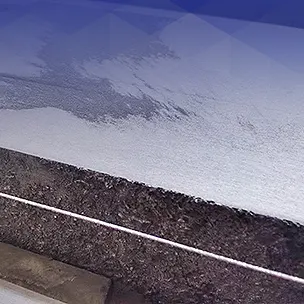
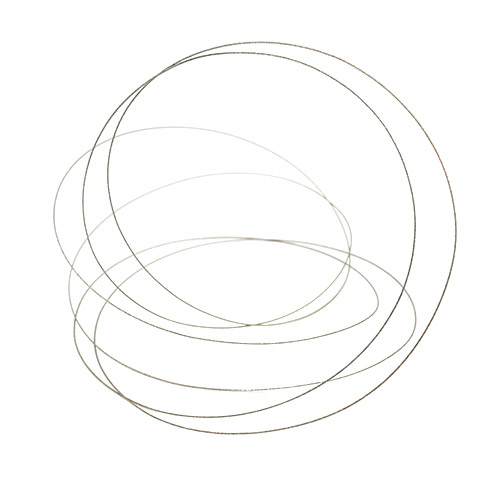
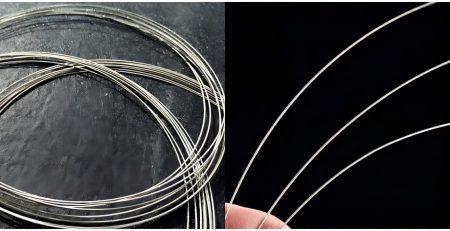
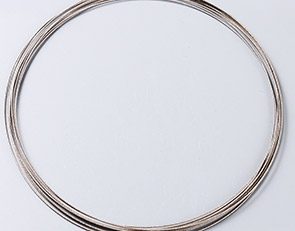
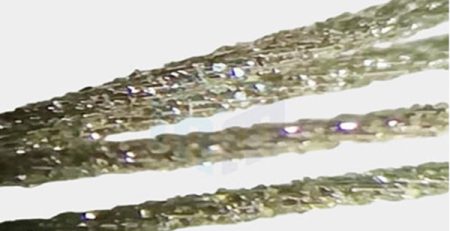
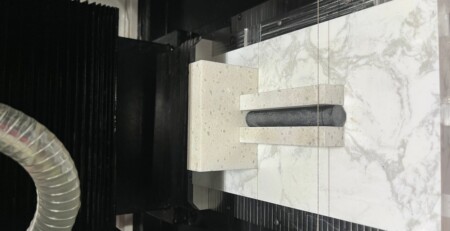
Diamond Wire Saw Cutting: Diamond wire saw machines equipped with high-quality diamond-coated wires are utilized to cut graphite blocks with precision and efficiency. The hardness and abrasion resistance of the diamond wire ensure clean and accurate cuts without compromising the integrity of the graphite material.
장점: Diamond wire saw cutting provides smooth edges, minimal material wastage, and high cutting speeds, making it a preferred method for processing graphite in industries requiring precise dimensions and superior surface finishes.
Two practical points govern graphite machining. 첫째, graphite is soft but brittle and abrasive at the same time: edges crumble under mechanical load, and tooling wears quickly. Second, the dust it produces is electrically conductive — it contaminates spindles, guides and electronics, and it is a health hazard. Water cooling or strong extraction is therefore not optional.
The full comparison of sawing, milling, 연 삭, wire EDM and diamond wire cutting — with coolant and dust-handling rules — is covered in our graphite cutting methods guide.
결론:
석묵‘s remarkable properties, diverse applications, and the advanced machining techniques involved in its processing, including diamond wire saw cutting, underscore its significance as a valuable material in modern industrial processes. Understanding the intricacies of graphite opens doors to innovative solutions across a wide range of industries, driving progress and efficiency in manufacturing and technology sectors.
자주 묻는 질문
Is graphite a metal?
아니요. Graphite is a non-metal — an allotrope of carbon, like diamond and fullerenes. It conducts electricity, which is why it is sometimes called a semimetal, but it has none of the metallic properties such as malleability or ductility.
Is graphite a mineral or a manufactured material?
Both exist. Natural graphite is a mineral, mined as flake, amorphous or vein material. Synthetic graphite is manufactured by graphitising petroleum coke or coal-tar pitch.
What is graphite used for?
Refractories and crucibles, electrodes for steel and aluminium production, lithium-ion battery anodes, dry lubricants, and automotive parts such as gaskets and brake linings.
흑연 절단에 냉각수가 필요한가?
예. 수냉 또는 강한 추출이 필수. Graphite dust is electrically conductive and damages spindles, guides and electronics, and it is a health hazard.
Can graphite be cut with a diamond wire?
예. Diamond wire saws cut graphite blocks, contours and profiles with smooth edges and minimal material loss. Graphite’s abrasiveness wears conventional blades quickly, which is why diamond tooling is preferred.
Ensoll 엔지니어링 팀이 검토한 기술 내용 — 다이아몬드 와이어 루프 제조사와 함께 10+ 다년간의 생산 경험을 가진 회사.