Алмазная проволочная петля в передовом производстве
В современном промышленном производстве, способность чисто разделять материалы является фундаментальным условием для последующих этапов обработки. по мере развития инженерных приложений, материалы, которые используются, становятся все более сложными — от ультра-твердых кристаллических структур до сильно абразивных композитов и хрупких многослойных основ. традиционные абразивные пилы и методы термической резки часто не справляются с этими сложными составами, часто вызывая структурные дефекты или неприемлемые потери материала.
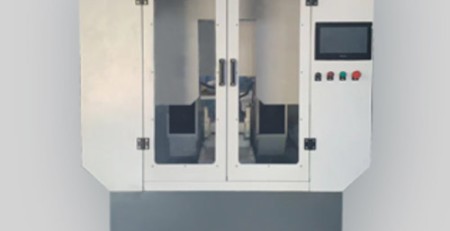
чтобы преодолеть эти производственные узкие места, производственные отрасли по всему миру обратились к сочетанию высокопроизводительных алмазных ленточных резательных станков и их необходимых, высокоскоростных расходных материалов: алмазной проволочной петли. понимая специфическое взаимодействие между этой бесконечной абразивной петлей и различными классами материалов, production facilities can optimize their separation processes for maximum structural integrity.
—
The Universal Cutting Mechanism: Micro-Abrasive Friction
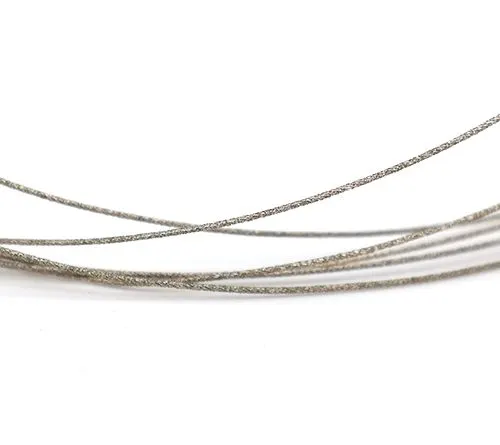
The operational success of the Петля из алмазной проволоки across vastly different material types lies in its fundamental physics. Rather than utilizing a sharp, wedge-like edge to shear through material (as seen in traditional metal saw blades) or relying on localized thermal energy to melt a path (as seen in laser or plasma cutting), the loop operates via a continuous micro-abrasive grinding process.
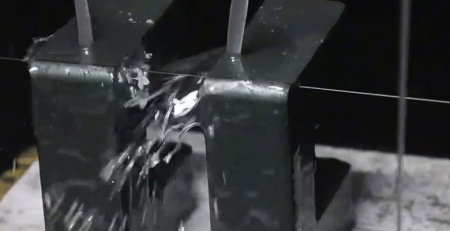
Because microscopic diamond particles are securely bonded to an endless, high-tensile steel core, the loop acts as a moving matrix of thousands of miniature grinding teeth. Driven by the motorized pulley system of a dedicated cutting machine, the loop travels continuously in a single direction at high linear velocities. When brought into contact with a workpiece, these diamond grains execute micro-fracturing and micro-plowing actions on the material’s surface, removing minuscule particles in the form of fine powder or chips. This mechanical action avoids imparting macro-forces or intense thermal stress to the workpiece, making it highly adaptable to a diverse spectrum of materials.
—
Класс 1: Hard, Brittle Crystalline and Semiconductor Materials
Slicing hard and brittle substrates is perhaps the most critical and economically vital application for the diamond wire loop. Materials such as монокристаллический кремний, Карбид кремния ($SiC$), нитрид галлия ($GaN$), and sapphire form the backbone of the semiconductor, power electronics, and optics industries.
Overcoming Chipping and Cracking
Основная проблема этих кристаллов заключается в их чрезвычайной твердости в сочетании с низкой вязкостью разрушения. При традиционных методах пиления, вибрация и высокая механическая нагрузка вызывают значительные сколы по краям, подповерхностные повреждения, и микро-трещины, что может испортить электрические или оптические свойства всей пластинки.
Преимущество однонаправленного метода
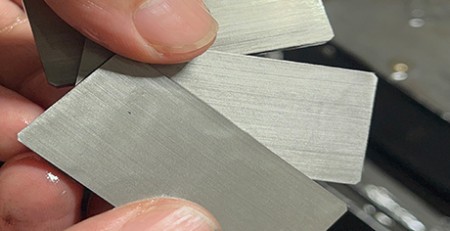
Непрерывное, плавное вращение алмазной петли исключает резкие удары, характерные для возвратно-поступательных систем. Режущий станок направляет петлю с равномерным натяжением и программируемой скоростью подачи, позволяя алмазной крошке аккуратно стирать твердую кристаллическую структуру. Это гарантирует, что кристаллическая решетка остается полностью непотревоженной под поверхностью реза, в результате чего получаются безупречные заготовки, требующие минимальной последующей доработки.
—
Класс 2: Передовые технические керамика и стекло
Engineering ceramics—including alumina, Циркония, нитрид кремния, and boron carbide—are favored in aerospace and industrial applications for their exceptional wear resistance, термическая стабильность, and hardness. Подобным образом, оптическое стекло, кварц, and fused silica are foundational to high-end scientific instruments.
The Problem with Conventional Tooling
Because technical ceramics are engineered specifically to resist mechanical wear, they rapidly dull conventional cutting blades. Кроме того, their brittle nature makes them highly susceptible to catastrophic cracking during machining.
Consistent Abrasive Refreshing
When a diamond wire loop cuts through technical ceramics or оптическое стекло, the machine’s cooling and flushing system plays a dual role. It removes the highly abrasive ceramic swarf from the cutting zone and controls the localized friction. As the loop rotates, the diamond particles consistently degrade the ceramic surface. Because the wear is distributed evenly across the entire length of the endless loop, the tool maintains a sharp, aggressive cutting profile throughout the operation, preventing tool glazing and ensuring a continuous, fluid separation.
—
Класс 3: Soft, Эластичный, and Composite Materials
While it is intuitive that a diamond tool can cut hard substances, the diamond wire loop is equally effective when processing soft, gummy, or heterogeneous materials. This category includes heavy rubber, multi-layered vehicle tires, graphite anodes, reinforced carbon fibers, and insulation materials.
Preventing Material Deformation and Binding
When cutting elastic materials like rubber or polymer composites with standard blades, the material tends to deform under the blade’s pressure, creating massive friction, жара, and eventual binding (where the blade gets trapped). For composite materials like carbon fiber, traditional sawing causes severe delamination and fraying of the structural fibers.
Clean Matrix Dissociation
The ultra-high speed of the diamond wire loop ensures that the diamond particles interact with the soft or composite material faster than the material can elastically deform. In composites, the diamonds cleanly sever both the hard carbon fibers and the soft resin matrix simultaneously, achieving a perfectly clean cross-section without pulling the fibers apart or melting the polymer binder. For rubber and tires, the loop easily transitions from the elastic outer rubber layers directly through the embedded steel reinforcement belts without requiring a change in tooling or introducing mechanical imbalance.
—
Оптимизация синергии расходных материалов и станка для конкретных материалов
Для достижения оптимальных результатов при работе с различными классами материалов, инженерам по производству необходимо рассматривать станок для резки алмазной проволоки и расходные материалы алмазной проволочной петли как взаимосвязанную экосистему, настраивая параметры на основе конкретного профиля материала:
Для сверхтвердых материалов: Станок программируется на высококонтролируемую, консервативную скорость погружения с максимальной линейной скоростью проволоки. Это позволяет микроабразивным алмазам эффективно работать без перегрузки прочности основной проволоки на разрыв. Непрерывная подача жидкого охлаждающего средства обязательна для удаления плотной стружки и поддержания теплового баланса.
Для мягких или пористых материалов: Некоторые материалы, такие как графит или определенные изоляционные пены, могут впитывать жидкости или загрязняться при влажной резке. For these applications, the loop is run in a completely dry environment. The cutting machine is often paired with a specialized dust extraction system to capture the fine particulates immediately as they are generated by the loop.
—
Заключение
From the rigid, unforgiving atomic structures of semiconductor crystals to the flexible, multi-layered matrices of reinforced rubber, the diamond wire loop has proven to be an indispensable asset in modern industrial separation. By relying on a continuous, low-stress, micro-abrasive cutting mechanism rather than blunt force or heat, this advanced consumable—when paired with a precision cutting machine—allows manufacturers to conquer the challenges of material variety, ensuring clean, predictable, and structurally sound results across every application.