Понимание неодимовых магнитов: Полное руководство
В области современной науки о материалах, немногие инновации оказали столь глубокое влияние, как неодим-железо-бор (НдФеБ) постоянные магниты. С момента их открытия 1982 Масато Сагава в Sumitomo Special Metals, эти замечательные материалы произвели революцию в отраслях от потребительской электроники до возобновляемой энергетики . С наивысшей магнитной энергией среди всех коммерчески доступных магнитов, neodymium magnets have earned their title as the “King of Magnets” and continue to drive technological advancement across the global economy .
- Неодим (НдФеБ) is the strongest commercial permanent magnet, with energy products up to 52 MGOe from its Nd2Fe14B tetragonal crystal structure — the ‘King of Magnets’.
- Two types exist: спеченные NdFeB (highest performance, needs nickel/zinc/epoxy coating) and bonded NdFeB (isotropic and corrosion-resistant, but limited to about 16 MGOe).
- Key limits: хрупкость, corrosion susceptibility, and rapid strength loss above 80 degC unless heavy-rare-earth grades are used (до 230 °C).
- Diamond wire saw machining reaches Sa 0.32 micrometer surfaces and ±0.05 mm tolerances, and has produced micro-magnets just 80 micrometers thick — all without thermal damage to magnetic properties.
- NdFeB is 5-10 times stronger than ferrite but roughly ten times more expensive; the right choice depends on performance versus cost.
Sintered NdFeB is brittle and heat-sensitive, so anyone machining it should read up on как резать неодимовые магниты before choosing between grinding, EDM and wire cutting.
 Часть 1: Понимание неодимовых магнитов
Неодимовые магниты, formally known as neodymium-iron-boron (НдФеБ) магниты, are composed of a tetragonal crystal structure of Nd₂Fe₁₄B . This specific crystalline formation is responsible for the material’s exceptional magnetic properties, including high remanence, высокая коэрцитивность, and an extraordinarily high maximum energy product (BHmax) that can reach up to 52 MGOe or higher
There are two primary types of neodymium magnets: sintered and bonded. Sintered NdFeB magnets are produced through a powder metallurgy process, where alloy powders are melted, pulverized, pressed in a magnetic field, and then sintered in inert gas or vacuum to achieve densification . These magnets offer superior magnetic performance but require surface protection through coatings such as nickel, цинк, or epoxy due to their susceptibility to corrosion . Bonded NdFeB magnets, by contrast, are created by mixing NdFeB powder with polymer binders, offering isotropic magnetic properties and excellent corrosion resistance, though with lower magnetic energy products typically not exceeding 16 MGOe .
The magnetic strength of neodymium magnets is truly remarkable—they can lift objects up to 640 times their own weight . This exceptional performance is quantified through various grades, from N35 to N52, with higher numbers indicating greater magnetic energy product. Специальные марки с включением тяжелых редкоземельных элементов, таких как диспрозий и тербий, расширяют рабочие температуры от стандартных 80°C до 230°C для требовательных применений .
Однако, Неодимовые магниты имеют определенные ограничения. Они хрупкие и подвержены сколам или трещинам при ударе . Их температура Кюри составляет от 320°C до 460°C, И магнитные свойства быстро ухудшаются при повышенных температурах, если специально не формулированы с добавлением тяжелых редкоземельных элементов . Эти характеристики делают обработку и применение материалов NdFeB сложной инженерной задачей.
Часть 2: Применение и прецизионная обработка с Алмазная канатная пила
Возможно, самым значительным фактором роста спроса на неодимовые магниты сегодня является переход на чистую энергетику. В электромобилях, каждому синхронному двигателю с постоянными магнитами требуется 2-5 кг спеченных магнитов NdFeB, повышая эффективность привода на 15% по сравнению с обычными двигателями . Только сектор новых энергетических транспортных средств в Китае потребляет более 35% от производства редкоземельных магнитов, траектория спроса остается высокой . Подобным образом, Оффшорные ветряные турбины все чаще используют генераторы с прямым приводом на постоянных магнитах, одна турбина мощностью 16 МВт требует до 30 тонн неодимовых магнитов .
Новые варианты применения включают человекоподобную робототехнику, where joint motors demand high power density and precision control—each robot may require 15-20 kg of NdFeB magnets, three times that of industrial robots . Aerospace applications leverage these magnets in radar systems, microwave isolators, circulators, and magnetic bearings for gyroscopes and turbines .
The Critical Role of Diamond Wire Saw Machining
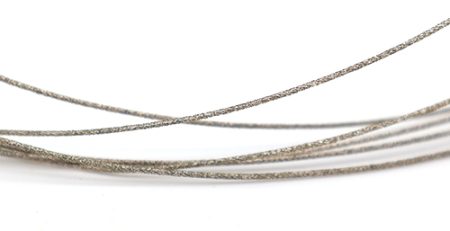
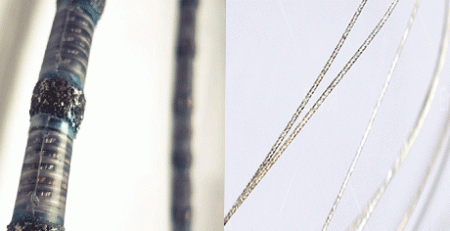
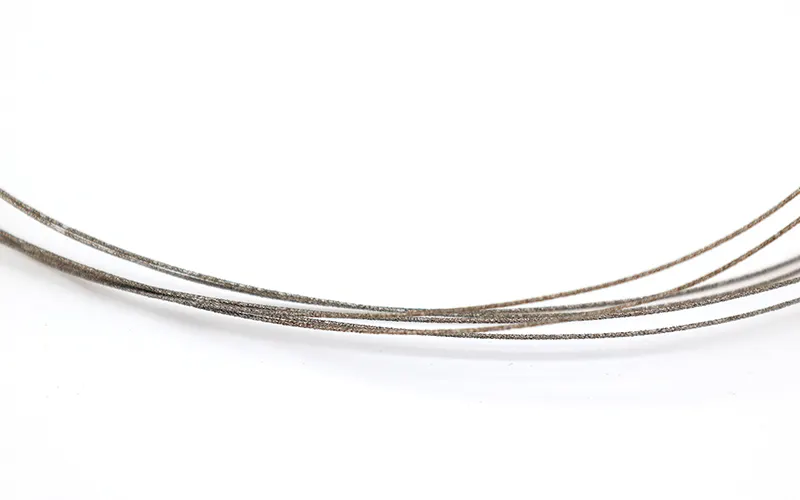
The processing of neodymium magnets presents unique challenges due to their hardness, хрупкость, and sensitivity to thermal damage. Traditional machining methods can induce microcracks, cause surface degradation, and even compromise magnetic properties. This is where алмазная проволочная пила technology has emerged as a game-changing solution.
Recent research published in Precision Engineering demonstrates the efficacy of diamond wire sawing for NdFeB micromachining . The study systematically investigated the effects of wire cutting speed (vc) и скорость подачи (vf) on surface integrity and magnetic performance. Results showed that higher cutting speeds favor surface morphologies dominated by microgrooving and microcutting, while increasing feed rates tend to produce more crater formations .
Remarkably, the diamond wire saw process achieved minimum surface roughness values as low as Sa = 0.32 мкм, Sq = 0.41 мкм, and Sz = 5.93 мкм, demonstrating exceptional surface quality . The technique successfully produced micro-magnets as thin as 80.4 ± 4.6 μm while maintaining strong magnetic properties, with intrinsic coercivity (Hcj) из 1209.5 kA/m and maximum energy product (BH)max of 217.3 kJ/m³ .
The diamond wire saw offers several distinct advantages for NdFeB processing:
Minimal subsurface damage: While some grain pullout and intergranular microcracks occur, нет доказательств термического повреждения, сохранение магнитной целостности
Высокая точность: Техника позволяет достигать допусков по размерам до ±0,05 мм
Сокращение отходов материала: Тонкий пропил минимизирует потерю материала — особенно важно при обработке дорогих редкоземельных материалов
Многосторонность: Алмазная резка проволокой может использоваться для различных геометрий и размеров магнитов, от крупных спеченных блоков до микроскопических компонентов
Для производителей микро-магнитов для медицинских устройств, микроэлектромеханических систем (МЭМС), или миниатюрных датчиков, технология алмазной резки проволокой представляет оптимальный баланс между производительностью, точность, и сохранением магнитных свойств.
Часть 3: Неодимовые магниты против. Ферритовые магниты — сравнительный анализ
 Хотя неодимовые магниты доминируют в высокопроизводительных применениях, феррит (керамический) magnets remain the most widely produced permanent magnets globally due to their cost-effectiveness and unique property profile . Understanding the differences between these two material families is essential for proper material selection.
Magnetic Performance
The most dramatic difference lies in magnetic strength. Neodymium magnets achieve maximum energy products up to 52 MGOe, while ferrite magnets typically range from 1.1 Кому 5.2 MGOe—making NdFeB approximately 5-10 times stronger magnetically . This means that for applications requiring high field strength in compact volumes, such as EV motors or miniaturized electronics, neodymium is the only viable choice.
Composition and Manufacturing
Ferrite magnets are composed primarily of iron oxide (Fe₂O₃) в сочетании с карбонатом стронция или бария, making them essentially ceramic materials . They are produced through conventional ceramic processing methods, resulting in hard, brittle products with limited machinability. Неодимовые магниты, by contrast, contain rare earth elements (approximately 29-32.5% неодим) along with iron (64-68%) и бор (1-1.2%), with possible additions of dysprosium, praseodymium, or other elements for property modification . Their production involves sophisticated powder metallurgy techniques .
Corrosion Resistance and Environmental Stability
Ferrite magnets excel in environmental resistance. They possess excellent inherent corrosion resistance and require no protective coating, making them suitable for outdoor or humid environments . Their operating temperature range extends to 250°C, and they resist demagnetization well .
Неодимовые магниты, однако, are highly susceptible to corrosion due to the chemical reactivity of rare earth elements. They require surface treatments such as nickel-copper-nickel plating, zinc coating, or epoxy protection for use in demanding environments . Their maximum operating temperatures vary by grade from 80°C to 230°C, with high-temperature grades requiring costly heavy rare earth additions .
Cost Considerations
Ferrite magnets offer a dramatic cost advantage, typically being nearly ten times less expensive than equivalent neodymium magnets . Their raw materials are abundant and not subject to the geopolitical supply risks associated with rare earth elements. This makes ferrites the default choice for cost-sensitive applications where moderate magnetic performance suffices.
Machinability and Tolerances
Both materials present machining challenges due to their brittleness, but neodymium magnets offer superior machinability. Dimensional tolerances can reach ±0.05 mm for NdFeB, compared to ±0.1 mm typical for ferrites . Both materials may be machined using diamond tooling, but the higher value and more stringent requirements of neodymium components have driven the adoption of advanced techniques like diamond wire sawing for precision applications .
Application Domains
Neodymium magnets dominate high-performance applications: EV traction motors, wind turbine generators, hard disk drives, МРТ-аппаратах, и аэрокосмические компоненты . Ferrite magnets find their niche in cost-sensitive and moderately demanding applications: громкоговорителях, магниты для холодильника, small DC motors, магнитные сепараторы, and toys .
The choice between these materials ultimately depends on application requirements: when maximum performance in minimal volume justifies higher cost, neodymium prevails; when cost optimization and environmental robustness take priority, ferrite remains the workhorse.
Заключение
Neodymium-iron-boron magnets represent one of the most significant materials innovations of the late 20th century, enabling countless technologies that define modern life. From the smartphones in our pockets to the electric vehicles transforming transportation and the wind turbines generating clean energy, these remarkable materials deliver performance previously unimaginable.
The precision machining of NdFeB materials, particularly through advanced techniques like diamond wire saw, continues to evolve, enabling ever-smaller and more sophisticated components while preserving the exceptional magnetic properties that make these materials so valuable. As research pushes toward reduced heavy rare earth content and improved recyclability, neodymium magnets will remain at the heart of the global transition toward sustainable, технологии с высокой эффективностью.
Понимание сравнительных преимуществ неодимовых и ферритовых магнитов позволяет инженерам и конструкторам делать обоснованный выбор материала, сбалансирование требований к производительности с экономическими и экологическими соображениями. В быстро развивающемся ландшафте современного производства, тем “King of Magnets” царит верховенство — но всегда в контексте инженерной мудрости, соответствующей применению.
Часто задаваемые вопросы
Из чего состоит неодимовый магнит?
Сплав неодима (около 29-32.5%), железо (64-68%) и бор (1-1.2%) образующий кристаллическую структуру Nd2Fe14B, иногда с добавлением диспрозия или тербия для повышения рабочей температуры.
В чем разница между спеченными и прессованными NdFeB магнитами?
Спеченный NdFeB изготавливается методом порошковой металлургии и обеспечивает наивысшую магнитную производительность, но он хрупкий и требует защитного покрытия. Bonded NdFeB mixes magnetic powder with polymer binders: it resists corrosion and can be molded into complex shapes, but its energy product is much lower (up to about 16 MGOe).
Neodymium vs ferrite magnets — which should you choose?
Choose neodymium when maximum strength in minimum volume justifies the cost — EV motors, miniaturized electronics, wind generators. Choose ferrite for cost-sensitive, moderately demanding uses such as loudspeakers, small DC motors and separators; it also resists corrosion without any coating.
Can neodymium magnets be cut without losing their magnetism?
Да, if the process stays cold and low-stress. Diamond wire sawing keeps the cut zone cool with no thermal damage, preserving coercivity and energy product while achieving tolerances as tight as ±0.05 mm.
Технический контент проверен инженерной командой Ensoll — производителя алмазных проволочных петель с 10+ многолетним производственным опытом.