硅碳化物的激光切割与金刚石线锯切割
在先进材料的世界里, 切削 碳化硅 (原文如此) 呈现出需要专业解决方案的独特挑战. 作为第三代半导体材料, 碳化硅具有卓越的性能,包括极高的硬度 (9.5 莫氏硬度, 仅次于金刚石), 高耐热性, 和化学惰性 . 正是这些特性使得碳化硅在功率电子和航空航天应用中非常有价值, 电动汽车, 但也使其加工异常困难. 随着全球碳化硅市场的快速扩张, 主要由电动车使用和可再生能源技术推动, 高效的重要性, 精密切割方法从未如此重要 .
硬度本身对于SiC并不独特 – 同样的限制也影响着 切割氧化铝陶瓷, 尽管原因不同.
- 碳化硅的极高硬度使方法选择至关重要: 激光切割速度快但会产生热影响区, 金刚石线锯冷切且表面质量优越.
- 金刚石线锯产生的亚表面损伤更少, 减少SiC晶片和零件的后处理.
- 对于厚SiC和高精度要求, 金刚石线环是更安全的生产选择.
选择合适的碳化硅切割工具会直接影响制造效率, 产品质量, 以及生产成本. 现在, two primary methods have emerged as leading contenders for SiC processing: laser cutting and 金刚石线锯 切削. Each approach offers distinct advantages and limitations, making them suitable for different applications and production scenarios. This comprehensive analysis examines both technologies to help manufacturers and engineers make informed decisions about their SiC processing strategies.
The same method choice decides yield in 硅片切割, where it was settled years earlier at production scale.
For the tooling side of 碳化硅切割的方法 — wire diameter, grit and tension — see our dedicated guide.
Understanding Diamond Wire Saw Cutting for Silicon Carbide
The Technology Behind Diamond Wire Saw Cutting
金刚石绳锯 cutting represents an evolution of traditional wire cutting methods, utilizing a continuous loop of wire embedded with diamond particles to slice through SiC material through mechanical grinding action . The fundamental mechanism involves a high-speed wire coated with diamond particles moving through the SiC workpiece, with the diamond particles acting as microscopic cutting tools that gradually abrade the material.
That closed-loop form is what distinguishes a 金刚石线环 from a spooled wire saw.
The cutting process falls under the category of “two-body processing,” where the fixed diamond particles directly engage with the workpiece material . This differs significantly from traditional slurry-based methods that rely on “three-body processing” with free abrasive particles. The diamond wire configuration enables more efficient material removal while maintaining precise control over cutting parameters.
金刚石线锯切割的优势
Diamond wire technology offers several compelling benefits for cutting silicon carbide:
- Superior Cutting Speed and Efficiency: Diamond wire saws achieve significantly faster cutting speeds compared to traditional methods, particularly when processing large SiC crystals . The continuous motion of diamond-impregnated wire enables efficient material removal, reducing overall processing time in high-volume production environments. Realising that speed depends on the machine, and our 金刚石绳锯切割机 overview compares the architectures behind it.
- High Precision with Minimal Kerf Loss: The technology provides excellent cutting precision with relatively minimal material waste . While the kerf width (material removed during cutting) typically ranges from 120-200μm , 这比传统的浆料切割方法有了改进,有助于节约昂贵的SiC材料.
- 已验证的工业应用可扩展性: 金刚线切割已成为光伏制造中硅片切割的主导技术 . 这一工业验证表明其适用于需要一致性和高产量的高产量生产环境. 这一主导地位背后的工艺细节已在我们的 硅片切割 指南. (链接 2 之 2)
- 降低环境影响: 现代金刚线系统消除了或显著减少了对磨料浆的需求, 解决了传统浆料切割相关的废物处理问题 . 这一环境优势符合日益严格的制造法规.
金刚线锯切割的局限性
尽管有其优势, diamond wire saw cutting presents several significant limitations:
- Surface and Subsurface Damage: 金刚线切割的机械特性会产生较厚的损伤层,这通常需要后续的抛光或蚀刻以恢复表面质量 . 这一额外的加工增加了制造流程的时间和成本. 在透明基板上,损伤深度同样重要, 正如公差要求所示 光学玻璃切割 明确说明.
- 热管理挑战: 切割过程会产生大量热量, 如果不适当控制,可能会导致碳化硅工件的热损伤 . 有效的冷却系统对于降低这一风险至关重要, 这增加了设备的复杂性.
- 材料利用率问题: 虽然比浆料方法有所改进, 金刚线切割仍会导致材料损失高达 46% 在某些应用中 . 这代表了昂贵碳化硅材料的巨大浪费, 直接影响生产经济性. How much of that loss is recoverable depends on the configuration, which is why our comparison of single-wire and multi-wire diamond wire cutting separates the two cases.
- Geometric Limitations: Diamond wire cutting is primarily suited for straight cuts and standardized geometric patterns, with limited capability for complex contours or intricate shapes .
Understanding Laser Cutting for Silicon Carbide
The Technology Behind Laser Cutting
Laser cutting represents a non-contact thermal processing method that utilizes a high-energy laser beam to melt, 蒸发, or ablate SiC material in a precisely controlled manner . Different laser types, including ultraviolet, picosecond, femtosecond, and nanosecond lasers, offer varying capabilities for SiC processing .
Heat input is the failure mechanism to watch, a point made concrete by the recast layers seen in precision ZnSe cutting.
The fundamental mechanism involves focusing a high-energy radiation beam onto a small-diameter spot on the SiC surface, creating rapid, high-temperature-gradient heating that triggers material removal . Advanced systems often incorporate gas assist to blow away melted/vaporized material and expose fresh surface for continued cutting.
Recent technological innovations have expanded laser capabilities for SiC processing:
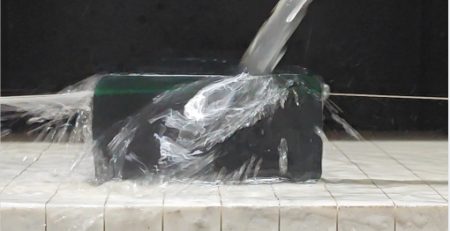
– Water-Guided Laser Cutting: Also known as Laser MicroJet technology, this approach uses a pressurized water jet to guide the laser beam to the workpiece, providing cooling and debris removal simultaneously .
– Stealth Dicing: 这种技术将激光束聚焦在材料表面下方以形成改性层, 实现精密分离并将表面损伤降至最小 .
– 超快激光加工: 飞秒和皮秒激光由于其超短脉冲持续时间,可实现极其精密的材料加工并将热损伤降至最低 .
激光切割的优势
激光技术在切割碳化硅方面具有多种显著优势:
- 卓越的精度与灵活性: 激光切割能够实现极其复杂的设计和几何形状,这在机械方法下难以或不可能完成 . 非接触式加工允许在不对工件施加物理力的情况下进行切割.
- 最小机械损伤: 与机械方法不同, 激光切割消除了刀具磨损等问题, 机械应力, 和振动引起的损伤 . 这导致在脆性SiC材料中切割质量更高,微裂纹减少.
- 优越的材料利用率: 与机械方法相比,激光方法显著减少材料损耗. 研究表明,相同的SiC晶棒可以产生 50% 通过激光切割比通过线切割方法获得更多晶片 . 一些先进的激光技术声称几乎无损切割,材料利用率接近 100% .
- 使用先进激光减少热影响: 超快激光 (飞秒和皮秒) 产生的热影响区最小, 保持SiC的材料特性并减少后续加工要求 .
激光切割的局限性
尽管其具有可观的优势, 激光切割技术仍面临若干挑战:
- 高设备和操作成本: Laser cutting systems represent substantial capital investments, with sophisticated systems ranging from $10,000 自 $150,000 or more . Maintenance and operation require specialized expertise, adding to operational expenses. Capital cost is only part of the comparison – running cost per cut is where the ESC600 diamond wire saw cutting machine tends to win on thick sections.
- Throughput Limitations: While excelling in precision, laser cutting typically offers lower throughput compared to multi-wire diamond saws for high-volume production . This makes it less suitable for applications where production speed is the primary concern.
- Technical Complexity: Laser processing of SiC requires careful parameter optimization to achieve desired results without causing thermal damage, including pulse duration, wavelength, energy density, and scanning speed .
- Thickness Limitations: Laser cutting efficiency decreases with material thickness, making it less suitable for very thick SiC substrates compared to mechanical methods .
Head-to-Head Comparison: Critical Performance Factors
Cutting Quality and Surface Integrity
When evaluating silicon carbide cutting tools, final workpiece quality is a primary consideration. Diamond wire saw cutting typically produces surfaces with more significant subsurface damage, including microcracks and saw marks that require extensive subsequent polishing . The mechanical stress imparted during sawing can compromise the structural integrity of thin wafers.
Laser cutting generally produces cleaner edges with minimal mechanical damage, but introduces thermal effects that can alter material properties. Studies show that laser ablation can reduce surface hardness to less than 1% of original values (below 50 MPa from initial 13,896 兆帕) . Advanced ultrafast lasers significantly reduce these thermal effects, but at increased equipment cost.
Production Throughput and Efficiency
For high-volume manufacturing environments, production throughput is a critical factor. 金刚线锯, particularly multi-wire configurations, can process multiple wafers simultaneously, offering significant advantages for mass production . The continuous cutting motion and established industrial implementation enable high throughput for standard wafer sizes.
Laser cutting systems typically process wafers sequentially, limiting maximum throughput. 然而, for complex geometries or specialized applications, lasers may offer efficiency advantages by combining multiple processing steps or reducing subsequent polishing requirements.
Operational Economics and Cost Considerations
The economic analysis of cutting silicon carbide must consider both capital investment and operational expenses. Diamond wire saws represent mature technology with known operational costs, though consumable expenses (diamond wires) and waste disposal contribute significantly to total cost of ownership.
Laser cutting systems require higher initial investment but offer potential savings through reduced material waste and higher material utilization. As laser technology matures and becomes more widespread, equipment costs are expected to decrease, improving economic viability.
Material Versatility and Application Range
While this analysis focuses on cutting silicon carbide, manufacturers often process multiple materials. Diamond wire saws demonstrate excellent performance across various hard and brittle materials including silicon, 蓝宝石, and advanced ceramics . This versatility can be advantageous in facilities processing multiple material types.
Laser cutting systems also offer material flexibility, with parameter adjustments enabling processing of diverse materials from metals to composites . 然而, optimization for specific materials like SiC may reduce performance for other applications.
Application-Specific Recommendations
High-Volume Semiconductor Manufacturing
For high-volume production of standard SiC wafers for power electronics, diamond wire saw cutting currently offers the best balance of throughput, consistency, and operational familiarity . The established infrastructure and process controls support the demanding quality requirements of semiconductor manufacturing.
Prototyping and Low-Volume Production
For research institutions, prototyping facilities, and low-volume production of specialized components, laser cutting provides superior flexibility and faster setup times . 能够在不修改模具的情况下快速实施设计更改,使激光成为开发环境的理想选择.
复杂几何形状和微型组件
对于需要复杂形状的应用, 轮廓, 或微型特征, 激光切割无疑更为优越 . 非接触式工艺和可编程光束路径使机械方法无法实现的复杂几何成为可能.
厚截面和大幅面加工
对于厚的SiC基板或大幅面加工, 金刚石线锯目前在切割效率和成熟工艺方面仍然具有优势 . 尽管激光技术在这一领域不断发展, 对于非常厚的材料,机械方法仍更为实用.
未来展望和技术趋势
The landscape of silicon carbide cutting tools continues to evolve with both technologies advancing rapidly. Diamond wire saw development focuses on finer wires, improved diamond particle distribution, and enhanced tension control systems to reduce kerf loss and improve surface quality .
Laser cutting innovation centers on increased power, improved beam quality, and advanced processing techniques to enhance throughput and reduce thermal effects. Emerging approaches like hybrid processing combine laser pretreatment with mechanical polishing to optimize both efficiency and quality .
Industry analysts project strong growth for both technologies, with the SiC wafer laser cutting equipment market expected to expand significantly through 2033 . As manufacturing volumes increase and technology improves, laser methods are anticipated to capture greater market share, particularly for advanced applications demanding highest precision and minimal material loss.
结论: Selecting the Right Approach for Your Needs
The choice between diamond wire saw cutting and laser cutting for silicon carbide processing involves careful consideration of application requirements, production volume, quality specifications, and economic factors.
Diamond wire saw cutting remains the preferred solution for high-volume production of standard SiC wafers, offering proven reliability, high throughput, and established process controls. Its limitations in surface quality and material utilization are offset by its robustness and predictability in industrial environments.
Laser cutting technology provides compelling advantages for applications prioritizing precision, complex geometries, and material utilization. While requiring greater capital investment and technical expertise, its capabilities align with industry trends toward thinner wafers, more complex devices, and sustainable manufacturing through reduced material waste.
As SiC continues its expansion into power electronics, 电动汽车, and advanced applications, both cutting technologies will evolve to meet increasing demands for precision, 效率, 和成本效益. Understanding their respective strengths and limitations enables manufacturers to implement optimal processing strategies for their specific requirements, ultimately supporting the broader adoption of silicon carbide across advanced technology sectors.
常见问题
Is laser or diamond wire saw better for cutting silicon carbide?
For precision work, 金刚石线锯: it cuts without a heat-affected zone, giving better surface integrity and less sub-surface damage. 激光在薄片上速度更快,但会留下热损伤和再熔层.
为什么碳化硅如此难切割?
SiC的硬度接近钻石 (莫氏硬度约9.2-9.5) and is brittle, 因此机械刀片锯切会导致崩裂,而激光切割会产生热微裂纹. 金刚石磨料线是少数实用工具之一.
激光切割会损伤SiC晶片吗?
激光烧蚀会产生带有微裂纹和再熔材料的热影响区,这些必须通过额外研磨去除, 增加成本和良率损失——对半导体级SiC尤为关键.
金刚石线锯在SiC上能达到什么表面质量?
使用细线和优化参数, Ra可达到亚微米级, 通常可消除或减少抛光前的精磨步骤.
技术内容由Ensoll工程团队审核——一家金刚线环制造商 10+ 多年生产经验.