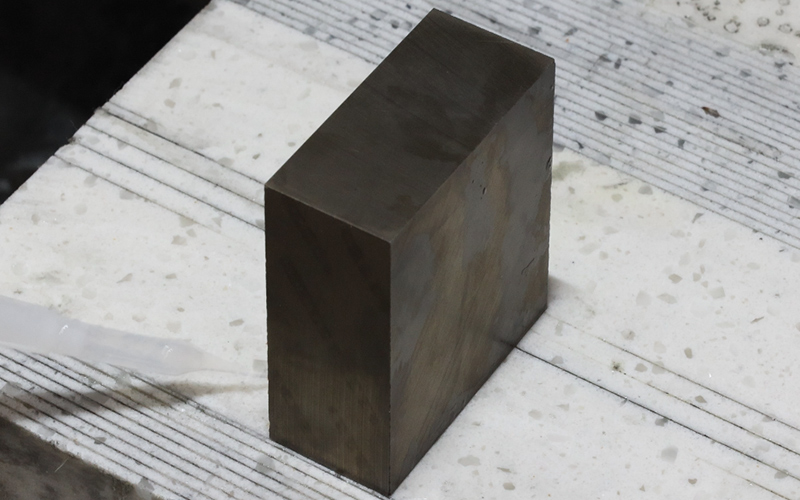
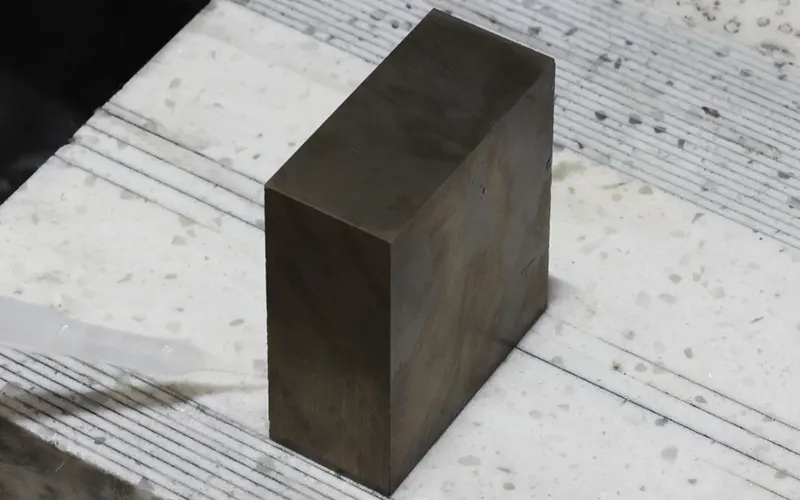
Magnetic materials are a fundamental class of substances defined by their ability to generate a magnetic field and to respond in a significant, measurable way to an applied magnetic field. This property originates from the quantum mechanical spin and orbital motions of electrons within the atoms, which create tiny magnetic “dipoles.” The macroscopic magnetic behavior of a material is determined by how these microscopic magnetic moments are arranged and interact with one another.
关键要点
Magnetic materials fall into four classes by susceptibility: ferromagnetic (铁, – 5–40%, Ni, 钕铁硼, 钐钴), ferrimagnetic (MnZn/NiZn ferrites), paramagnetic (铝, Pt) and diamagnetic (– 3–4%, water, 石墨).
The processing market is led by abrasive cutting (35%), wire EDM (25%) and laser (20%), while diamond wire sawing (15%) is the fastest growing at about 18% CAGR.
Conventional methods share three pain points: 100-300 micrometer heat-affected zones, microcracks that cut NdFeB service life by 30-40%, 和 20-25% material waste on expensive rare earths.
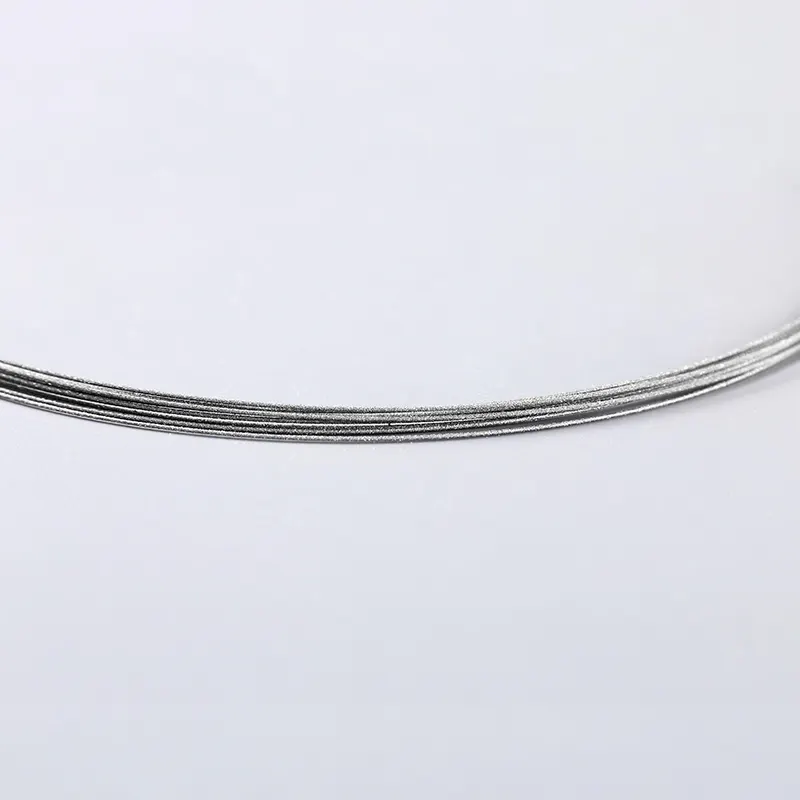
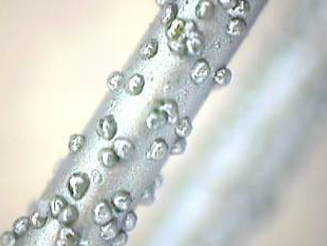
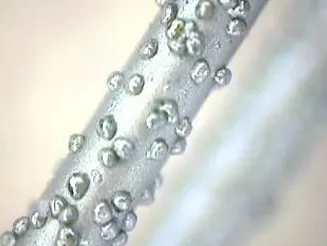
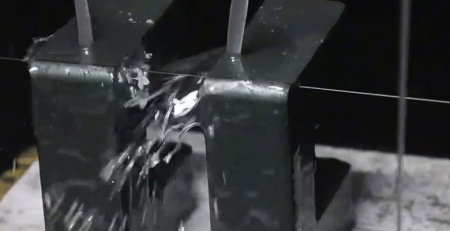
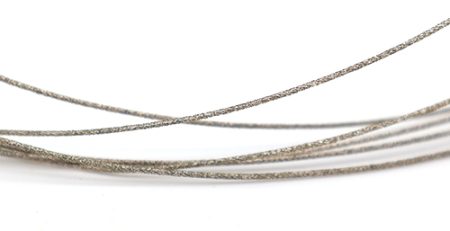
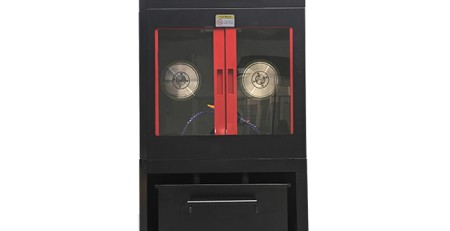
Diamond wire loop cutting runs below 40 degC with under 2% flux variation, ±2 micrometer accuracy, Ra 0.1-0.3 micrometer finish and a 0.15-0.25 mm kerf — lifting rare-earth yield to 92-95% at roughly half the operating cost of EDM.
The primary classification system is based on a material’s magnetic susceptibility—the measure of how strongly it magnetizes in response to an external field. This leads to four main categories:
Ferromagnetic Materials are the strongest and most commercially significant type. Within them, the magnetic moments of neighboring atoms align spontaneously and parallel to each other over large regions called domains, even without an external field.
Examples & 应用: 铁 (铁), Co (– 5–40%), – 15–26% (Ni), and their alloys, especially Neodymium-Iron-Boron (钕铁硼) and Samarium-Cobalt (钐钴). They are the workhorses of modern technology, found in electric motors, generators, 扬声器, 核磁共振成像(MRI)设备, and data storage media (hard drives).
Ferrimagnetic Materials are similar to ferromagnets in that they also exhibit spontaneous magnetization and permanent magnetic properties. 然而, the underlying magnetic structure is more complex: the magnetic moments of different types of atoms in the crystal lattice align in opposite directions, but do not cancel out completely, resulting in a net magnetization. They are typically ceramic oxides.
Examples & 应用: Primarily ferrites (例如, Fe₃O₄ – Magnetite, and engineered ferrites like MnZn and NiZn). They are ubiquitous in telecommunications, used in transformer cores, 电感, microwave components, and magnetic recording heads.
Paramagnetic Materials have atoms with individual magnetic moments, but these moments are randomly oriented due to thermal agitation in the absence of an external field. When placed in a magnetic field, the moments align weakly with the field, creating a small, positive magnetization.
Examples & 应用: – 8–12% (铝), Platinum (Pt), Oxygen (O₂), and many rare-earth elements. Their weak susceptibility is utilized in scientific instruments like Magnetic Susceptibility Balances for chemical analysis.
Diamagnetic Materials represent the weakest form of magnetism, present in all materials. When exposed to a magnetic field, the orbital motion of electrons is slightly altered to oppose the applied field (Lenz’s Law), inducing a very weak, negative magnetization.
Examples & 应用: Water (H₂O), Cu (– 3–4%), Bismuth (Bi), 石墨, and most plastics. While weak, 这种特性可以实现诸如热解石墨的磁悬浮等壮观演示,并且是磁共振成像等技术的基础 (核磁共振成像), 它在成像中贡献了用于化学位移的作用.
– Complex geometry cutting in aerospace components
With ROI periods under 8 months for most applications, this technology is transforming magnetic material manufacturing across industries.
6.How to Select a High-Quality Magnetic Material Processing Supplier – Why Choose元素工具?
Selecting the right manufacturing partner for magnetic material processing requires careful evaluation of technical capabilities, quality systems, and industry expertise. As a leader in precision magnetic component production, Ensoll delivers unmatched advantages through our advanceddiamond wire loop cutting technologyand vertically integrated solutions.
Key Selection Criteria for Magnetic Material Processors
Material-Specific Expertise
– Ensoll Advantage: 15+ years specializing in:
– Rare-earth magnets (NdFeB/SmCo) 跟 <2% magnetic property degradation
– Proprietary tension control maintains ±0.1N wire stability
– AI-powered adaptive cutting parameters
– 300+ 针对特定材料优化的线材配方
专业加工解决方案
– 超低温切割 (-196°C) 用于超导材料
– 用于硬脆材料的超声波辅助线切割
– 用于薄晶圆加工的真空吸附系统
Industry-Specific Applications
| 行业 | Ensoll解决方案 | 性能优势 |
|——–|—————–|———————|
| 电动车电机 | 梯形磁体切割 | 95% 材料产率与行业水平 80% 平均值 |
| 医疗MRI | SmCo分割 | <3微米公差符合IEC标准 60601-2-33 |
| 航空航天 | 传感器合金加工 | 叠片中零分层 <0.2毫米级叠片 |
| 能源 | 变压器核心切割 | 0.151.7T下的W/kg损耗 (B35A270等效材料) |
全球领导者为何选择Ensoll
– 30% 通过优化材料利用率降低成本
– 50% 通过并行工程加快产品上市时间
– 关键任务应用中的零PPM缺陷
– 通过NDA和安全数据协议保护知识产权
案例研究亮点:
– 减少NdFeB浪费 22% 适用于Tier级 1 电动汽车电机供应商
– 实现 99.97% 为医疗植入OEM按时交付
– Developed proprietary cutting fluid extending wire life 3X
For manufacturers requiring absolute precision in magnetic components, Ensoll delivers:
✓ Technical Superiority – 23 patents in magnetic material processing
✓ Supply Chain Reliability – Dual-source raw material procurement
✓ Total Cost Leadership – Value engineering programs
Contact our engineering team today to audit your magnetic component production process. Our application experts will conduct a free cutting process optimization analysis to identify your savings potential.
Because NdFeB dominates motor production, most of the cost pressure in this section comes down tohow to cut neodymium magnetswithout chipping or heat damage.
常见问题
What are the main types of magnetic materials?
By magnetic susceptibility there are four: ferromagnetic materials such as iron, cobalt, nickel and the NdFeB/SmCo alloys; ferrimagnetic ceramics such as MnZn and NiZn ferrites; paramagnetic materials such as aluminum and platinum; and diamagnetic materials such as copper, water and graphite.
What is the most precise way to cut magnetic materials?
金刚石线环切割. It achieves around ±2 micrometer dimensional accuracy and Ra 0.1-0.3 micrometer surfaces across thicknesses from 0.05 自 300 毫米, with no thermal impact — outperforming laser and EDM on NdFeB yield (95% 与 82% 和 88%).
Why does conventional cutting waste so much rare-earth magnet material?
Blades and conventional saws have kerf widths of 0.8-1.2 毫米, and each cut also generates heat-affected or microcracked zones that must be machined away. Diamond wire’s 0.15-0.25 mm kerf and damage-free surface push material utilization from about 80% 自 92-95%.
How does heat affect magnets during machining?
Laser and EDM create 100-300 micrometer heat-affected zones that can cost a SmCo magnet up to 15% of its remanence. Diamond wire loop cutting stays below 40 degC with continuous coolant, keeping flux density variation within about 2% and eliminating post-process annealing.