Cutting Solar Cells: Laser vs Diamond Wire Loop
- Laser cutting is contactless and fast, 但其热影响区可能产生微裂纹,从而降低太阳能电池效率.
- Diamond wire loop cutting is a cold, mechanical process: no thermal damage, cleaner edges and lower breakage on thin cells.
- For monocrystalline solar cells, diamond wire loop gives a narrow kerf and higher mechanical yield than thermal cutting methods.
- Choose laser for speed on forgiving material; choose diamond wire loop when cell efficiency and yield dominate the cost equation.
The solar industry is rapidly evolving, and one of the most critical processes in solar cell manufacturing is cutting. Whether you’re working with monocrystalline solar cells or other types, precision cutting ensures optimal efficiency and minimal waste. Two of the most popular cutting methods are laser cutting and 金刚石线环 切削.
在这篇博客中, we’ll compare these two techniques, focusing on their advantages, disadvantages, 和应用. We’ll also highlight why diamond wire loop cutting is often the superior choice and recommend Ensoll, a leading manufacturer in this field. 
Solar cells are thinner than semiconductor wafers, but the physics of silicon wafer slicing is the same.
Why Cutting Solar Cells Matters
Solar cells, especially monocrystalline solar cells, require precise cutting to maximize energy output and minimize material loss. Traditional mechanical cutting methods can cause micro-cracks and reduce cell efficiency. That’s why advanced techniques like solar cell laser cutting and diamond wire loop cutting have become essential in modern solar manufacturing.
Solar Cell Laser Cutting: How It Works
Laser cutting is a non-contact method that uses a high-energy laser beam to slice through solar wafers. The solar cell laser cut process is popular due to its precision and speed.
激光切割的优势
Laser cutting has become a key technology in solar cell manufacturing, particularly for monocrystalline solar cells, due to its precision and versatility. Below are the primary benefits of using solar cell laser cutting in production:
 1. Ultra-High Precision Cutting
– Lasers produce clean, narrow kerfs (cutting widths) as small as 20–50 microns, minimizing material waste.
– Ideal for high-efficiency solar cells, where even minor imperfections can reduce performance.
– Enables shaping of custom solar cell designs (例如, half-cut or shingled cells) without mechanical stress.
2. Non-Contact Process (Reduces Micro-Cracks)
– Unlike mechanical sawing, laser cutting does not physically touch the wafer, eliminating chipping and micro-fractures.
– Critical for thin wafers (≤150µm), which are prone to cracking under mechanical pressure.
3.High-Speed Processing for Mass Production
– Modern solar cell laser cutting machines (such as those from SunPower) can process thousands of wafers per hour.
– Automated laser systems integrate seamlessly into PV production lines, reducing bottlenecks.
4. 最小的割缝损失 (Higher Material Yield)
– Traditional wire sawing loses 150–200µm per cut, while lasers waste <50微米, preserving more silicon.
– Directly improves cost-per-watt efficiency in solar panel manufacturing.
5. Flexibility in Cutting Patterns
– Lasers can perform:
– Straight cuts (for standard cells)
– Curved or intricate cuts (for next-gen designs like IBC cells)
– Edge isolation (improving cell efficiency by reducing recombination losses).
6.Low Maintenance vs. Mechanical Alternatives
– No diamond wire degradation (unlike diamond wire saws, which require frequent replacement).
– 更少的运动部件 = 更少的维修停机时间.
激光切割的缺点
– 热影响区 (HAZ 系列) – 激光产生热量, 这可能会损坏硅结构.
– 成本更高 – 太阳能电池激光切割机, 尤其是像 SunPower 这样的品牌, 价格昂贵.
– 厚度有限 – 激光难以切割非常厚的晶片.
尽管有这些缺点, 太阳能电池激光切割仍然是薄晶片和特殊应用的可行选择.
金刚石线环 切削: 一种更优的替代方案?
随着太阳能行业推动更高效率和更低生产成本, 金刚线环切割已成为切割单晶硅太阳能电池和其他光伏材料的领先方法. 但它真的比激光切割更好吗? 让我们来看看它的技术, 优势, 以及理想的应用.
金刚线环切割的工作原理
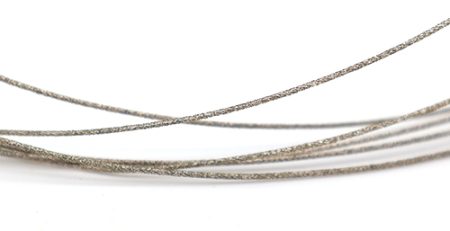
This process uses a high-tensile steel wire (typically 70–120µm in diameter) embedded with synthetic diamond particles as the cutting medium. The wire moves in a continuous loop at speeds of 10–25 m/s, while a slurry (or coolant) prevents overheating and removes silicon debris.
Key Steps in the Process:
- Wire Guidance System – Precision rollers maintain wire tension and alignment.
- Multi-Wire Configuration – Industrial machines use hundreds of parallel wires to cut multiple wafers simultaneously.
- Coolant Application – Reduces friction and prevents silicon contamination.
- Wafer Separation – Finished wafers are cleaned and inspected for defect
金刚线环切割的优点
1. Higher Material Yield (Lower Kerf Loss)
– 锯缝宽度: ~100–150µm (与. 200–300µm in traditional slurry-based sawing).
– 高达 30% more wafers per silicon ingot compared to older methods.
2.No Thermal Damage to Silicon
– Unlike solar cell laser cutting, diamond wire is a cold-cutting process, avoiding:
– Heat-affected zones (HAZ 系列)
– Micro-crack propagation
– Edge recombination losses
3. Faster Cutting Speeds for Mass Production
– Processes up to 2,000 wafers per hour in industrial setups.
– 50% faster than slurry-based wire saws.
4. Superior Surface Quality
– Produces wafers with:
– <1µm surface roughness (与. 5–10µm with lasers)
– Fewer subsurface cracks → higher cell efficiencies
5.Lower Operating Costs
– Energy consumption: 30–50% less than laser systems.
– Wire lifespan: Modern diamond wires last for 300–500 km of cutting.
6. Scalability for Thick Wafers
– Effectively cuts 200µm–1mm thick wafers (lasers struggle beyond 300µm).
Disadvantages of Diamond Wire Loop Cutting
– Wire wear – The diamond-coated wire degrades over time and needs replacement.
– Initial setup cost – High-quality machines require investment, but long-term savings outweigh this.
Laser Cutting vs. 金刚石线环: Which is Better?
| Feature | 激光切割 | 金刚石线环切割 |
| 精度 | 高 | Very High |
| 热损伤 | 是的 | 不 |
| Material Loss | 中速 | 最小 |
| 成本 | Expensive | Cost-effective long-term |
| 适用范围 | 薄晶片 | All wafer thicknesses |
Why Diamond Wire Loop Cutting Wins
For most manufacturers, diamond wire loop cutting is the better choice because:
✔ Higher yield – Less silicon waste means more profit.
✔ No thermal damage – Better cell performance and longevity.
✔ Scalability – Suitable for both small and large-scale production.
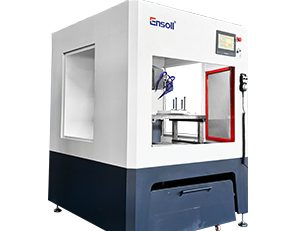
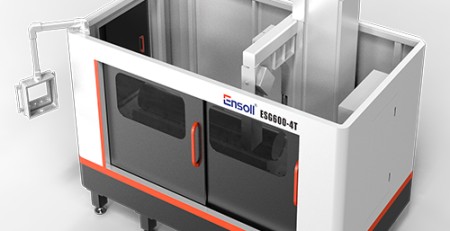
Recommended Manufacturer: 元素工具
If you’re looking for high-quality diamond wire loop cutting machines, Ensoll is a top-tier manufacturer specializing in solar wafer cutting solutions. Their machines offer:
��� High cutting precision
��� Low maintenance costs
��� Energy-efficient operation
Ensoll’s technology ensures minimal material waste and maximum efficiency, making them a preferred choice for solar cell manufacturers.
结论
While solar cell laser cutting has its place in the industry, diamond wire loop cutting is often the superior method due to its efficiency, cost-effectiveness, and minimal material waste. For manufacturers looking to optimize their production, investing in diamond wire loop cutting machines from Ensoll is a smart choice.
By choosing the right cutting method, you can enhance solar cell performance, 降低成本, and contribute to a more sustainable energy future.
常见问题
Is laser or diamond wire loop better for cutting solar cells?
It depends on the priority. Laser is faster but introduces a heat-affected zone and micro-cracks; diamond wire loop is a cold cut that preserves cell efficiency and gives higher yield on thin cells.
最后审核: 九月 2026
Does laser cutting damage solar cells?
是的, it can. The heat-affected zone around a laser cut may create micro-cracks and recombination losses that reduce the conversion efficiency of the finished cell.
Why is diamond wire loop called a cold cutting process?
Material is removed by diamond abrasive acting mechanically under continuous coolant, so no significant heat is introduced into the cell.
Can diamond wire loop cut very thin solar cells?
是的. Its low cutting force and controlled tension keep breakage low even on thin monocrystalline cells, which is why it is favored as cells get thinner.
技术内容由Ensoll工程团队审核——一家金刚线环制造商 10+ 多年生产经验.