Ferrite (céramique) les aimants sont des oxydes de fer frittés avec carbonate de strontium ou de baryum: bon marché, résistants à la corrosion et stables jusqu'à 250 degC, mais dur et fragile — donc la méthode de coupe décide directement du rendement.
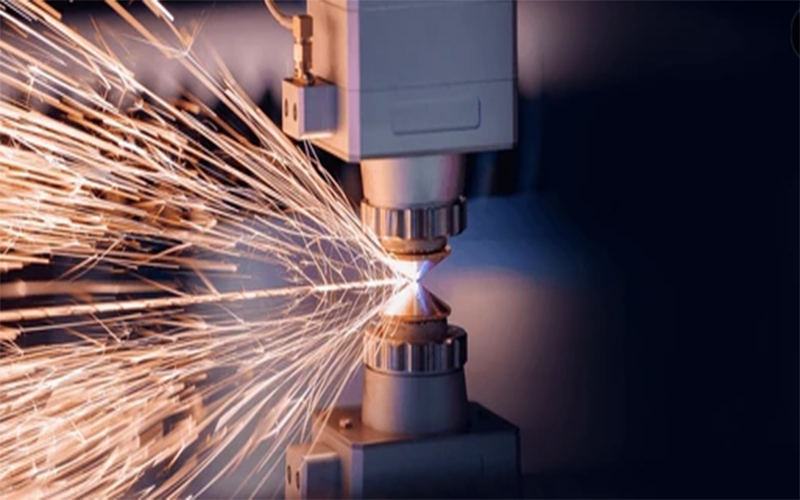
Le meulage laisse 50-100 des micro-fissures de l'ordre du micromètre et avance lentement; le laser ajoute une zone affectée par la chaleur qui modifie les propriétés magnétiques; le jet d'eau laisse des bords Ra >3 de l'ordre du micromètre nécessitant un polissage.
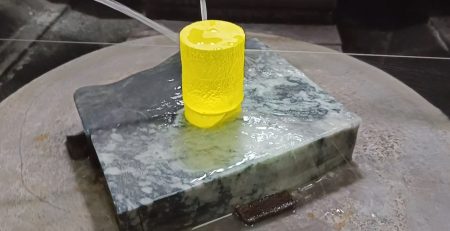
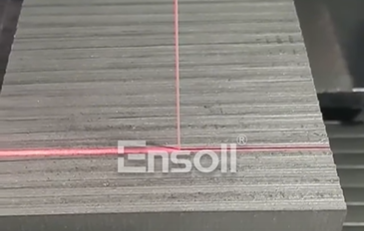
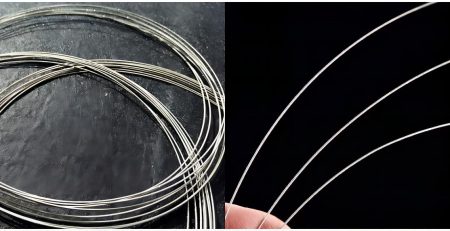
La scie à fil diamanté est la mieux adaptée: un 0.1-0.3 Fil diamanté de mm donnant des bords sans copeaux (Ra <0.5 micromètres), pas de dommages thermiques, ±0.02 mm tolerances and kerf under 0.2 mm.
About 80% of Japanese ferrite manufacturers already use diamond wire saws, cutting production cost by roughly 30% versus grinding in high-volume runs.
1. Qu'est-ce que les aimants en ferrite?
Les aimants en ferrite, également connus sous le nom d'aimants en céramique, are a type of permanent magnet composed primarily of iron oxide (Fe₂O₃) combiné avec du carbonate de strontium ou de baryum. They are sintered under high temperatures to form a hard, brittle ceramic material with moderate magnetic strength (0.2–0.4 Tesla).
Key Properties
– Cost-Effective: Cheaper than rare-earth magnets (NdFeB/SmCo)
– High Resistivity: Low electrical conductivity reduces eddy current losses
– Temperature Stability: Maintain performance up to 250°C
– Corrosion Resistance: Do not require coating like NdFeB
Applications
– Électronique: Speakers, sensors, and microwave devices
– Automobile: ABS sensors, electric motor components
– Industrial: Séparateurs magnétiques, holding systems
Due to their brittleness, ferrite magnets require specialized cutting methods to avoid chipping and cracking.
2.How Are Ferrite Magnets Processed?
Ferrite magnets are manufactured through sintering, producing blocks or discs that must be cut into precise shapes. Common machining methods include:
– Sensor Components: Precision slots for Hall-effect devices
– Custom Shapes: Trapezoidal/arc cuts for motors
Conclusion
Ferrite magnets demand precision cutting to maintain performance. While grinding and laser methods have limitations, diamond wire saw cutting machines deliver the best balance of accuracy, surface quality, and cost efficiency.
For manufacturers seeking zero-defect ferrite components, upgrading to diamond wire technology reduces waste by 20% and boosts productivity by 3×.
Need a cutting solution? [Contactez-nous] for a free sample test with your ferrite material! Compared withcomment couper les aimants en néodyme, ferrite allows a higher feed rate, but chipping at the exit edge is still the defect to watch.
Questions fréquemment posées
What is the best way to cut ferrite magnets?
Découpe à la scie fil diamant. The thin diamond-coated wire (0.1-0.3 mm) grinds through the brittle ceramic with very low force, producing chip-free edges at Ra below 0.5 micrometers and tolerances around ±0.02 mm — without the micro-cracks of grinding or the heat damage of laser cutting.
Why do ferrite magnets chip during cutting?
La ferrite est une céramique frittée avec une résistance à la traction très faible. Rigid blades and grinding wheels concentrate mechanical stress at the cut edge, and the material fractures as the tool exits. Low-force abrasive micro-grinding with a diamond wire largely eliminates this failure mode.
Can you laser cut ferrite magnets?
Only thin sheets (under about 3 mm) and only for straight cuts. The laser’s heat-affected zone alters the magnetic properties near the cut, so for production parts a cold process like diamond wire saw cutting is preferred.
Does cutting affect ferrite’s magnetic performance?
Yes if the process adds heat or stress. Laser and hot grinding can alter properties near the cut; diamond wire saw cutting is a cold, coolant-controlled process, so the ferrite keeps its rated performance with no heat-affected zone.
Rapport de test original Ensoll: un 415 Pièce de quartz de mm découpée à une vitesse stable de 80 mm/min d'avance, avec TTV documenté, surface... Lire la suite
Points clés
Séléniure de zinc (ZnSe) is a soft, brittle infrared optical crystal that cracks easily under conventional machining.
Diamond loop wire cuts... Lire la suite
Dans le domaine de la science des matériaux moderne, peu d'innovations ont eu un impact aussi profond que le néodyme-fer-bore (NdFeB) aimants permanents.... Lire la suite
Dans le monde des matériaux avancés, découpage carbure de silicium (Sic) présente des défis uniques qui exigent des solutions spécialisées. Comme un... Lire la suite
Points clés
Les boucles de fil diamanté glissent à travers le verre avec une surface de coupe recouverte de diamant, permettant aux artisans de sculpter les bouteilles de bière en motifs complexes.... Lire la suite
Key Takeaways
Controlled tests on 5 le verre SCHOTT B270 de mm montrent qu'une scie à fil diamant atteint Ra 0.18-0.22 micromètres contre Ra... Lire la suite
1.Qu’est-ce qu’une boucle de fil de diamant?
Boucle de fil diamanté, également connues sous le nom de scies à fil diamanté, sont des outils de coupe qui se composent de... Lire la suite
Key Takeaways
Diamond wire loop saws cut an exceptionally wide range of metal and non-metal composite materials, des céramiques et du verre... Lire la suite
Points Clés
Les machines de sciage par fil diamanté existent en quatre structures principales - vertical, horizontal, portique et irrégulière - chacune adaptée... Lire la suite