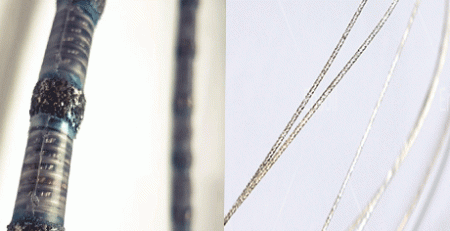
Magnetic materials fall into three families: aimants permanents (NdFeB, SmCo, AlNiCo, ferrite), magnétiques doux (Acier au silicium, ferrite douce, amorphous and nanocrystalline alloys, permalloy) and functional materials (magnetostrictive, recording media, spintronics).
Each family fails differently under cutting: NdFeB microcracks and demagnetizes, ferrite crumbles at the edges, amorphous ribbons are extremely hard (jusqu’à 900 HV) et fin, et les alliages nanocristallins se dégradent au-dessus de 150 degC.
La performance magnétique finale dépend de la qualité des bords (fuites de flux), la précision dimensionnelle (jeux d'air) et exemption de chaleur- or stress-damaged zones.
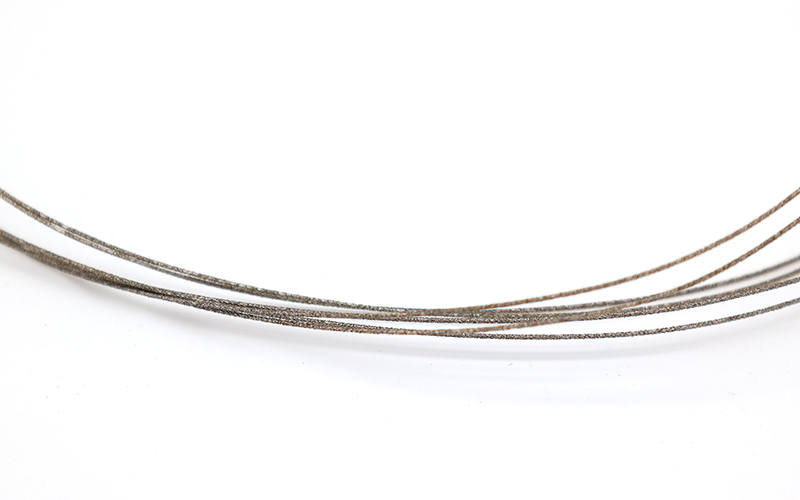
Diamond wire loop cutting addresses all three requirements at once: cutting temperatures below 50 degC, tolerances to ±2 micrometers and material yields above 95%.
1.Introduction: The Critical Role of Magnetic Materials in Modern Technology
Magnetic materials form the backbone of countless technologies, from electric vehicles to medical imaging systems. Toutefois, their unique properties—including hardness, fragilité, and thermal sensitivity—make them notoriously difficult to machine without compromising performance.
This guide explores all major categories of magnetic materials, their post-processing applications, and the cutting challenges they present. For manufacturers requiring precision machining, advanced solutions like coupe de boucle de fil diamanté (offered by specialists such as [Ensoll Tools](https (en anglais)://www.ensolltools.com/)) are often indispensable.
For mission-critical applications, partnering with experts like[EnsollTools]ensures optimal results.
Questions fréquemment posées
Quels sont les principaux types de matériaux magnétiques?
Three broad families: permanent (dur) magnets such as NdFeB, SmCo, AlNiCo and ferrite; soft magnetic materials such as silicon steel, soft ferrites, amorphous and nanocrystalline alloys and permalloy; and functional materials such as magnetostrictive alloys, magnetic recording media and spintronics materials.
What is the difference between hard and soft magnetic materials?
Les matériaux durs (permanent) magnetic materials have high coercivity and retain their magnetization after the external field is removed. Soft magnetic materials magnetize and demagnetize easily, making them ideal for transformer cores, inductors and flux-control components.
Why are magnetic materials difficult to machine?
They combine hardness with brittleness and thermal sensitivity: conventional cutting introduces microcracks, éclats sur les bords, burrs or heat that can locally demagnetize the part or destroy delicate structures such as nanocrystalline phases and multilayers.
Which cutting method works across all magnetic material types?
Diamond wire loop cutting is the most universal option. Its cold (en dessous de 50 degC), low-force micro-grinding preserves magnetic properties across hard magnets, soft ferrites and advanced alloys, while achieving micrometer-level tolerances and material yields above 95%.
Contenu technique examiné par l'équipe d'ingénierie d'Ensoll — un fabricant de boucles de fil diamanté avec 10+ des années d'expérience en production.
Points Clés
Les machines de sciage par fil diamanté existent en quatre structures principales - vertical, horizontal, portique et irrégulière - chacune adaptée... Lire la suite
Key Takeaways
Optical glass is brittle and sensitive to thermal shock; les fissures commencent généralement au niveau du bord de sortie de la coupe.
Diamant... Lire la suite
Les matériaux ultra-durs comme le diamant, Diamant CVD (Diamant issu de Dépôt Chimique en Phase Vapeur), et le nitrure de bore cubique (cBN) révolutionnent les industries allant de... Lire la suite
Ensoll est un fabricant leader de machines de découpe de précision par fil diamanté en Chine, avec notre propre R&Équipe D. Nos machines... Lire la suite
L'évolution rapide des télécommunications 5G, véhicule électrique (VE) infrastructure de recharge, et alimentations électriques à haute fréquence ont mis un énorme projecteur.... Lire la suite
Introduction aux solutions avancées de découpe du verre
Dans le paysage exigeant de la fabrication optique d'aujourd'hui, Découpe à la scie à fil diamantée a émergé comme le choix d'or.... Lire la suite
Avec le développement continu de la technologie, Les avantages de la boucle de fil diamanté dans l’industrie du traitement de la découpe deviennent de plus en plus.. Lire la suite
Points clés à retenir
Une scie à fil diamanté est une option ouverte, fin avec des particules de diamant incorporées utilisé dans une coupe en ligne droite continue... Lire la suite
Points clés à retenir
Les matériaux PV en film mince tels que CdTe, CIGS et a-Si nécessitent une découpe précise qui évite à la fois les dommages thermiques et mécaniques.
Diamant... Lire la suite
En tant que leader mondial de la fabrication d’outils et d’équipements industriels, Notre entreprise est très fière de ses installations de production à la pointe de la technologie.. Lire la suite