I materiali ferrite sono ovunque nella tecnologia moderna. Dai minuscoli componenti magnetici all'interno del tuo smartphone ai potenti elettromagneti nei motori dei veicoli elettrici, le ferriti svolgono un ruolo fondamentale nella nostra vita quotidiana. Tuttavia, lavorare questi materiali ceramici duri, fragili presenta una sfida significativa. I metodi di taglio tradizionali spesso portano a scheggiature, cracking, e spreco di materiale.
Punti Chiave
Ferrites are iron-oxide ceramic magnets — soft grades (MnZn, NiZn) per trasformatori e induttori, gradi duri per altoparlanti e motori — tutti duri (Mohs 5-7), brittle and low in tensile strength.
Conventional cutting fails on ferrite: scheggiature del bordo, heat-induced cracking, rapid tool wear, wide-kerf material waste and heavy post-processing.
Diamond wire saw cutting uses distributed micro-grinding instead of shearing: nessuna scheggiatura dei bordi, calore minimo, 0.2-0.6 Taglio mm, Ra 0.4-1.6 micrometer finishes and ±0.01 mm CNC repeatability.
The endless (closed-loop) wire configuration beats reciprocating saws for production: higher speed, smoother surfaces, less vibration and longer wire life.
Ecco il Sega a filo diamantato—a precision cutting technology that is transforming how manufacturers process ferrite components. In questa guida completa, we will explore everything you need to know aboutSega a filo diamantatocutting for ferrite, including how it works, why it outperforms conventional methods, and which applications benefit most from this innovative approach.
Whether you are a manufacturing engineer, uno specialista in approvvigionamento, o semplicemente curioso delle tecnologie avanzate di lavorazione meccanica, questa guida ti fornirà approfondimenti pratici e conoscenze tecniche.
La ferrite è più morbida dei gradi di terre rare, ma le lezioni del processo si trasferiscono direttamente da how to cut neodymium magnets — alimentazione costante, generosa lubrificazione, e assenza di accumulo di calore.
Cos'è la Ferrite? Comprendere il Materiale
Prima di immergersi nelle tecniche di taglio, è essenziale capire cos'è la ferrite e perché richiede lavorazioni specializzate.
Definizione e Composizione
La ferrite è una classe di materiale ceramico composto principalmente da ossido di ferro (Fe₂O₃) combinato con uno o più elementi metallici aggiuntivi, come manganese, zinco, nichel, o cobalto. A differenza dei magneti metallici tradizionali, le ferriti sono non conduttive e altamente resistenti alla corrosione.
Tipi di Ferrite
Esistono due principali categorie di ferrite utilizzate nelle applicazioni industriali:
Ferrite Morbida
Le ferriti morbide sono caratterizzate dalla loro capacità di magnetizzarsi e smagnetizzarsi facilmente. Esse mostrano bassa coercitività, cioè non mantengono il magnetismo una volta rimosso il campo magnetico esterno. Le comuni ferriti morbide includono:
– Manganese-zinco (MnZn) ferrite
– Nichel-zinco (NiZn) ferrite
Questi materiali sono ampiamente utilizzati nei nuclei dei trasformatori, induttori, e l'interferenza elettromagnetica (EMI) componenti di soppressione.
Ferrite Dura (Ferrite a Magnete Permanente)
Ferriti dure, noti anche come magneti in ceramica, mantengono il loro magnetismo dopo la magnetizzazione. Esse mostrano alta coercitività e sono resistenti alla smagnetizzazione. Le applicazioni comuni includono:
– Magneti per altoparlanti
– Magneti per motori CC
– Separatori magnetici
– Guarnizioni delle porte dei frigoriferi
Proprietà Chiave della Ferrite
Comprendere queste proprietà spiega perché la ferrite è sia preziosa che difficile da lavorare:
Proprietà
Descrizione
Elevata durezza
Tipicamente 5–7 sulla scala di Mohs, rendere la ferrite difficile da tagliare con strumenti convenzionali
Alta fragilità
Quasi nessuna deformazione plastica prima della rottura; propenso a scheggiature e crepe
Bassa resistenza alla trazione
Non può sopportare elevati stress meccanici durante il taglio
Eccellenti proprietà magnetiche
Alta resistività elettrica e basse perdite per correnti parassite
Stabilità chimica
Resistente all'ossidazione e alla corrosione
Stabilità termica
Mantiene le proprietà magnetiche in un ampio intervallo di temperature
Perché la ferrite è difficile da tagliare con metodi convenzionali
Le tecniche di taglio tradizionali spesso non producono risultati soddisfacenti quando si lavora con la ferrite. Ecco perché:
1. La fragilità porta a scheggiature
La ferrite si comporta come il vetro sotto stress meccanico. Quando una lama tradizionale o una mola entra in contatto con il materiale, la pressione concentrata sul bordo di taglio provoca microfratture che si propagano verso l'esterno. Il risultato è scheggiatura dei bordi—talvolta estesa per diversi millimetri nel pezzo lavorato.
2. La generazione di calore causa crepe
La lavorazione ad alta velocità con mole abrasive genera calore significativo. Il ferrite ha una cattiva conducibilità termica, il che significa che il calore si accumula localmente. Questo gradiente termico crea stress interni che possono causare la rottura del materiale, spesso rovinando l'intero componente.
3. L'usura degli utensili è eccessiva
Il ferrite è più duro della maggior parte dei metalli. Gli utensili tradizionali, comprese le lame in carburo e le mole diamantate, si consumano rapidamente quando si taglia il ferrite. Le frequenti sostituzioni degli utensili aumentano i costi di produzione e i tempi di inattività.
4. Lo spreco di materiale è elevato
Il largo taglio (ampiezza di taglio) delle lame convenzionali rimuove una quantità significativa di materiale. Quando si lavora con componenti in ferrite costosi o geometrie rare, questo spreco influisce direttamente sulla redditività.
5. I requisiti di post-lavorazione sono estesi
I tagli grezzi ottenuti con metodi convenzionali richiedono passaggi aggiuntivi di macinazione e lucidatura per ottenere una qualità superficiale accettabile. Ogni passaggio aggiuntivo aumenta il tempo, i costi, e il rischio di ulteriori danni.
Che cos'è una sega a filo diamantato? Una panoramica tecnica
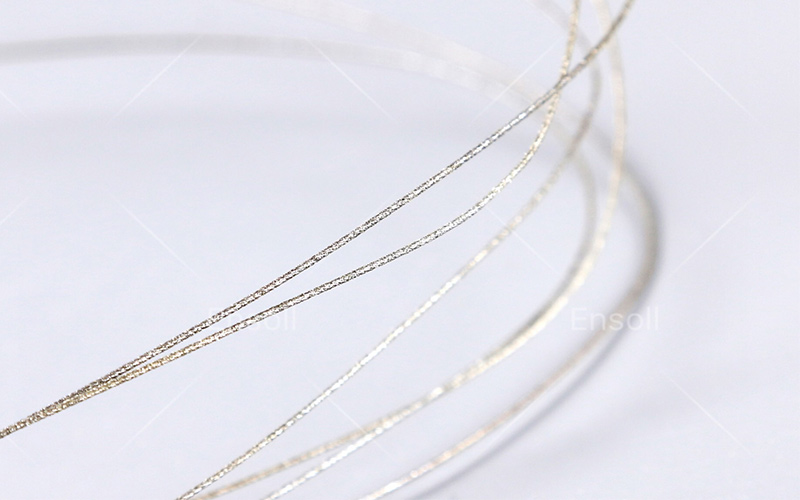
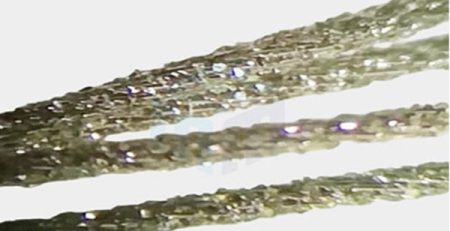
Un Sega a filo diamantato è uno strumento di taglio di precisione che utilizza un filo d'acciaio sottile incorporato con particelle di diamante industriale per tagliare materiali duri. A differenza delle seghe tradizionali che si basano sui denti della lama o sui dischi abrasivi, le seghe a filo diamantato tagliano tramite un'azione di macinazione—ogni particella di diamante agisce come un dente di taglio microscopico.
Come funziona una sega a filo diamantato
Il principio di funzionamento di base coinvolge quattro elementi chiave:
Il filo diamantato
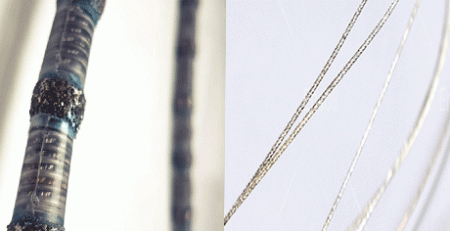
Un filo d'acciaio ad alta resistenza, tipicamente con un diametro che varia da 0.2 mm to 2.0 mm, è rivestito con graniglia di diamante tramite elettrodeposizione o legame in resina. Le particelle di diamante sono distribuite uniformemente lungo la lunghezza del filo.
Rotazione ad alta velocità
Il filo diamantato è montato su un set di pulegge e ruotato a una velocità tipica di 4 mm/min, generalmente producendo una fetta al minuto per una rimozione efficiente del materiale.
Contatto con il materiale e macinazione
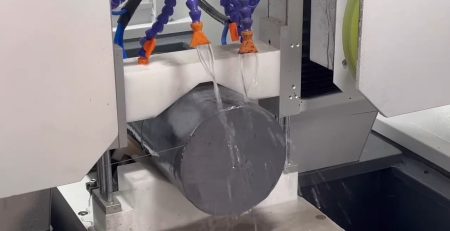
Il filo diamantato rotante viene portato in contatto con il pezzo in ferrite. Ogni particella di diamante asporta particelle microscopiche di ferrite, creando un taglio liscio, preciso.
Raffreddamento e rimozione dei detriti
Un liquido refrigerante—tipicamente acqua o una soluzione acquosa—viene applicato continuamente alla zona di taglio. Il refrigerante rimuove i residui di taglio
Tipi di configurazioni della sega a filo diamantato
Ci sono due configurazioni principali utilizzate per il taglio della ferrite:
Avanzamento alternato (Ciclo aperto) Sega a filo diamantato
Il filo si muove avanti e indietro in un movimento alternato, simile a una sega manuale tradizionale. Sebbene efficace per lavori su piccola scala o prototipi, questo metodo è limitato dalla velocità e dai cambiamenti di direzione che possono causare vibrazioni.
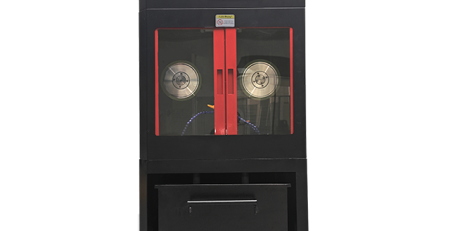
Infinito (Circuito chiuso) Sega a filo diamantato
Le estremità del filo vengono saldate insieme per formare un anello continuo. Questo design senza fine permette al filo di ruotare in una sola direzione ad alte velocità senza fermarsi o invertire. Le seghe a filo diamantato senza fine sono preferite negli ambienti di produzione perché offrono:
– Maggiore velocità di taglio
– Finiture superficiali più lisce
– Vibrazione ridotta
– Maggiore durata del filo
Perché il taglio con sega a filo diamantato è ideale per la ferrite
La tecnologia della sega a filo diamantato affronta praticamente ogni sfida associata al taglio convenzionale della ferrite. Ecco i principali vantaggi:
1. Nessuna scheggiatura ai bordi
The most significant advantage of diamond wire saw cutting is the elimination of edge chipping. Because the wire uses a distributed grinding action rather than concentrated shearing force, mechanical stress is spread evenly across the cutting zone. Ferrite edges emerge clean and smooth, even at cut entry and exit points.
Real-world result: Manufacturers report chipping-free cuts on ferrite components as thin as 0.5 millimetro.
Minimal Heat Generation
Diamond wire saws generate surprisingly little heat during cutting. Several factors contribute to this:
– The diamond particles remove material in tiny increments
– High wire speed carries heat away from the cut zone
– Continuous coolant flow provides active cooling
For temperature-sensitive ferrite materials, this means no thermal cracking and no degradation of magnetic properties.
3. Extremely Thin Kerf
La corsa del taglio—la larghezza del materiale rimosso durante il taglio—è notevolmente piccola con il filo diamantato. I diametri tipici dei fili variano da 0.2 mm to 0.6 millimetro, rispetto a 1.5 mm to 3.0 mm per le lame abrasive convenzionali.
Il vantaggio: È possibile tagliare più pezzi dallo stesso blocco di ferrite, riducendo il costo del materiale del 30–50%.
4. Eccellente finitura superficiale
I seghetti a filo diamantato producono finiture superficiali misurate in micron di Ra (media di rugosità). I valori tipici variano da Ra 0.4 µm a Ra 1.6 µm—spesso eliminando la necessità di successiva rettifica o lucidatura.
5. Costante, Risultati Ripetibili
I seghetti a filo diamantato controllati da CNC seguono percorsi di taglio programmati con precisione misurata in ±0,01 mm. Una volta stabiliti i parametri di taglio ottimali, ogni pezzo risulta identico al precedente.
6. Lunga durata dell'utensile
Un singolo anello di filo diamantato può tagliare per ore di funzionamento continuo prima che la grana diamantata si consumi. Quando il filo si consuma, la sostituzione è rapida ed economica.
7. Nessuna contaminazione di materiali
A differenza del taglio abrasivo in polvere, che può lasciare residui sul pezzo, il taglio con filo diamantato utilizza refrigerante a base d'acqua pulita. I componenti in ferrite emergono liberi da contaminanti che potrebbero influire sulla lavorazione successiva o sulle prestazioni finali.
8. Ecologiche
Rispetto ai metodi di taglio tradizionali, le seghe a filo diamantato sono più ecologiche:
– Refrigerante a base d'acqua invece che a base di olio
– Nessun residuo di pasta pericolosa da smaltire
– Minore consumo energetico per taglio
– Filo d'acciaio riciclabile (Dopo che la grana diamantata si consuma)
Conclusione
La tecnologia della sega a filo diamantato ha cambiato radicalmente il modo in cui i produttori affrontano il taglio della ferrite. La combinazione di zero scheggiature sul filo, generazione minima di calore, taglio sottile, and excellent surface finish makes it the ideal choice for processing these challenging ceramic materials.
Whether you are producing transformer cores, magneti permanenti, EMI suppression components, or custom ferrite parts for specialized applications, a diamond wire saw delivers results that conventional methods simply cannot match.
The initial investment in equipment is offset by reduced material waste, elimination of post-processing steps, and consistently high-quality output. As ferrite components continue to play an essential role in modern electronics, dell'energia rinnovabile, and electric vehicles, diamond wire saw cutting will remain a critical enabling technology.
Ready to improve your ferrite cutting process? Start by evaluating your typical part geometries, production volumes, and quality requirements. Then consult with diamond wire saw manufacturers to select the system that best fits your needs.
Have questions aboutSega a filo diamantatocutting for ferrite or other hard materials?Contact our teamof precision machining specialists for expert guidance.
Domande Frequenti
What is the best way to cut ferrite?
Taglio con sega a filo diamantato. The diamond-coated wire grinds the ceramic away with evenly distributed, bassa forza, eliminating the edge chipping and thermal cracking that blades and grinding wheels cause. Endless-loop machines are preferred for production volumes.
Why is ferrite so difficult to machine?
Ferrite combines high hardness (Mohs 5-7) with glass-like brittleness and low tensile strength. Concentrated cutting pressure causes micro-fractures, its poor thermal conductivity lets heat build up and crack the part, and its hardness wears conventional tools rapidly.
Does diamond wire cutting damage ferrite’s magnetic properties?
No. Material is removed in tiny increments at high wire speed with continuous coolant flow, so very little heat enters the workpiece. There is no thermal cracking and no degradation of magnetic performance.
How much material can diamond wire save compared with blades?
Tipicamente 30-50%. The kerf of a 0.2-0.6 mm diamond wire is far narrower than the 1.5-3.0 mm kerf of abrasive blades, so significantly more parts come out of the same ferrite block.
Contenuto tecnico esaminato dal team di ingegneria Ensoll — un produttore di anelli diamantati con 10+ anni di esperienza produttiva.
Test originale di taglio di precisione Ensoll per materiali magnetici usando una sega a filo diamantato infinito ESO-GM, con TTV misurato, deriva di spessore, superficie... leggi di più
Le seghe per cavi metallici sono strumenti versatili ampiamente utilizzati per il taglio di vari tipi di metalli. Sono comunemente impiegati nelle industrie.. leggi di più
Punti Chiave
La produzione di semiconduttori inizia con la fabbricazione di wafer, dove l’affettatura con filo di diamante definisce sia il rendimento sia la qualità della superficie.
Rivestimento con fotoresist, litografia, incisione.... leggi di più
Il panorama globale della produzione in 2026 è definito da un paradosso: i materiali stanno diventando contemporaneamente più resistenti, più leggeri, e più... leggi di più
La lavorazione del vetro ottico richiede precisione sub-micronica per soddisfare le esigenze di industrie come aerospaziale, fotonică, e elettronica di consumo. Con leggi di più
Punti chiave
Un lingotto di silicio monocristallino passa attraverso il taglio, levigatura del diametro, tagliatura, smussamento dei bordi, levigatura e lucidatura prima di essere pronto... leggi di più
Punti chiave
Il taglio con filo diamantato ad anello è diventato un processo chiave nella produzione di wafer di silicio sia per il fotovoltaico che per i semiconduttori.
Un continuo... leggi di più
Per secoli, il giada è stato venerato per la sua bellezza, durabilità, e il significato culturale, particolarmente nell'arte e nella gioielleria asiatica. Tuttavia,... leggi di più

 Cos'è la Ferrite? Comprendere il Materiale