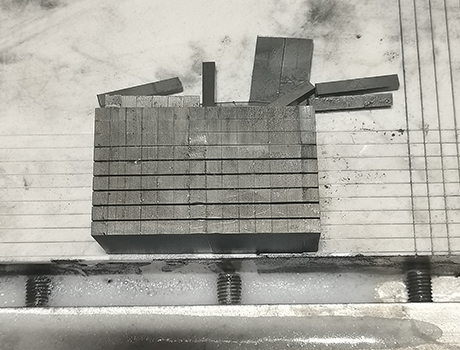
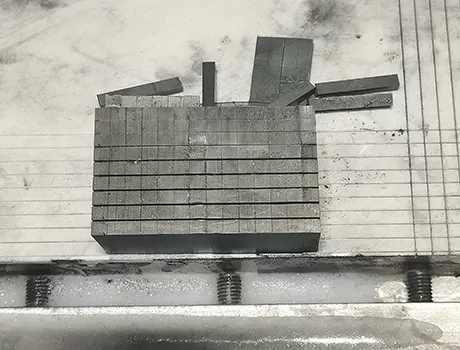
Magnetic materials like neodymium (NdFeB), サマリウムコバルト (SmCo), フェライト, and alnico require specialized cutting equipment to maintain their structural integrity and magnetic properties during processing. Unlike conventional metals, these materials present unique challenges that demand precision cutting solutions.
重要なポイント
Cutting magnetic materials demands equipment that handles four challenges at once: 脆性, heat sensitivity, ±0.02 mm tolerances and minimal material waste.
Compared with laser (heat-affected zone, <5 mm thickness), waterjet (abrasive contamination, taper) and abrasive saws (1-2 mm kerf, rough finish), diamond wire saw machines are the most complete solution.
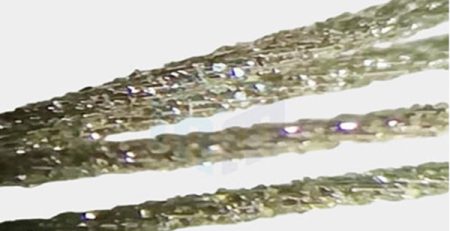
A modern machine like the ESG200-4T uses a 0.1-0.3 mm diamond wire loop at programmable 0.1-10 メートル/秒, achieving ±0.005 mm positioning, Ra <0.2 micrometer finish and kerf loss as low as 0.15 ミリメートル.
Typical payback is 12-18 months at medium volume, driven by 20-40% material savings and about 50% faster processing than conventional methods.
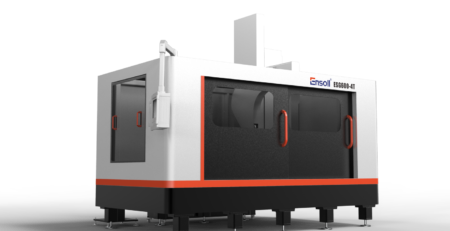
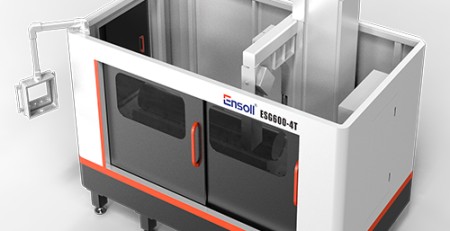
でエンソール, we specialize in advanced magnetic material processing using our state-of-the-artESG200-4Tダイアモンドワイヤーソー切断機. This innovative technology has revolutionized how manufacturers cut sensitive magnetic components while preserving their critical properties.
Challenges in Magnetic Material Cutting
Cutting magnetic materials presents several technical challenges that standard equipment cannot adequately address:
脆性: Most permanent magnets are extremely brittle and prone to cracking
Heat Sensitivity: Excessive heat can demagnetize materials
Precision Requirements: Many applications demand tolerances within ±0.02mm
Material Waste: Conventional methods create significant material loss
Traditional cutting methods like laser cutting, waterjet cutting, or abrasive sawing often fail to meet these challenges effectively. This is where specialized equipment like ダイヤモンドワイヤーソーmake the critical difference.
Challenge: Required contamination-free cutting for MRI components
解決策: ESG200-4T with medical-grade coolant system
Results: Zero contamination, 100% quality approval rate
ケーススタディー 3: Aerospace Supplier
Challenge: Complex-shaped sensor magnets with tight tolerances
解決策: ESG200-4T with multi-axis capability
Results: Achieved ±0.008mm precision consistently
Future of Magnetic Material Cutting
Emerging trends that reinforce the value of diamond wire saw technology:
Thinner Magnets: Demand for <0.5mm thick components
Complex Geometries: 3D-shaped magnets for advanced applications
Material Diversity: New composite magnetic materials
産業界 4.0 Integration: Smart, connected cutting systems
The ESG200-4T is future-proofed to address these evolving requirements through:
Software-upgradable control systems
Modular design for new capabilities
Compatibility with emerging materials
結論
For manufacturers requiring precision cutting of magnetic materials, diamond wire saw technology – particularly theESG200-4Tfrom Ensoll – represents the optimal solution. It outperforms all alternatives in precision, 材料の節約, and quality while eliminating thermal damage concerns.
Four main types: diamond wire saw cutting machines (the most advanced option), laser cutting systems, waterjet cutters and conventional abrasive saws. For brittle magnets like NdFeB, SmCo and ferrite, diamond wire saw machines deliver the best combination of precision, surface quality and material savings.
What precision can a diamond wire saw machine achieve on magnets?
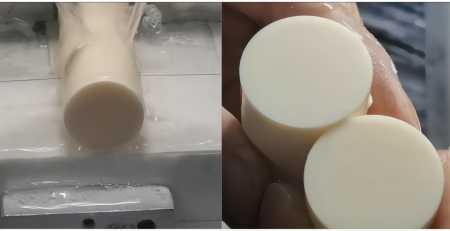
Machines such as the ESG200-4T hold ±0.01 mm dimensional accuracy with ±0.002 mm repeatability, Ra below 0.2 micrometers and kerf loss as low as 0.15 mm — with no heat-affected zone, so magnetic properties are preserved.
Why is laser cutting risky for magnetic materials?
Laser cutting creates a heat-affected zone that can degrade or demagnetize the material near the cut, it is limited to thinner sections (typically under 5 ミリメートル), and it carries higher equipment and operating costs than wire sawing.
How do you choose a magnetic material cutting machine?
Match the machine to the material and volume: check wire diameter range and speed programmability, tension control stability, cutting envelope, coolant system, and whether the supplier offers material-specific parameter presets. Also compare kerf loss and operating cost per hour — wire saws run around $15/hour versus $30-40 for waterjet and laser.
Key Takeaways
Samarium cobalt (SmCo) magnets combine high magnetic strength with thermal stability up to 350 degC and natural corrosion resistance... 続きを読む