Magnetic materials are a fundamental class of substances defined by their ability to generate a magnetic field and to respond in a significant, measurable way to an applied magnetic field. This property originates from the quantum mechanical spin and orbital motions of electrons within the atoms, which create tiny magnetic “dipoles.” The macroscopic magnetic behavior of a material is determined by how these microscopic magnetic moments are arranged and interact with one another.
Основные выводы
Magnetic materials fall into four classes by susceptibility: ferromagnetic (Fe, Co, Ni, НдФеБ, СмКо), ferrimagnetic (MnZn/NiZn ferrites), paramagnetic (Al, Pt) and diamagnetic (Cu, water, графит).
The processing market is led by abrasive cutting (35%), wire EDM (25%) and laser (20%), while diamond wire sawing (15%) is the fastest growing at about 18% CAGR.
Conventional methods share three pain points: 100-300 micrometer heat-affected zones, microcracks that cut NdFeB service life by 30-40%, и 20-25% material waste on expensive rare earths.
Diamond wire loop cutting runs below 40 degC with under 2% flux variation, ±2 micrometer accuracy, Ra 0.1-0.3 micrometer finish and a 0.15-0.25 mm kerf — lifting rare-earth yield to 92-95% at roughly half the operating cost of EDM.
The primary classification system is based on a material’s magnetic susceptibility—the measure of how strongly it magnetizes in response to an external field. This leads to four main categories:
Ferromagnetic Materials are the strongest and most commercially significant type. Within them, the magnetic moments of neighboring atoms align spontaneously and parallel to each other over large regions called domains, even without an external field.
Examples & Приложений: Железо (Fe), Кобальт (Co), Никель (Ni), and their alloys, especially Neodymium-Iron-Boron (НдФеБ) and Samarium-Cobalt (СмКо). They are the workhorses of modern technology, found in electric motors, generators, loudspeakers, MRI machines, and data storage media (hard drives).
Ferrimagnetic Materials are similar to ferromagnets in that they also exhibit spontaneous magnetization and permanent magnetic properties. Однако, the underlying magnetic structure is more complex: the magnetic moments of different types of atoms in the crystal lattice align in opposite directions, but do not cancel out completely, resulting in a net magnetization. They are typically ceramic oxides.
Examples & Приложений: Primarily ferrites (например., Fe₃O₄ – Magnetite, and engineered ferrites like MnZn and NiZn). They are ubiquitous in telecommunications, used in transformer cores, дросселях, microwave components, and magnetic recording heads.
Paramagnetic Materials have atoms with individual magnetic moments, but these moments are randomly oriented due to thermal agitation in the absence of an external field. When placed in a magnetic field, the moments align weakly with the field, creating a small, positive magnetization.
Examples & Приложений: Aluminum (Al), Platinum (Pt), Oxygen (O₂), and many rare-earth elements. Their weak susceptibility is utilized in scientific instruments like Magnetic Susceptibility Balances for chemical analysis.
Diamagnetic Materials represent the weakest form of magnetism, present in all materials. When exposed to a magnetic field, the orbital motion of electrons is slightly altered to oppose the applied field (Lenz’s Law), inducing a very weak, negative magnetization.
Examples & Приложений: Water (H₂O), Медь (Cu), Bismuth (Bi), графит, and most plastics. While weak, this property enables spectacular demonstrations like magnetic levitation of pyrolytic graphite and is fundamental to technologies like Magnetic Resonance Imaging (MRI), where it contributes to the chemical shift used for imaging.
3.Processing of Magnetic Materials: Techniques and Industrial Applications
Magnetic materials require specialized machining approaches due to their unique physical properties and performance-critical applications. The processing landscape encompasses several key methodologies:
Primary Machining Technologies
Abrasive Cutting (35% market penetration)
– Diamond blade cutting dominates hard magnet processing (NdFeB/SmCo)
– Achieves surface roughness Ra 0.4-0.8μm but generates 10-15% Потери материала
– Standard for bulk shaping of ferrite magnets in automotive applications
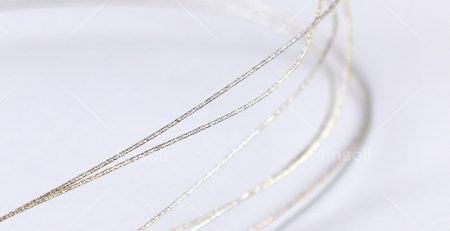
The diamond wire loop system represents the next-generation standard, particularly for:
– High-value rare-earth magnet segmentation
– Ultra-thin electrical steel processing
– Complex geometry cutting in aerospace components
With ROI periods under 8 months for most applications, this technology is transforming magnetic material manufacturing across industries.
6.How to Select a High-Quality Magnetic Material Processing Supplier – Why ChooseЭнсолл?
Selecting the right manufacturing partner for magnetic material processing requires careful evaluation of technical capabilities, quality systems, and industry expertise. As a leader in precision magnetic component production, Ensoll delivers unmatched advantages through our advanceddiamond wire loop cutting technologyand vertically integrated solutions.
Key Selection Criteria for Magnetic Material Processors
Material-Specific Expertise
– Ensoll Advantage: 15+ years specializing in:
– Rare-earth magnets (NdFeB/SmCo) с <2% magnetic property degradation
| Аэронаявигация | Sensor alloy machining | Zero delamination in <0.2mm laminations |
| Energy | Transformer core cutting | 0.15W/kg loss @1.7T (B35A270 equivalent) |
Why Global Leaders Choose Ensoll
– 30% Cost Reduction through optimized material utilization
– 50% Faster Time-to-Market with concurrent engineering
– Zero PPM Defects in mission-critical applications
– IP Protection with NDAs and secure data protocols
Case Study Highlights:
– Reduced NdFeB waste by 22% for Tier 1 EV motor supplier
– Achieved 99.97% on-time delivery for medical implant OEM
– Developed proprietary cutting fluid extending wire life 3X
For manufacturers requiring absolute precision in magnetic components, Ensoll предоставляет:
✓ Technical Superiority – 23 patents in magnetic material processing
✓ Supply Chain Reliability – Dual-source raw material procurement
✓ Total Cost Leadership – Value engineering programs
Contact our engineering team today to audit your magnetic component production process. Our application experts will conduct a free cutting process optimization analysis to identify your savings potential.
Because NdFeB dominates motor production, most of the cost pressure in this section comes down toкак резать неодимовые магнитыwithout chipping or heat damage.
Часто задаваемые вопросы
What are the main types of magnetic materials?
By magnetic susceptibility there are four: ferromagnetic materials such as iron, кобальт, nickel and the NdFeB/SmCo alloys; ferrimagnetic ceramics such as MnZn and NiZn ferrites; paramagnetic materials such as aluminum and platinum; and diamagnetic materials such as copper, water and graphite.
What is the most precise way to cut magnetic materials?
Нарезка ромбовидной проволочной петли. It achieves around ±2 micrometer dimensional accuracy and Ra 0.1-0.3 micrometer surfaces across thicknesses from 0.05 Кому 300 миллиметр, with no thermal impact — outperforming laser and EDM on NdFeB yield (95% против 82% и 88%).
Why does conventional cutting waste so much rare-earth magnet material?
Blades and conventional saws have kerf widths of 0.8-1.2 миллиметр, and each cut also generates heat-affected or microcracked zones that must be machined away. Diamond wire’s 0.15-0.25 mm kerf and damage-free surface push material utilization from about 80% Кому 92-95%.
How does heat affect magnets during machining?
Laser and EDM create 100-300 micrometer heat-affected zones that can cost a SmCo magnet up to 15% of its remanence. Diamond wire loop cutting stays below 40 degC with continuous coolant, keeping flux density variation within about 2% and eliminating post-process annealing.
Основные выводы
Алмазные проволочные петли скользят по стеклу с алмазным режущим покрытием, позволяя мастерам вырезать пивные бутылки в сложные узоры.... читать далее
Введение в передовые решения для резки стекла
В современном требовательном производственном ландшафте оптических изделий, Алмазная канатная пила стала золотым стандартом... читать далее
Петли из алмазной проволоки изготавливаются с использованием передовых производственных процессов, в которых алмазы встраиваются в проволочную петлю. Этот... читать далее
Абстрактный: В этой статье представлен тест точного нарезки на PEEK (полиэфирном эфирном кетоне) с использованием а Петля из алмазной проволоки. Тем... читать далее
Key Takeaways
Ferrite (керамический) магниты представляют собой спечённый оксид железа с карбонатом стронция или бария: дешёвые, коррозионностойкие и стабильные до 250... читать далее