金刚石线环: 新行业标准
在先进制造的世界中, 以亚微米精度切割极硬且脆的基材的能力是一个主要的竞争优势. 随着碳化硅等材料, 蓝宝石, 以及先进工业陶瓷成为5G电子产品, 电动汽车, 和航空航天工程的基础, 传统切割方法正在达到其物理极限.
工业对这一挑战的回应是 金刚石线环. 作为现代高性能切割系统的核心运行, 这种无尽的磨料环正在重塑工厂和研究实验室处理精密切割的方式.
钻石线环的构造
其核心, 钻石线环是一项为连续使用而设计的工程奇迹, 高速摩擦管理. 它由一根高抗拉强度的芯线组成,该芯线被精确焊接成无缝的, 无尽环. 外表面通过先进的电镀或真空钎焊技术嵌入微观的钻石晶体.
由于钻石位于摩氏硬度等级的绝对顶端, 钻石线环具有切割任意比自身软的材料的独特能力. Unlike traditional reciprocating saws that must halt and reverse direction—introducing vibration and uneven wear—the continuous unidirectional rotation of the loop allows for ultra-high linear speeds, 通常超过 30 自 60 meters per second. This constant, fluid motion is what enables rapid, vibration-free material removal.
A Perfect Dynamic: The Consumable and the Machine
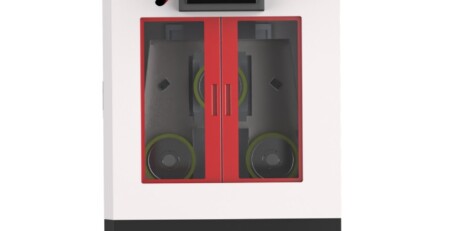
To fully appreciate this technology, one must recognize that a diamond wire loop cannot function in isolation; it is a critical, highly specialized consumable designed to work in perfect harmony with a 金刚石绳锯切割机.
The cutting machine acts as the rigid, high-precision exoskeleton. It provides the precise tensioning controls, the high-speed drive wheels, and the programmable feed rates required to guide the loop through the workpiece. When this premium consumable is paired with an advanced machine platform, it delivers a series of transformative operational benefits:
1. True Cold Cutting Mechanics
Traditional laser cutting or heavy grinding generates intense localized heat, which causes micro-fractures, thermal stress, and structural distortion in sensitive wafers. 金刚石线环 utilizes a micro-grinding mechanical process. Supported by an integrated coolant system that flushes away debris, it achieves a “cool cut” that preserves the raw material’s crystalline structure perfectly.
2. Unprecedented Surface Smoothness
The combination of a highly stable machine spindle and the uniform grit distribution of the loop results in an immaculate surface finish. It regularly achieves a surface roughness profile of less than $0.2\ \mu\text{m}$. For semiconductor and optical component manufacturers, this means the sliced wafer is already near-flat, significantly reducing or entirely eliminating the time and cost spent on secondary lapping and polishing.
3. Micro-Precision Tolerances
Industrial-grade cutting systems utilizing a diamond wire loop maintain tight positioning tolerances between $\pm0.02\ \text{毫米}$ and $\pm0.05\ \text{毫米}$. This level of repeatability ensures that every single slice, from the first to the one-thousandth, is completely uniform.
Maximizing ROI Through Ultra-Low Kerf Loss
In high-value material processing, material waste is the enemy of profitability. When slicing an expensive ingot of Silicon Carbide or a rare meteorite sample, the width of the cut—known as the kerf—represents pure material turned into useless dust.
Because a diamond wire loop boasts exceptional tensile strength, manufacturers can utilize incredibly thin wire core diameters. Slicing with a thinner wire directly minimizes kerf loss. By saving fractions of a millimeter on every single cut, a factory can extract significantly more usable wafers or blanks out of a single ingot, directly boosting yield percentages and lowering raw material procurement costs.
Versatility Across the Material Spectrum
While designed to conquer the hardest substances on earth, the application range of the diamond wire loop extends far into specialized composites and soft materials. It is highly sought after across multiple sectors for processing:
- Advanced Electronics: Slicing quartz, 氮化镓, and sapphire windows.
- Precision Optics: Creating flaw-free cuts in optical glass, 晶体, and laser mediums.
- Geology andAerospace: Sectioning fragile meteorites and rare mineral samples without altering their composition.
Industrial Manufacturing: Cleanly cutting through magnetic materials, graphite anodes, engineering ceramics, and even thick rubber tires or multi-layered insulation materials.
Crucial Selection Criteria for Engineers and Operators
To maximize the lifespan of this vital consumable and achieve the best possible throughput, operators must carefully evaluate their specific application parameters when selecting a diamond wire loop:
线径 & Length: Thin diameters maximize material savings, while thicker diameters handle aggressive feed rates. The length must perfectly match the machine’s wheel configuration to maintain stable line tension.
材料硬度: The size, concentration, and bonding method of the diamond grit on the loop must be tailored to the workpiece’s physical density.
Environmental Compatibility: The loop and machine system must be chosen based on whether the material requires dry cutting (such as certain porous ceramics or graphite) or wet cutting (which uses water or oil-based coolants for maximum thermal management).
结论
The diamond wire loop represents a massive leap forward in the evolution of precision manufacturing. By serving as a seamless, high-speed consumable that transforms the capabilities of modern diamond wire saw cutting machines, it provides businesses with the ultimate tool to reduce waste, eliminate thermal damage, and achieve microscopic accuracy. Whether for an elite university research lab or a high-throughput semiconductor foundry, integrating this technology is an indispensable step toward optimizing material yields and conquering the challenges of hard-material processing.