Lavorazione del vetro senza crepe: Sega a filo diamantato
- Optical glass is brittle and sensitive to thermal shock; le crepe di solito iniziano al bordo di uscita del taglio.
- La lavorazione con filo diamantato mantiene la forza di taglio bassa e costante, producing crack-free edges.
- Coolant and feed control matter far more than cutting speed.
Why Crack-Free Cutting Matters in Optical Glass Machining
Vetro ottico, such as SCHOTT B270, N-BK7, and fused silica, is widely used in high-precision applications like camera lenses, ottica laser, medical imaging, e componenti aerospaziali. Tuttavia, traditional cutting methods—such as diamond blade sawing, taglio laser, or ultrasonic machining—often introduce micro-cracks, subsurface damage, or thermal stress. These defects degrade optical performance, increase polishing costs, and lead to higher rejection rates.
To achieve true crack-free optical glass machining, manufacturers must adopt advanced cutting technologies that minimize mechanical and thermal damage. This is where diamond wire saw cutting machines excel, offering unparalleled precision and edge quality.
Come le macchine per il taglio con filo diamantato garantiscono risultati senza crepe
A differenza dei metodi convenzionali, macchine da taglio a filo diamantato uso di un filo sottile, rivestito di diamante (generalmente da 0,1 a 0,3 mm di diametro) che corre ad alta velocità sotto tensione controllata. Questo meccanismo di taglio unico fornisce diversi vantaggi chiave per il vetro ottico:
1. Danno subsuperficiale ultra-basso
– Le lame diamantate tradizionali creano micro-fratture a causa del taglio ad alto impatto.
– Il taglio laser genera zone influenzate dal calore (HAZ), portando a crepe indotte da stress.
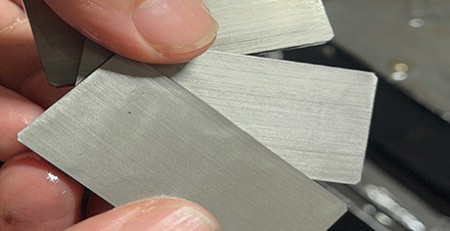
– Le seghe a filo diamantato utilizzano un'azione abrasiva delicata, produzione di crepe subsuperficiali quasi nulle—critico per ottiche ad alte prestazioni.
2. Finitura Superiore della Superficie (Ra < 0.2µm)
– Il filo diamantato a grana fine garantisce un bordo simile a uno specchio, riducendo la necessità di una lucidatura estesa.
– Ideale per lenti, Prismi, e ottiche di precisione dove la rugosità della superficie deve essere minimizzata.
3. Nessuna Distorzione Termica (Processo di Taglio a Freddo)
– Il taglio laser e a getto d'acqua genera calore, rischiando birefringenza da stress e deformazioni del materiale.
– Le seghe a filo diamantato operano a temperatura ambiente, preservando l'integrità strutturale del vetro.
4. Perdita di Scanalatura Minima (Fino a 0,15 mm)
– Saves expensive vetro ottico materiale, migliorando il rendimento e riducendo i costi.
– Perfect for wafer-level optics and micro-optics arrays where material conservation is crucial.
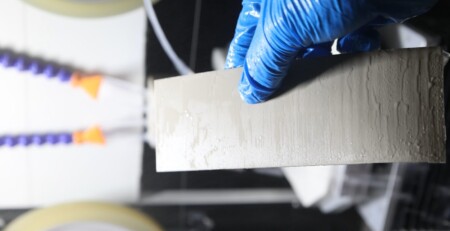
Cutting video display:
Applications of Diamond Wire Saws in Optical Glass Machining
- Camera Lenses & Prisms
– Requires chip-free edges to prevent light scattering.
– Reduces post-polishing time by 30–50%, lowering production costs.
- Telescope Mirrors & High-Precision Optics
– Maintains tight tolerances (±0.02mm ) for SCHOTT Zerodur and other low-expansion glass.
– Ensures long-term durability with no hidden cracks.
- Semiconduttore & Medical Optics
– Kerf widths as narrow as 0.15mm maximize material utilization.
– No thermal damage means higher reliability for critical components
Why Choose Our Diamond Wire Saw Cutting Machine?
When investing in crack-free optical glass machining, our diamond wire saw cutting machine stands out with:
✔ CNC Precision Control – Ensures repeatable, high-accuracy cuts.
✔ Advanced Coolant System – Prevents glass chipping and extends wire life.
✔ Automation Compatibility – Ideal for high-volume production.
✔ Customizable Wire Speeds – Optimized for different glass types (B270, N-BK7, silice fusa).
Conclusione: Upgrade to Crack-Free Optical Glass Cutting
For manufacturers of precision optics, le macchine da taglio a sega a filo diamantato offrono:
✅ No subsurface cracks – Stronger, more reliable components.
✅ Superior surface finish – Less polishing, faster production.
✅ Material savings – Narrow kerf reduces waste.
✅ No thermal damage – Preserves optical clarity.
Interested in achieving flawless optical glass cuts? [Contact us today for a free cutting test] and experience the difference of true crack-free machining!
Domande Frequenti
Come si taglia il vetro ottico senza romperlo?
Bassa, steady cutting force with continuous coolant. Diamond wire machining avoids the point loading that starts cracks.
Perché il vetro ottico si rompe durante la lavorazione?
Concentrated stress and local heating. Brittle materials fail at the point of highest tension — usually the exit edge.
Una sega a filo diamantato è migliore di una lama per il vetro ottico?
For precision work, sì: nessuna scheggiatura, no thermal shock, and a much narrower kerf.
Il taglio del vetro ottico ha bisogno di refrigerante?
Sì. Water-based coolant removes heat and swarf; dry cutting risks micro-cracks that only appear later.
Contenuto tecnico esaminato dal team di ingegneria Ensoll — un produttore di anelli diamantati con 10+ anni di esperienza produttiva.