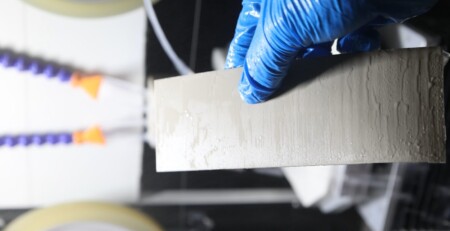
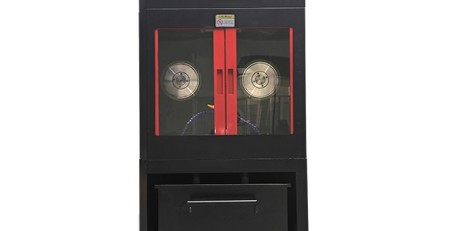
이 연구는 다이아몬드 와이어 루프의 절단 성능에 대한 다양한 수지 바인더의 영향을 조사합니다. 수지 경화 경도 샘플은 순수 페놀 수지를 사용하여 준비되었습니다, 에폭시 변성 페놀 수지, 및 방향족 알킬 변성 페놀 수지, 그리고 그들의 로크웰 경도가 시험되었습니다. 경화된 수지 샘플의 파괴된 표면은 주사 전자 현미경을 사용하여 관찰되었습니다, 경화 후 다양한 수준의 밀도 표시. Diamond wire loops were then manufactured for single crystalsilicon cuttingexperiments.
The experimental results demonstrate that diamond wire loops made with pure phenolic resin, characterized by high cured hardness and good post-curing density, exhibit minimal wire deflection during cutting, shorter cutting times, reduced diamond particle detachment, and enhanced cutting ability.
With the increase in the size of single crystal silicon and the rising demands for wafer quality and cutting efficiency, free abrasive wire saw cutting can no longer meet production needs, leading to widespread attention on bonded abrasive diamond wire loops.
Types of Bonded Abrasive Diamond Wire Loops
접착된 연마 다이아몬드 와이어 루프는 주로 전도금 다이아몬드 와이어 루프와 레진 다이아몬드 와이어 루프로 나뉩니다. 그 중, 레진 다이아몬드 와이어 루프 (수지 루프라고 불림) 제조 공정이 단순하다, 저비용, 고효율, 환경 오염 최소화, 가공 재료의 우수한 표면 품질. 레진 루프의 절단 성능은 주로 레진 바인더의 성능에 달려 있다. 단결정 실리콘을 절단할 때, 수지 바인더가 매트릭스 및 다이아몬드 입자와 잘 접착되어 다이아몬드 이탈 및 절단 루프 실패를 방지해야 한다; 레진 루프와 작업물 간 마찰이 많은 열을 발생시킴, 수지의 우수한 내열 능력이 필요하다.
절단 공정 분석
본 연구에서, the cured hardness of four types of resin binders is tested, and their post-cured cross-sectional morphology is analyzed. Subsequently, these four resins are used to prepare diamond wire loops for cutting single crystal silicon in experiments, with an analysis of the influence of the cured hardness and post-cured density of the resin binders on cutting ability.
Summary of Experimental Results
Using four different types of phenolic resin hardness specimens and resin wire, their cured Rockwell hardness was measured. Subsequently, cutting experiments on single crystal silicon were conducted under the same cutting process to compare the relationship between Rockwell hardness and cutting performance. The following conclusions were drawn from the experiments:
(1)Phenolic resins with shorter flow length and higher curing agent content exhibit higher cured Rockwell hardness. The resin layer of the cutting wire made from this resin binder shows good adhesion to diamonds, resulting in fewer diamond particle detachments during cutting, shorter cutting times, and indicating a stronger cutting capability of the cutting wire.
(2)Phenolic resins that produce fewer small molecules during curing exhibit denser structures post-curing, with better adhesion to diamonds and stronger cutting capabilities of the cutting wire.