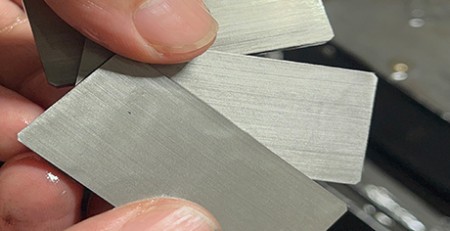
Sapphire is crystalline aluminum oxide (알2O3) — the mineral corundum, 모스 9, the second hardest natural mineral after diamond; pure Al2O3 itself is colorless.
The colors come from trace impurities: blue from titanium plus iron, pink from chromium, purple from vanadium; once chromium produces a true red, the stone is classified as ruby instead.
Natural sapphires form under high temperature and pressure in metamorphic and igneous rocks; major sources include Kashmir, Myanmar, Sri Lanka, Madagascar, Australia and Montana.
Synthetic sapphire — made by Verneuil flame fusion (since 1902), Czochralski pulling, flux or hydrothermal growth — has identical physical properties and serves watch crystals, LED substrates, phone lens covers and medical implants.
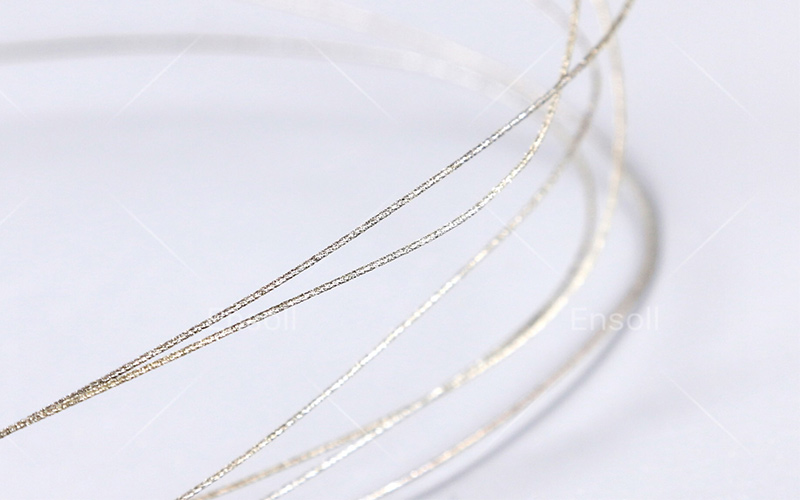
Only diamond tooling cuts sapphire efficiently; diamond wire loop slicing gives smooth, controlled cuts with minimal subsurface damage, protecting both LED wafers and expensive natural rough.
When you think of sapphires, you probably picture a deep blue gemstone in a royal ring or a luxury watch. But sapphires are far more interesting than their beauty suggests. 그렇다면, what are sapphires made of?
The short answer is aluminum oxide (알₂O₃). The longer answer involves crystal structures, trace elements, and even industrial applications that might surprise you. 이 문서의 내용, we will explore the composition of sapphires, how they form, and how they are shaped for both jewelry and high-tech uses.
The Basic Chemistry of Sapphire
Aluminum Oxide: The Foundation
핵심 요소, a sapphire is a crystalline form of aluminum oxide, a chemical compound made of two aluminum atoms bonded to three oxygen atoms (알₂O₃). 이것은 광물 코런덤을 형성하는 동일한 화합물입니다, the second hardest natural mineral after diamond, 순위 9 모스 경도 척도에서.
순수한 산화알루미늄은 실제로 무색입니다. 우리가 사파이어와 연관시키는 눈부신 색상은 미량 불순물—결정 격자에서 일부 알루미늄 원자를 대체하는 다른 원소의 아주 작은 양—에서 나옵니다.
파란색은 어디에서 오는가?
전통적인 파란 사파이어는 소량의 티타늄과 철에서 색을 얻습니다. 이 두 원소가 결정 구조 안에 함께 있을 때, 그들은 특정 파장의 빛을 흡수하고 파란색을 통과시키는 방식으로 빛과 상호작용합니다. 정확한 색조는 이러한 불순물의 비율과 농도에 따라 달라집니다.
다른 색상과 그 원인
사파이어는 거의 모든 색상의 무지개에서 나타납니다. 각 색상을 만들어내는 원인은 다음과 같습니다:
색상
원인 원소
파란색
티타늄 + 철
노란색
철
그린
철 + 티타늄 (다른 비율)
분홍색
크롬
주황색
철 + 크롬
보라색
Vanadium
Colorless
No impurities
Red corundum is not called sapphire—it is ruby. The difference is simply a matter of color and chromium concentration. Once the chromium level produces a red that meets certain standards, the gemstone is classified as ruby instead of pink sapphire.
Part Two: How Sapphires Form Naturally
Geological Origins
Natural sapphires form deep within the Earth’s crust under specific conditions. They require:
– 고온 (around 800–1,800°C)
– High pressure (several kilobars)
– Aluminum-rich environments low in silica
Most sapphires form in metamorphic rocks such as marble, gneiss, and schist. They can also form in igneous rocks like basalt. Over millions of years, erosion releases these crystals from their host rocks, and water transports them into riverbeds where miners find them as alluvial deposits.
Mining Locations
Major sapphire sources include:
– Kashmir (famous for intense blue, now largely depleted)
– Myanmar (Burma) – known for high-quality blues
– Sri Lanka (Ceylon) – produces a wide range of colors
– Madagascar – a major modern source
– Australia – large volumes but darker stones
– Montana, USA – unique pale blues and yellows
Part Three: Synthetic Sapphires – Made by Humans
Why Create Synthetic Sapphires?
Natural sapphires are rare and expensive. For many industrial and even some jewelry applications, synthetic sapphires offer the same physical and chemical properties at a fraction of the cost.
The first successful synthetic sapphire was created in 1902 by French chemist Auguste Verneuil. His flame fusion method remains in use today, though more advanced techniques have since been developed.
Methods of Production
Verneuil (플레임 퓨전) 방법:
고운 산화알루미늄 가루를 고온의 불을 통해 떨어뜨린다. 가루가 녹아 회전하는 받침대 위로 떨어진다, 그곳에서 단결정 불(perl)로 굳는다. 이 방법은 빠르고 저렴하지만 곡선 성장선을 가진 돌을 만든다.
초크랄스키 방법:
금속 산화물을 위한 동일한 방법 실리콘 웨이퍼. 산화알루미늄을 도가니에서 녹이고, 씨앗 결정(seed crystal)을 녹은 용융물에 담그고 천천히 회전시키며 위로 끌어올린다. 이를 통해 내부 구조가 완벽한 매우 고품질의 결정이 만들어진다.
플럭스 성장 및 수열법:
이 느린 방법들은 자연 성장 조건을 모방한다. 이들은 자연 사파이어와 매우 유사한 더 비싼 합성 돌을 만든다, 자연 돌이 너무 비쌀 때 고급 보석에 자주 사용된다.
합성 사파이어의 산업적 용도
합성 사파이어는 천연 사파이어와 동일한 경도와 화학적 저항성을 가지고 있기 때문에, 많은 기술적 용도로 사용된다:
– 시계 결정 (스크래치 방지 표면)
– 스마트폰 카메라 렌즈 커버와 디스플레이 화면 (일부 고급형 휴대폰은 사파이어 글라스를 사용한다)
– LED substrates (질화갈륨 LED 성장용 사파이어 웨이퍼)
– 의료 임플란트 (생체 적합성 부품)
– 과학 기구용 고압 유리
– 전자기기용 박막 기판
제4부: 사파이어 절단과 성형
사파이어 절단의 도전
사파이어는 매우 단단하여 다이아몬드 다음으로 강하다. 절단은 유리나 금속을 자르는 것과 같지 않다. 전통적인 강철 공구는 사파이어 표면에 흠집을 내지 못한다. 대신에, 사파이어 절단과 성형에는 다이아몬드 공구가 필요하다, 오로지 다이아몬드만이 사파이어보다 경도가 높기 때문이다 (10 대. 9 모스 척도에서).
거친 결정에서 연마된 보석으로
보석의 경우, 이 과정에는:
Sawing the rough crystal into manageable pieces
Grinding to create basic shapes (cabochons or faceted preforms)
Lapping to flatten and smooth surfaces
Faceting to cut precise angles that reflect light
Polishing to achieve a mirror finish
For industrial sapphire components (윈도우, 웨이퍼, watch crystals), the process is similar but with stricter dimensional tolerances. Large synthetic sapphire boules must be sliced into thin wafers or plates.
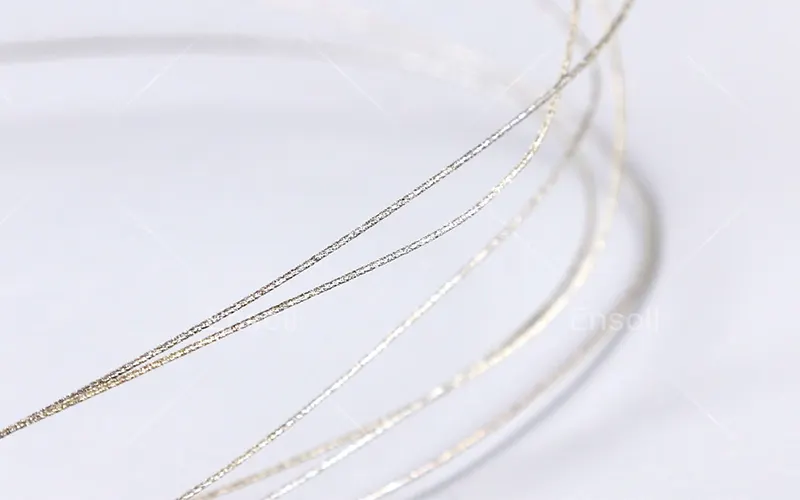
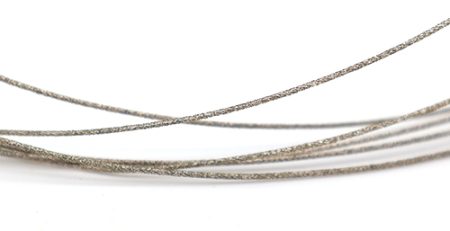
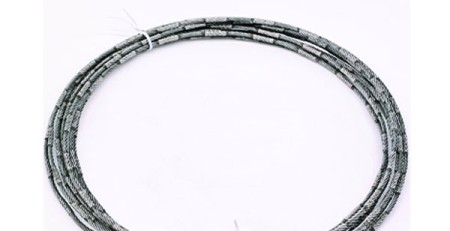
This is where precision cutting technology becomes essential. Slicing a sapphire boule into thin wafers requires a tool that can maintain consistent thickness while minimizing cracks and waste. 이 다이아몬드 와이어 루프offers exactly this capability. The continuous loop of diamond-coated wire moves in one direction, providing a smooth, controlled cut with minimal subsurface damage. This technique is especially valuable for producing sapphire wafers used in LED manufacturing or for cutting expensive natural sapphire rough where every millimeter of material matters.
Part Five: Sapphire vs. Other Gemstones
Sapphire vs. Ruby
As mentioned, both are corundum (알₂O₃). The only difference is color. There is no chemical distinction—just a historical and commercial naming convention. Some pink sapphires contain the same chromium as rubies but at lower concentrations.
Sapphire vs. 다이아몬드
Diamond is pure carbon in a cubic crystal structure. Sapphire is aluminum oxide in a trigonal (hexagonal) 구조. Diamond is harder (10 대. 9) and has higher refractive index (2.42 대. 1.77), meaning diamonds generally show more brilliance. 그렇지만, sapphire is tougher (less likely to cleave) and costs far less, making it practical for many applications where diamond would be overkill.
Sapphire vs. 잔
Glass is amorphous (non-crystalline) silicon dioxide with various additives. Sapphire is crystalline aluminum oxide. Sapphire is much harder, more scratch-resistant, and has higher thermal conductivity. 그렇지만, glass is cheaper and easier to shape, which is why most phone screens still use glass rather than sapphire.
—
Part Six: How to Identify a Real Sapphire
Common Tests
Hardness test: Sapphire scratches glass and most other gemstones (except diamond). But this test is destructive and not recommended for finished jewelry.
Refractive index: Professional gemologists use a refractometer. Natural and synthetic sapphires both measure 1.762–1.770.
Inclusions: Natural sapphires often contain tiny inclusions—rutile needles, mineral crystals, or growth lines. Synthetic sapphires may show curved striae (Verneuil) or clean interiors (Czochralski).
Spectroscopy: A spectroscope reveals absorption patterns characteristic of specific trace elements. Blue sapphires show lines from iron and titanium.
Natural vs. Synthetic
For most practical purposes (경도, 화학 저항성, optical properties), natural and synthetic sapphires are identical. The difference is origin and price. A trained gemologist can distinguish them by internal features, but the average person cannot and does not need to.
결론: A Simple Composition with Remarkable Range
그렇다면, what are sapphires made of? The answer is delightfully simple: aluminum oxide with a pinch of trace elements. Yet this straightforward composition produces one of the most varied and valuable families of gemstones on Earth. From the deep blues of Kashmir to the industrial precision of synthetic wafers, sapphire combines beauty, 내구성, and utility in ways few other materials can match.
Whether you admire a sapphire in a royal crown, wear one as a birthstone (9월), or rely on a sapphire window in a scientific instrument, you are looking at the same remarkable material—corundum, colored and shaped for its purpose.
자주 묻는 질문
What are sapphires made of?
Aluminum oxide (알2O3) — two aluminum atoms bonded to three oxygen atoms in a crystalline lattice. This is the mineral corundum, rating 9 모스 경도 척도에서. Pure aluminum oxide is colorless; the familiar colors come from trace elements replacing some aluminum atoms in the lattice.
What gives blue sapphire its color?
Small amounts of titanium and iron sitting together in the crystal structure. They interact with light so that certain wavelengths are absorbed and blue is transmitted; the exact shade depends on the ratio and concentration of the two impurities.
Is a synthetic sapphire a real sapphire?
In physical and chemical terms, 네: synthetic sapphire has the same hardness, chemical resistance and optical properties as natural sapphire. The difference is origin and price. Gemologists can distinguish them by internal features such as curved growth lines, but for industrial uses they are interchangeable.
How do you cut sapphire?
Only diamond tooling works, because diamond (모스 10) is the only material harder than sapphire (모스 9). For slicing boules into wafers or cutting valuable rough, a diamond wire loop provides a smooth, controlled, continuous cut with minimal subsurface damage and very little material loss.

 The Basic Chemistry of Sapphire
 전통적인 파란 사파이어는 소량의 티타늄과 철에서 색을 얻습니다. 이 두 원소가 결정 구조 안에 함께 있을 때, 그들은 특정 파장의 빛을 흡수하고 파란색을 통과시키는 방식으로 빛과 상호작용합니다. 정확한 색조는 이러한 불순물의 비율과 농도에 따라 달라집니다.