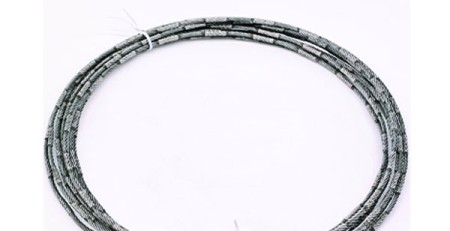
Резка PMI-пены алмазной проволочной петлей: 0.8 Тест точной резки в мм
Абстрактный: This application report documents a precision straight-slicing test on PMI
(Полиметакрилидимид) structural foam supplied by a European customer. Four slices measuring 400 mm x 400 mm x
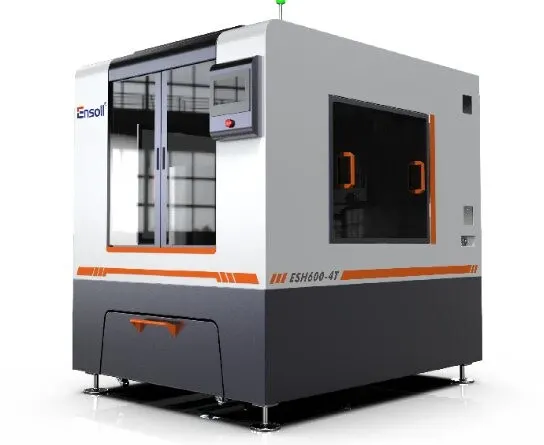
0.8 mm were produced on an ESH600-4T horizontal Петля из алмазной проволоки cutting machine
using dry cutting and a fully coated diamond wire. Measured results: total thickness variation (TTV)
0.013-0.050 миллиметр (в среднем 0.036 миллиметр), thickness tolerance +/-0.043 миллиметр, surface roughness Ra 0.68-0.82 um, and maximum
сколы на краях 5.5-7.1 um. Matching machine structure, cutting method and process parameters to the cellular
structure of PMI foam kept material removal stable and held slice dimensional accuracy and cut-surface quality
within a workable range.
Основные выводы
- PMI foam is a low-density structural foam with a fine cellular structure; at excessive cutting load its
skeleton is compressed or torn rather than cleanly sheared. - Dry cutting was chosen to keep coolant out of the foam cells and to remove the cleaning and drying steps
that follow a wet cut. - Across four 0.8 мм ломтики: TTV 0.013-0.050 миллиметр (среднее 0.036 миллиметр), thickness tolerance +/-0.043 миллиметр, Ra
0.68-0.82 um, maximum chipping 5.5-7.1 um. - Samples ran slightly thin overall (down to -0.043 миллиметр), which points to a straightforward dimensional
compensation on the next run. - Станок, проволоки, cutting method and parameters were matched as one set; no single parameter carried the
result.
Sample test for European customer I | Процесс резки алмазной проволокой
Overview of the PMI Foam Slicing Test
This test was carried out on PMI foam supplied by a European customer (customer I), with high-precision
straight slicing as the primary requirement. PMI (Полиметакрилидимид) foam is a high-performance structural foam
known for low density, a uniform cellular structure, and good specific strength and specific stiffness. Its
porous interior gives it a material-removal behaviour quite different from that of dense materials: the diamond
abrasive grains act continuously on the foam skeleton, and excessive cutting load or poorly matched parameters
readily cause local compression, tearing and an uneven cut face, all of which feed directly into slice thickness
and surface quality. This test therefore matched cutting method, machine configuration, wire and process
parameters to the structural characteristics of PMI foam and to the straight-slicing accuracy requirement, so
that material removal stayed stable while slice dimensions and cut-surface quality remained under control.
Because of the demands PMI foam places on cutting stability, dimensional accuracy and cross-section quality,
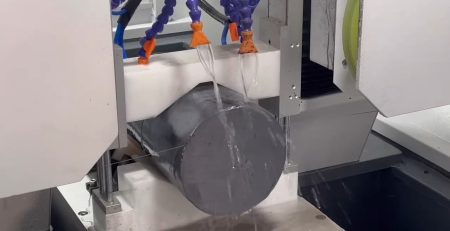
Ensoll applied a diamond wire solution tailored to foam machining. On the machine side, a dedicated horizontal
Алмазная канатная пила was used so that the wire runs stably along the horizontal
plane, providing a repeatable cutting path and stable feed for straight slicing. On the consumable side, a
diamond wire suited to PMI foam keeps the abrasive grains acting on the material surface continuously and evenly,
which sustains stable removal. On the cutting-method side, dry cutting avoids coolant entering the foam cells and
lets chips escape promptly during the cut. On that basis, wire running speed and feed rate were adjusted against
the density, cellular structure and target slice thickness of the material, holding the cutting load in a
suitable band and reducing the local compression and tearing that excessive point loads cause in the foam
структура. Станок, соответствующий требованиям, проволоки, cutting method and parameters as one set kept the slicing process stable and
brought slice thickness, dimensional accuracy and surface quality under control, establishing a process basis
for high-precision straight slicing of PMI foam.
1. Объект испытания: Основная информация
- Материал: ПМИ-пена
- Твёрдость: приблизительно MH 2
- Размеры заготовки: 400 mm x 400 mm x 50 миллиметр
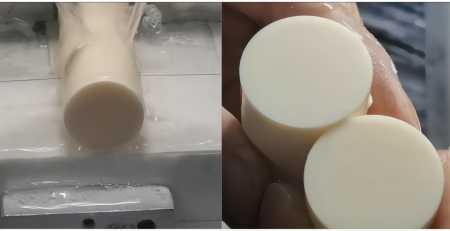
- Размеры реза: 400 mm x 400 mm x 0.8 миллиметр
2. Выбор станка и проволоки
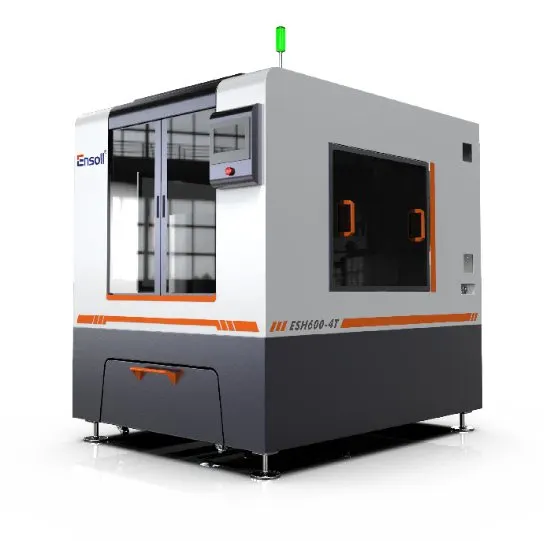
Тип станка: ЭШ600-4Т. Because PMI foam is lightweight, porous and easily deformed, и
because the requirement is high-precision straight slicing, Ensoll selected a horizontal diamond wire cutting
machine suited to PMI machining. This keeps the wire running stably and preserves cutting-path accuracy, reduces
the effect of machine vibration and cutting-load fluctuation on machining quality, и ограничивает локальную
деформацию, дефекты кромок и отклонение толщины, которые в противном случае могли бы возникнуть при неравномерной нагрузке, тем самым улучшая
как точность размеров, так и качество поверхности разреза срезов PMI.
- Тип охлаждающей жидкости: сухая обработка. Поскольку поролон PMI пористый, легкий и склонен к поглощению
Жидкостей, сухая обработка предотвращает попадание охлаждающей жидкости в ячейки или её оставание в материале и дестабилизацию
размеров среза. Также она исключает этапы очистки и сушки, которые следуют за мокрым резом, что помогает сохранить
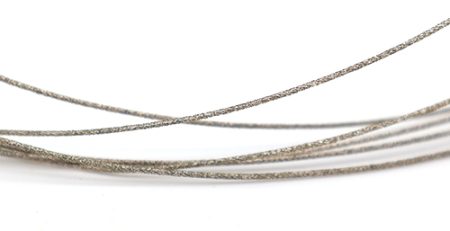
структурную целостность и точность размеров. - Тип проволоки: полностью покрытая. A полностью покрытая алмазная проволочная петля
повышает прочность сцепления зерен и стабильность распределения, обеспечивая стабильную и непрерывную способность резки.
Она уменьшает колебания резки, вызванные износом проволоки и выпадением зерен, ограничивает разрывы и дефекты кромок, и
улучшает размерную точность и качество поверхности срезов ПМИ.
3. Метод резки и преимущества машины
Горизонтальный метод резки. Машина использует горизонтальную конструкцию резки с
односторонним и быстрым движением Петля из алмазной проволоки в качестве режущего инструмента; тем
заготовка фиксируется на рабочем столе и режется с помощью точной подачи. Эта компоновка компактна с понятной траекторией движения,
что помогает сохранять стабильность траектории проволоки и уменьшает влияние колебаний нагрузки на толщину среза и
качество резной поверхности. Также поддерживаются фиксированные, вращательные и маятниковые режимы резки, так что режим резки можно подбирать
в соответствии с характеристиками материала и требованиями обработки, расширяя адаптивность машины к разным материалам и
условиям обработки.
Интеллектуальная система управления натяжением. Spring tensioning combined with force-sensor feedback
allows constant-tension or variable-tension operation according to the machining state. Holding wire tension
stable during the cut improves wire running stability and reduces trajectory fluctuation and the risk of wire
breakage; tension is automatically reduced in standby and during wire changes, which limits wire fatigue and
pulley wear.
Multi-stage automatic cutting. Толщина среза, number of cuts, cutting speed and cutting
depth can be preset, and the machine then completes continuous cutting automatically to those parameters,
reducing manual interference in the process. For tasks requiring many slices in succession, this raises cutting
efficiency and batch-to-batch consistency.
Breakpoint resume. If the process is interrupted by a wire break, power loss or similar
fault, система фиксирует текущую позицию резки и возобновляет с этого момента после восстановления работы,
нет необходимости сбрасывать ноль заготовки. это снижает ошибку обработки при повторном позиционировании, уменьшает
потери материала и повышает эффективность непрерывной обработки.
4. Настройки параметров и метод охлаждения
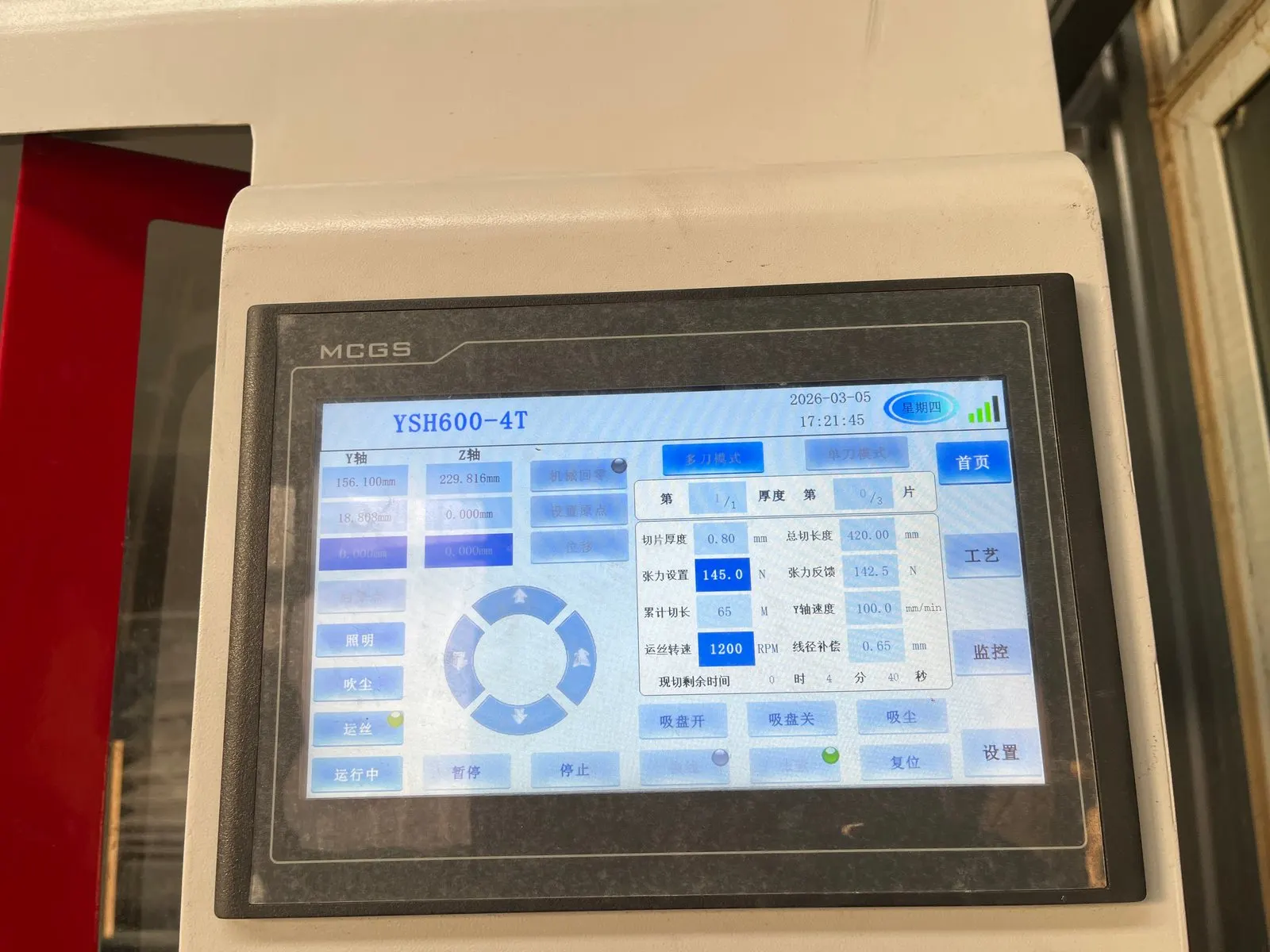
| Параметр | Значение |
|---|---|
| Диаметр проволоки (миллиметр) | 0.60 x 3460 |
| Скорость движения проволоки (мм/мин) | 100 |
| Ширина реза (миллиметр) | 400 |
| Напряжение резательного провода (N) | 145 |
| Скорость проволоки (М / сек) | 25 |
| Время натяжения проволочного лука (s) | 60 |
| Нагрузка при резке (N·м) | 17 |
5. Эффективность резки и результаты
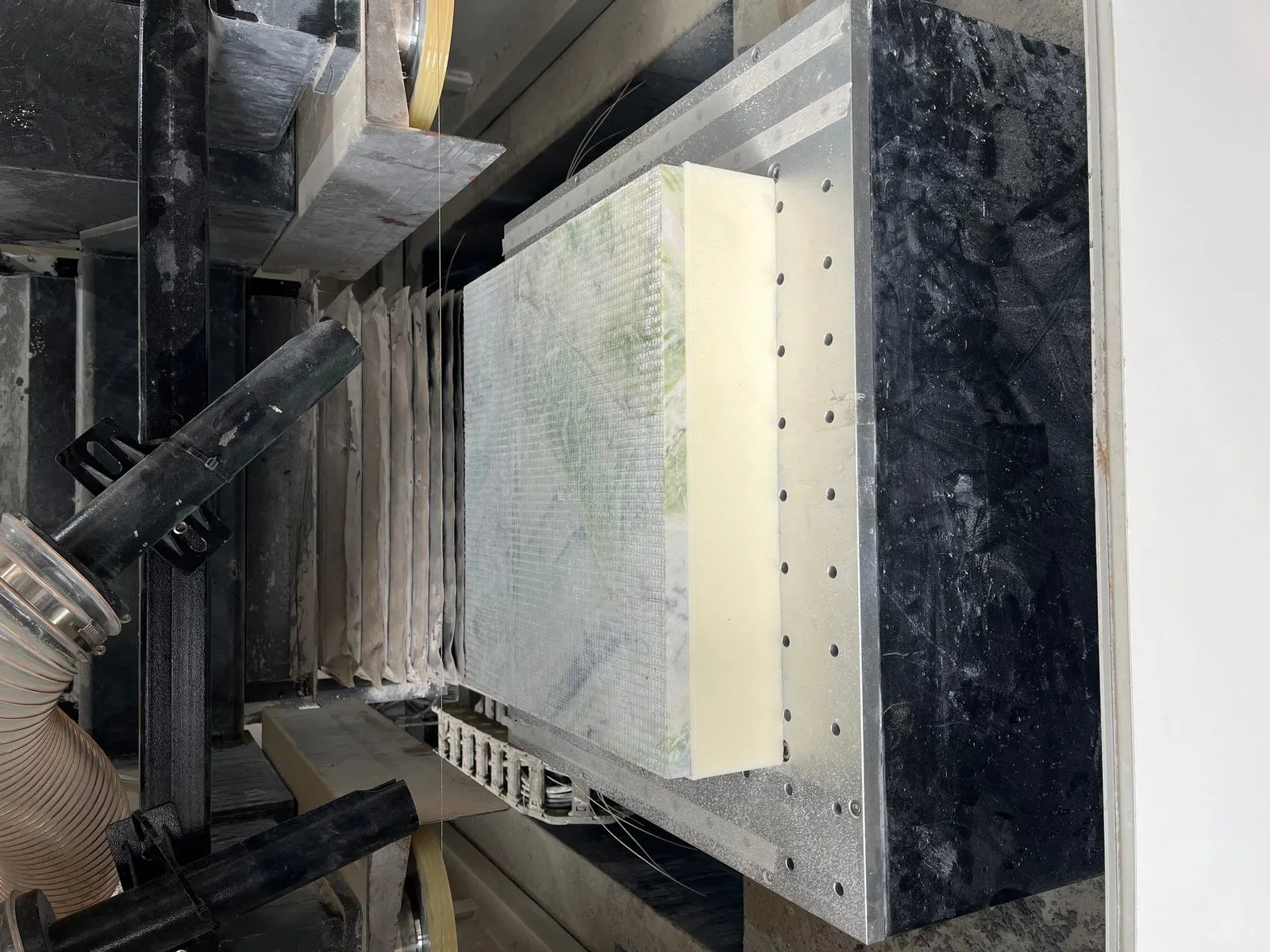
5.1 Данные теста TTV (миллиметр)
TTV (Изменение общей толщины) измерялся с использованием сетки из девяти точек, метод двойного зондирования толщины на
вакуумной платформе, применялся к срезам ПМИ-пены, полученным алмазной проволочной резкой. Размеры разрезанного образца были
400 mm x 400 mm x 0.8 миллиметр, с номинальной толщиной 0.8 миллиметр. Перед измерением инструмент был термически
stabilised and calibrated with a standard thickness block to reduce zero drift and systematic error. After
dust-free cleaning, each sample was centred on the vacuum chuck and held by negative pressure so that it stayed
in a stable measuring state, limiting the effect of position shift, local warping and deformation on the
thickness readings. The procedure follows the same nine-point method used in our
PEEK slicing test. Thickness data were then collected in sequence at the preset nine
grid positions, and the difference between the largest and smallest readings across all points was taken as the
TTV of that sample, which is used to evaluate the thickness uniformity and machining consistency of PMI foam
slices.
| Образец | Nine-point thickness readings (миллиметр) | Tmax | Tmin | TTV |
|---|---|---|---|---|
| S01 | 0.785, 0.790, 0.799 / 0.800, 0.802, 0.812 / 0.819, 0.832, 0.835 | 0.835 | 0.785 | 0.050 |
| S02 | 0.752, 0.754, 0.757 / 0.759, 0.762, 0.775 / 0.786, 0.787, 0.789 | 0.789 | 0.752 | 0.037 |
| S03 | 0.747, 0.748, 0.751 / 0.754, 0.756, 0.757 / 0.762, 0.784, 0.791 | 0.791 | 0.747 | 0.044 |
| S04 | 0.749, 0.751, 0.753 / 0.755, 0.759, 0.760 / 0.760, 0.761, 0.762 | 0.762 | 0.749 | 0.013 |
Оценка: Four PMI foam slices were tested for thickness uniformity by the nine-point
метод. TTV values ranged from 0.013 Кому 0.050 mm with an average of 0.036 миллиметр. Sample S04 showed the smallest
variation, at 0.013 миллиметр. Overall, the results indicate reasonable slice thickness consistency, although some
scatter remains between samples.
5.2 Данные по допуску толщины (миллиметр)
Thickness tolerance was measured by the same nine-point grid method, с 0.800 mm as the nominal thickness of
the sample. The deviation between the measured thickness at each point and the nominal thickness was calculated,
и максимальное положительное отклонение, maximum negative deviation and thickness deviation range were collated to
evaluate the dimensional accuracy and overall machining consistency of the PMI foam slices.
| Образец | Средняя толщина (миллиметр) | Thickness deviation (миллиметр) |
|---|---|---|
| S01 | 0.808 | +0.008 |
| S02 | 0.769 | -0.031 |
| S03 | 0.761 | -0.039 |
| S04 | 0.757 | -0.043 |
| Максимальное положительное отклонение | +0.008 | +0.008 |
| Максимальное отрицательное отклонение | -0.043 | -0.043 |
| Допуск по толщине | +/-0.043 | +/-0.043 |
Оценка: С 0.800 mm as the nominal thickness, the average thicknesses of the four PMI
foam slices were 0.808, 0.769, 0.761 и 0.757 миллиметр, corresponding to deviations of +0.008, -0.031, -0.039 и
-0.043 миллиметр. Максимальное положительное отклонение составило +0.008 миллиметр, the maximum negative deviation -0.043 миллиметр, and the
overall thickness tolerance +/-0.043 миллиметр. The results show that sample thickness tends toward the negative side,
with the last three samples running somewhat thin; thickness control can be improved further through cutting
parameters and dimensional compensation.
5.3 Данные по шероховатости поверхности Ra (um)
Шероховатость поверхности (Ra) was measured to ISO 4287 using a stylus profiler. Были взяты три представительных положения,
центр, середина слева и середина справа, were profiled on the cut face of each PMI foam slice, and Ra was calculated at
each position to evaluate surface quality and machining consistency after diamond wire cutting.
| Образец | Ra-1 | Ra-2 | Ra-3 | Среднее значение Ra |
|---|---|---|---|---|
| S01 | 0.82 | 0.79 | 0.85 | 0.82 |
| S02 | 0.76 | 0.72 | 0.78 | 0.75 |
| S03 | 0.80 | 0.75 | 0.82 | 0.79 |
| S04 | 0.68 | 0.65 | 0.71 | 0.68 |
Оценка: Four PMI foam slices were tested for surface roughness by the three-point
метод. Average Ra ranged from 0.68 Кому 0.82 um, with little variation between measuring positions, indicating a
broadly uniform cut surface and a stable wire running and material-removal process.
5.4 Edge Chipping Data (um)
Chipping was measured by optical imaging on a toolmaker’s microscope to quantify edge defects on the PMI foam
slices. Кромки образцов очищаются перед измерением, and the instrument magnification and measuring scale were
calibrated. Each edge region of the slice was then examined under the microscope, recognisable chips, notches
and local edge damage were located and measured, and the defect size at each measuring point was recorded. Тем
largest defect on a single slice was taken as the primary evaluation index, giving a combined view of edge
integrity and machining quality after cutting PMI foam.
| Образец | Положение 1 | Положение 2 | Положение 3 | Положение 4 | Максимальный излом |
|---|---|---|---|---|---|
| S01 | 5.2 | 6.4 | 5.8 | 7.1 | 7.1 |
| S02 | 4.6 | 5.7 | 5.1 | 6.3 | 6.3 |
| S03 | 5.0 | 6.1 | 5.5 | 6.8 | 6.8 |
| S04 | 3.8 | 4.7 | 4.3 | 5.5 | 5.5 |
Оценка: Four PMI foam slices were inspected for edge defects by the four-point method.
Defect sizes were generally small, with maximum chipping between 5.5 и 7.1 um and little difference between
samples. The results indicate stable edge material removal during diamond wire cutting and good edge integrity on
the slices.
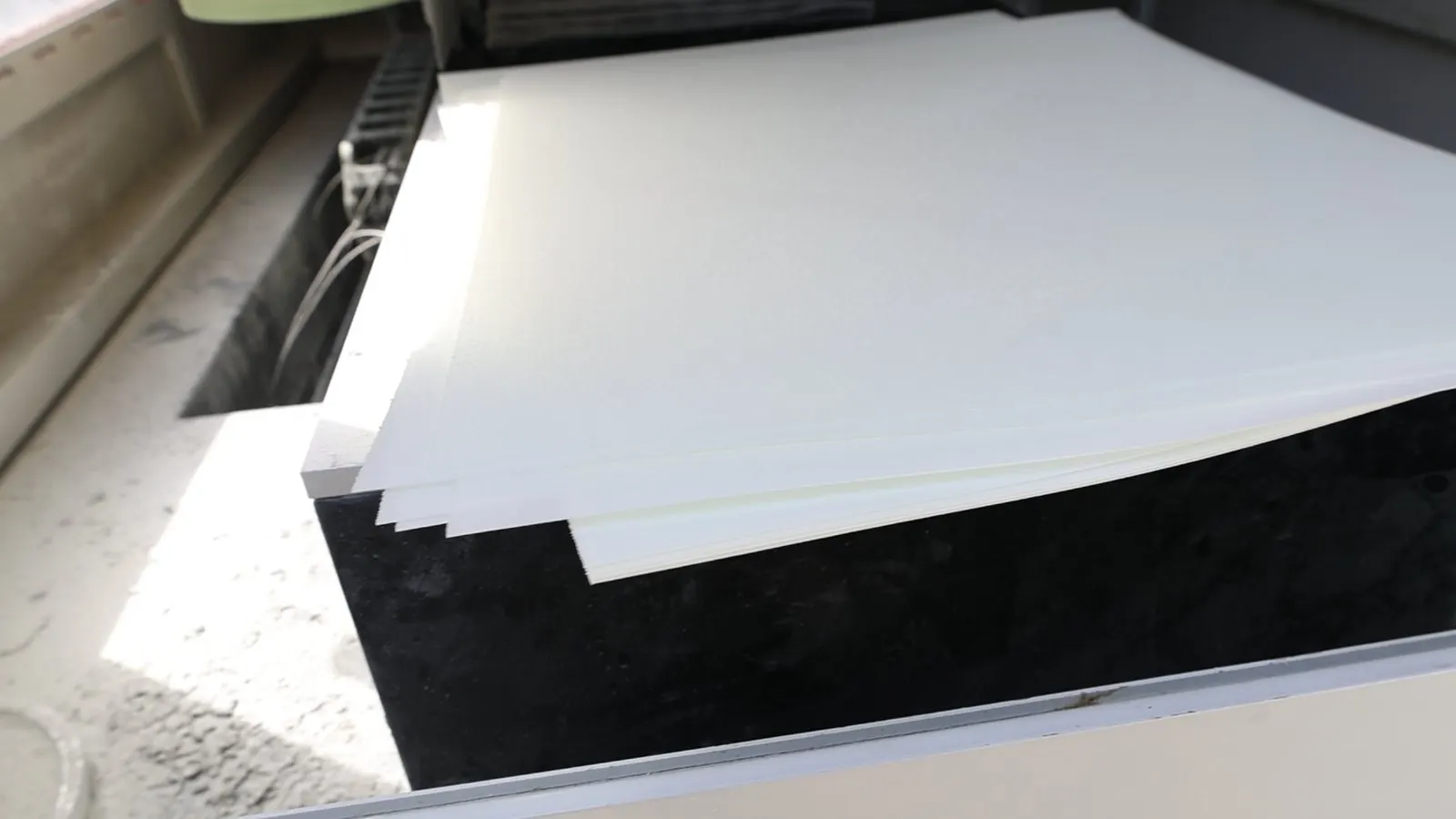
6. Заключение
The high-precision slicing of PMI foam in this test produced good results, mainly because the dedicated
cutting machine, the dry cutting method and the process parameters were matched as one set. PMI foam is a
high-performance structural foam with low density, an internal cellular structure and good specific strength and
stiffness, and that cellular structure gives it a load behaviour different from dense materials during diamond
wire cutting. The diamond grains act continuously on the internal skeleton, and when the cutting load is too
high or the parameters are poorly matched, local compression, tearing and an uneven cut face appear and affect
slice thickness and dimensional accuracy. Aiming at the structural properties of PMI foam and the straight
slicing accuracy requirement, this test therefore optimised machine selection, cutting method and process
parameters in a targeted way, controlling dimensional accuracy and cut-surface quality while keeping the cutting
process stable.
First, machine selection. Given the demands PMI foam slicing places on motion stability,
cutting accuracy and machine rigidity, a dedicated horizontal diamond wire loop cutting machine for precision
PMI machining was selected. Horizontal cutting keeps the wire running stably along the horizontal plane, which
helps hold the cutting trajectory and feed motion steady and reduces the effect of machine vibration, motion
error and wire running fluctuation on cut position and dimensional accuracy. Stable feed and motion control also
narrow the variation in cutting load, keeping the relative motion between wire and PMI foam consistent. This
reduces the compression and tearing that uneven local loading causes, improves slice dimensional consistency,
and provides a stable machine basis for high-precision PMI slicing.
Во-вторых, cutting method. Given the cellular structure and properties of PMI foam, сухая обработка
была использована. Dry cutting introduces no liquid coolant, so liquid cannot enter the foam cells, and the cleaning and
drying steps that would otherwise affect the material state are avoided. Тем
полностью покрытая алмазная проволочная петля grinds the material directly and continuously, so
removal takes place under relatively stable cutting conditions. Controlling wire
running state and cutting load sensibly reduces the local squeezing and tearing the material experiences during
режущий, улучшение равномерности сечения разреза и качества кромки, и поддержание процесса
постоянного.
Third, параметры процесса. Учитывая низкую плотность, ячейчатую структуру и поведение при снятии материала
ПМИ-пена, скорость движения проволоки и скорость подачи были соответственно согласованы. Параметры были установлены для поддержания стабильного движения проволоки
и равномерного снятия материала, избегая такой высокой скорости подачи, при которой нагрузка на резание возрастает и каркас из пены
возникает большая локальная сила; скорость движения проволоки контролировалась так, чтобы резание оставалось непрерывным и стабильным с
меньшими колебаниями нагрузки. Целенаправленная корректировка параметров резания обеспечивала относительно плавное снятие материала
и, при этом соблюдалась эффективность обработки, улучшалась толщина и размерная согласованность срезов, а также качество
поверхности разреза.
В целом, результаты по точности размеров срезов, thickness tolerance, шероховатость поверхности (Ra) и
качество кромки разреза показывают, что, through coordinated optimisation of a dedicated horizontal cutting machine, сухой
cutting and suitable cutting parameters, diamond wire loop cutting meets the requirements of high-precision
straight slicing for PMI foam. The machined samples performed consistently in dimensional accuracy, slice
thickness consistency and cut-surface quality, which indicates that matching machine structure, cutting method
and process parameters to the structure and cutting behaviour of PMI foam effectively improves material removal
and process stability, and provides a process reference for high-precision straight slicing of PMI foam.
Related Process Data
Проверенное окно параметров за этими результатами – что делает каждая настройка на ячеистой пене и в каком направлении её перемещать при появлении дефекта – опубликовано как отдельный справочник: Параметры резки пены PMI. Для сравнительного анализа с плотным термопластиком, измеренным на той же основе, см. PEEK против пены PMI, и для самого метода измерения толщины, тем руководство TTV с девятью точками.
Часто задаваемые вопросы
Может ли резка алмазной проволокой разрезать пену PMI до 0.8 мм толщины?
Да. В этом тесте, четыре 400 mm x 400 мм срезов пены PMI были разрезаны до номинальной толщины 0.8 мм на
ESH600-4T горизонтальном Алмазная канатная пила. Измеренное общее отклонение толщины
(TTV) колебалось от 0.013 Кому 0.050 mm with an average of 0.036 миллиметр, и общая допуск толщины составил
+/-0.043 миллиметр, что является приемлемой основой для точных компонентов из пены.
Почему была выбрана сухая резка пены PMI вместо влажной резки?
Пена PMI пористая, легкая и склонна к впитыванию жидкости. Dry cutting prevents coolant from entering
the cells or remaining in the material and destabilising slice dimensions, and it removes the cleaning and
drying steps that follow a wet cut. That helps preserve the structure of the foam and the dimensional accuracy
of the slices.
What surface quality can be expected when cutting PMI foam?
Шероховатость поверхности измерялась по ISO 4287 with a stylus profiler at three positions per slice. Среднее значение Ra
колебалось от 0.68 Кому 0.82 um with little variation between measuring positions, and the maximum edge chipping
measured by optical microscopy was 5.5 Кому 7.1 um, indicating a uniform cut surface with good edge integrity.
Why did the PMI foam slices come out slightly thin?
С 0.800 mm as the nominal thickness, the four slices averaged 0.808, 0.769, 0.761 и 0.757 миллиметр, so three of
them ran thin by 0.031 Кому 0.043 миллиметр. This is a systematic offset rather than random scatter, and it can be
corrected directly through cutting parameters and dimensional compensation on the next run.
Which other materials has Ensoll tested with diamond wire loop cutting?
Ensoll опубликовала сопоставимые данные по процессам для других полимеров и труднообрабатываемых материалов, включая
тест прецизионного реза PEEK и руководство по
материалам, подходящим для резки алмазной проволокой. По общим вопросам процесса, см.
тем Часто задаваемые вопросы о технологии резки алмазной проволочной петлей.
Технический контент проверен инженерной командой Ensoll – производитель алмазной проволочной петли с 10+ многолетним производственным опытом.