Crack-Free Glass Machining: 다이아몬드 와이어 톱
- Optical glass is brittle and sensitive to thermal shock; 금 속 균열은 일반적으로 절단부의 출구 가장자리에서 시작됩니다.
- 다이아몬드 와이어 가공은 절삭력을 낮고 일정하게 유지한다, producing crack-free edges.
- Coolant and feed control matter far more than cutting speed.
Why Crack-Free Cutting Matters in Optical Glass Machining
광학 유리, such as SCHOTT B270, N-BK7, and fused silica, is widely used in high-precision applications like camera lenses, 레이저 광학, medical imaging, and aerospace components. 그렇지만, traditional cutting methods—such as diamond blade sawing, 레이저 절단, or ultrasonic machining—often introduce micro-cracks, subsurface damage, or thermal stress. These defects degrade optical performance, increase polishing costs, and lead to higher rejection rates.
To achieve true crack-free optical glass machining, manufacturers must adopt advanced cutting technologies that minimize mechanical and thermal damage. This is where diamond wire saw cutting machines excel, offering unparalleled precision and edge quality.
다이아몬드 와이어 톱 절단기가 균열 없는 결과를 보장하는 방법
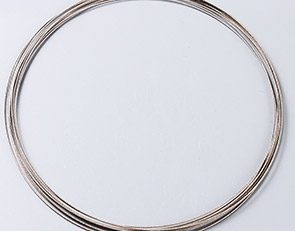
기존 방법과 달리, 다이아몬드 와이어 톱 절단기는 얇은, 다이아몬드 코팅 와이어를 사용함 (일반적으로 직경 0.1–0.3mm) 제어된 장력 하에서 고속으로 작동. 이 독특한 절단 메커니즘은 광학 유리에 여러 주요 이점을 제공함:
1. 초저층 손상
– 전통적인 다이아몬드 블레이드는 고충격 절단으로 인해 미세 균열을 발생시킴.
– 레이저 절단은 열 영향을 받는 영역을 생성함 (헤이즈), 응력으로 인한 균열을 유발함.
– 다이아몬드 와이어쏘는 부드러운 연마 작용을 사용함, 표면 아래 균열이 거의 0에 가깝게 발생—고성능 광학에 필수적.
2. 우수한 표면 마감 (Ra < 0.2μm의)
– 미세 입자 다이아몬드 와이어는 거울과 같은 날을 보장, 광범위한 연마 필요성 감소.
– 렌즈 및 정밀 광학에 이상적, 프리즘, 표면 거칠기를 최소화해야 하는 정밀 광학 장치에 적합.
3. 열 왜곡 없음 (냉간 절단 공정)
– 레이저 및 워터젯 절단은 열을 발생시킴, 응력 복절 및 재료 변형 위험.
– 다이아몬드 와이어쏘는 실온에서 작동, 유리의 구조적 완전성 보존.
4. 최소한의 절단 손실 (0.15mm까지 낮음)
– Saves expensive 광학 유리 material, 수율 향상 및 비용 절감.
– Perfect for wafer-level optics and micro-optics arrays where material conservation is crucial.
Cutting video display:
Applications of Diamond Wire Saws in Optical Glass Machining
- Camera Lenses & Prisms
– Requires chip-free edges to prevent light scattering.
– Reduces post-polishing time by 30–50%, lowering production costs.
- Telescope Mirrors & High-Precision Optics
– Maintains tight tolerances (±0.02 밀리미터 ) for SCHOTT Zerodur and other low-expansion glass.
– Ensures long-term durability with no hidden cracks.
- 반도체 & Medical Optics
– Kerf widths as narrow as 0.15mm maximize material utilization.
– No thermal damage means higher reliability for critical components
Why Choose Our Diamond Wire Saw Cutting Machine?
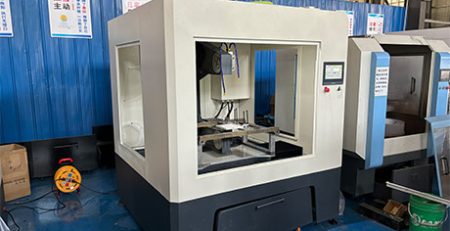
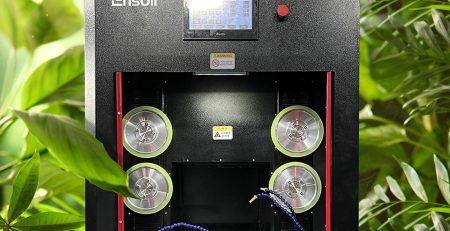
When investing in crack-free optical glass machining, our diamond wire saw cutting machine stands out with:
✔ CNC Precision Control – Ensures repeatable, high-accuracy cuts.
✔ Advanced Coolant System – Prevents glass chipping and extends wire life.
✔ Automation Compatibility – Ideal for high-volume production.
✔ Customizable Wire Speeds – Optimized for different glass types (B270, N-BK7, 퓨즈드 실리카).
결론: Upgrade to Crack-Free Optical Glass Cutting
For manufacturers of precision optics, diamond wire saw cutting machines deliver:
✅ No subsurface cracks – Stronger, more reliable components.
✅ Superior surface finish – Less polishing, faster production.
✅ Material savings – Narrow kerf reduces waste.
✅ No thermal damage – Preserves optical clarity.
Interested in achieving flawless optical glass cuts? [Contact us today for a free cutting test] and experience the difference of true crack-free machining!
자주 묻는 질문
How do you cut optical glass without cracking it?
낮음, steady cutting force with continuous coolant. Diamond wire machining avoids the point loading that starts cracks.
Why does optical glass crack when machined?
Concentrated stress and local heating. Brittle materials fail at the point of highest tension — usually the exit edge.
광학 유리에는 블레이드보다 다이아몬드 와이어 톱이 더 나은가요??
정밀 작업에 적합한가, 네: 치핑 없음, no thermal shock, and a much narrower kerf.
광학 유리 절단에 냉각제가 필요한가요??
예. Water-based coolant removes heat and swarf; dry cutting risks micro-cracks that only appear later.
엔솔 엔지니어링 팀이 검토한 기술 내용 — 다이아몬드 와이어 루프 제조업체 10+ 다년간의 생산 경험을 가진 회사.