간단히 말해서: 일반 유리는 빛을 통과시키지만, 휘어진다, 흐림, and reflects some of it. Optical glass bends light exactly where it needs to go, with almost no loss.
Key Characteristics of Optical Glass:
Property
What It Means
High homogeneity
No internal bubbles, striae, or inclusions
Precise refractive index
Light bends consistently and predictably
Low dispersion
Minimal color separation (less rainbow effect)
High transmittance
Lets 95%+ of light pass through
Thermal stability
Resists cracking from temperature changes
장 2: Which Glasses Are Called Optical Glass?
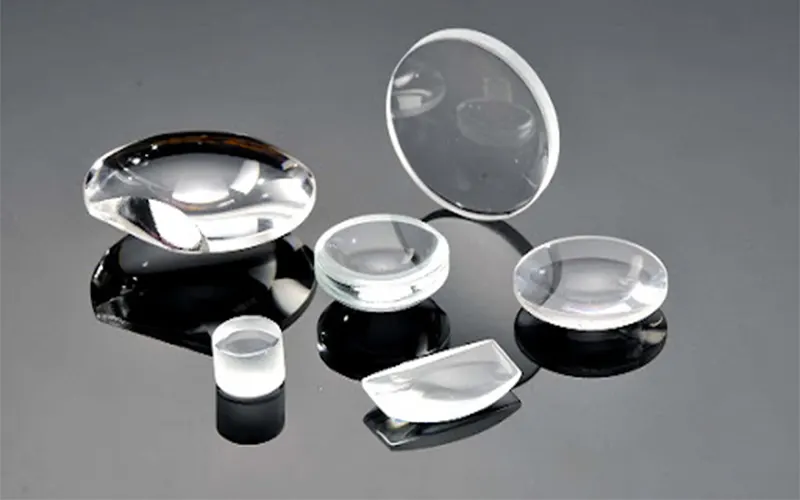
Not every transparent material qualifies as optical glass. The term specifically refers to glasses used in optical elements such as lenses, 프리즘, beam splitters, filters, and windows for scientific instruments.
Infrared crystals belong to the same family of problems – see the chipping data in our note onprecision ZnSe cutting.
Here are the main categories:
1. Crown Glass (Low Dispersion)
Crown glass has a low refractive index (around 1.52) and low dispersion. It is commonly used for simple lenses and microscope slides. BK7 is the most famous crown glass.
2. Flint Glass (High Dispersion)
Flint glass contains lead oxide or other additives, giving it a high refractive index (1.57–1.75) and high dispersion. It is used in combination with crown glass to correct chromatic aberration in camera lenses.
Lanthanum oxide replaces some of the silica, creating glass with high refraction but low dispersion. This is the secret behind modern high-performance camera lenses.
4. Phosphate Glass
Used for high-power laser applications. It has excellent thermal stability but is softer and more difficult to manufacture.
5. Fused Silica (Pure SiO2)
Technically not a “잔” in the traditional sense (it has no additives), fused silica has extremely low thermal expansion and high UV transmittance. It is used in space telescopes and semiconductor lithography.
Silicon itself is sliced to comparable tolerances, and the parameters are documented under실리콘 웨이퍼 절단.
6. Colored Optical Glass
Used for filters and signal lenses. The color comes from precise additions of metal oxides like cobalt (blue), 네오디뮴 (purple-pink), or didymium (orange-absorbing).
요약: If a glass is formulated, melted, annealed, and polished specifically to control how it interacts with light, it is called optical glass. If it comes from a window factory, it is not.
장 3: How Is Optical Glass Made?
Manufacturing optical glass is a slow, 정확한, and expensive process. Here is the step-by-step journey from raw powder to lens blank.
걸음 1: Raw Material Selection
Pure silica sand (SiO2) is the base. But pure sand alone does not make optical glass. 제조업체들은 정밀한 양을 첨가합니다:
– 산화붕소 (저분산을 위해)
– 산화납 (높은 굴절률을 위해)
– 산화란타넘 (고성능을 위해)
– 비소 또는 안티몬 (기포를 제거하기 위해)
불순물은 백만분율 단위로 측정됩니다. 잘못된 광물 한 알이 전체 용해를 망칠 수 있습니다.
걸음 2: 용융 (어려운 부분)
원료 배치는 백금 또는 세라믹 도가니에서 1300°C–1600°C로 가열됩니다. 백금은 유리를 오염시키지 않기 때문에 종종 사용됩니다.
용융물을 계속 저어야 합니다—때로는 줄무늬를 제거하기 위해 며칠 동안— (서로 다른 조성의 실). 화학 성분의 어떠한 변화도 최종 렌즈에 눈에 띄는 왜곡을 만듭니다.
걸음 3: 정제 (기포 제거)
용융 유리를 고온에서 몇 시간 동안 유지하여 기포가 표면으로 올라오도록 합니다. 기포 없는 광학 유리를 위해, 이 단계는 걸릴 수 있습니다 24 수 시간 이상.
걸음 4: 균질화
특수 교반 장치가 유리를 섞어 각 입방 밀리미터마다 정확히 동일한 굴절률을 갖도록 합니다. 굴절률 차이가 0.0001 전체 배치를 폐기할 만큼 충분합니다.
걸음 5: 어닐링 (오랜 기다림)
유리는 제어된 어닐링 퍼에서 매우 천천히 냉각됩니다—때로는 수주에 걸쳐. 이로 인해 내부 응력이 제거됩니다. 너무 빨리 냉각되면, 유리는 절단되거나 연마될 때 파손됩니다.
대형 망원경 거울 블랭크는 어닐링에 몇 달이 걸릴 수 있습니다. 팔로마 천문대의 유명한 200인치 헤일 망원경 거울은 냉각하는데 거의 1년이 걸렸습니다.
걸음 6: 형상화 및 절단
한번 어닐링된 후, 유리는 블록으로 절단됩니다, 스트립으로, 또는 거의 최종 형태로. 이 단계에서 폐기물 감소가 매우 중요해지며—이는 본문 장에서 다룰 것입니다 5.
The cut glass is ground to rough shape, then fine-ground, then polished to a surface accuracy measured in wavelengths of light (nanometers). A typical lens surface is polished to within 20 nanometers of perfection.
장 4: Why Is Optical Glass So Expensive?
If you have ever priced a replacement lens for a camera or microscope, you know optical glass costs a fortune. Here is why.
Reason 1: Raw Material Purity
Ordinary glass uses cheap sand. Optical glass uses ultra-pure silica and rare additives like lanthanum, niobium, or tantalum. Some raw materials cost hundreds of dollars per kilogram.
Reason 2: Platinum Crucibles
Many optical glasses are melted in platinum crucibles to avoid contamination. Platinum costs roughly $30 per gram—30 times the price of silver.
Reason 3: Slow Production
A float glass factory produces tons of window glass per hour. An optical glass melting furnace might produce a few hundred kilograms per week. The annealing process alone can take weeks or months.
Reason 4: Low Yields
Even with perfect processes, a percentage of every melt is rejected due to bubbles, striae, or refractive index variations. For high-end glasses, the rejection rate can exceed 50%.
Reason 5: Precision Cutting and Finishing
Shaping a lens blank requires diamond tools, skilled labor, and hours of polishing time. A single camera lens element might require eight hours of polishing.
Much of that polishing time is really damage removal, which a dedicated광학 유리 절단기reduces at the cutting step.
Reason 6: Small Batch Sizes
Window glass is made in factories that run 24/7/365. Optical glass is often made in batches of a few hundred kilograms—or even a few kilograms for specialty glasses. Small batches mean high per-unit costs.
Putting It in Perspective:
Glass Type
Cost per Kilogram (Approx.)
Window glass
0.50–0.50–1
Soda-lime glass (tableware)
2–2–5
Container glass (bottles)
0.30–0.30–0.80
광학 유리 (crown)
50–50–200
광학 유리 (flint)
100–100–500
Lanthanum optical glass
500–500–2,000
Fused silica (semiconductor grade)
1,000–1,000–5,000+
장 5: Processing Optical Glass – How to Minimize Waste
Now we arrive at the most practical question: How do you cut and shape optical glass without wasting half of it?
Optical glass is expensive—often $100–$2,000 per kilogram. Every millimeter of waste is money thrown away. Traditional cutting methods like diamond blades, abrasive wheels, or even laser cutting introduce problems:
We ran that comparison on a brittle semiconductor in our analysis of레이저 절단과 다이아몬드 와이어 쏘.
– Diamond blades create a wide kerf (thick cut), wasting material
– Abrasive saws generate heat, causing micro-cracks and internal stress
– Laser cutting creates a heat-affected zone that ruins optical properties
– Waterjet cutting embeds abrasive particles into the glass surface
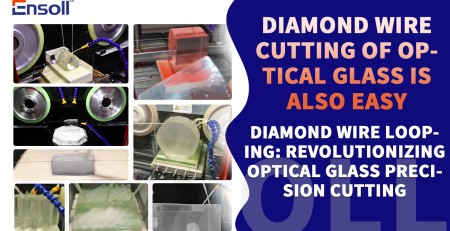
Enter다이아몬드 와이어 루프technology—the most efficient, low-waste method for cutting optical glass, 결정, and other brittle optical materials.
What Is a Diamond Wire Loop?
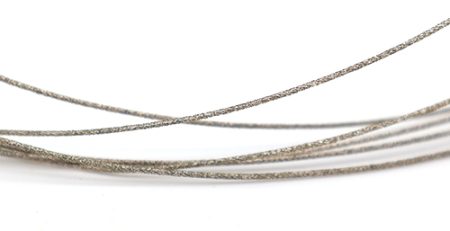
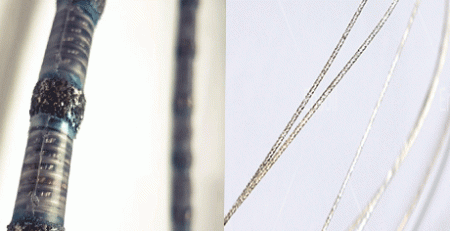
A 다이아몬드 와이어 루프is an endless steel wire electroplated with industrial diamond grit. Unlike traditional wire saws that spool thousands of meters of wire back and forth, a diamond wire loop is a continuous loop—typically 2–10 meters in circumference—that moves in a single high-speed direction (40–80 m/s).
ESO-GM에는 복잡한 스풀링 메커니즘이 없습니다, 교체할 와이어 가이드가 없으며, 조절할 텐션 롤러도 없습니다. 신뢰할 수 있고, 간단하며, 일상 사용에 적합함.
장 6: 광학 유리 절단 방법 비교
방법
절삭 폭
열 손상?
표면 품질
폐기물 수준
최적 사용
다이아몬드 블레이드 톱
1.5–2.5mm
예 (균열)
거칠음
높음
저가 유리의 거친 절단
연마 와이어 (왕복식)
0.8–1.2mm
보통
보통
보통
큰 블록 (느림)
레이저 절단
0.1–0.5mm
예 (헤이즈)
미흡 (녹은 가장자리)
낮음
얇은 유리 전용
워터젯
0.8–1.5mm
아니요
미흡 (매립)
보통
두꺼운 유리 (오염됨)
다이아몬드 와이어 루프
0.3–0.6mm
아니요
우수
매우 낮음
프리미엄 광학 유리
고가 광학 유리용, 다이아몬드 와이어 루프가 명백한 승자.
다이아몬드 와이어 톱 절단기가 균열 없는 결과를 보장하는 방법
기존 방법과 달리, 다이아몬드 와이어 톱 절단기는 얇은, 다이아몬드 코팅 와이어를 사용함 (일반적으로 직경 0.1–0.3mm) 제어된 장력 하에서 고속으로 작동. 이 독특한 절단 메커니즘은 광학 유리에 여러 주요 이점을 제공함:
1. 초저층 손상
– 전통적인 다이아몬드 블레이드는 고충격 절단으로 인해 미세 균열을 발생시킴.
– 레이저 절단은 열 영향을 받는 영역을 생성함 (헤이즈), 응력으로 인한 균열을 유발함.
– 다이아몬드 와이어쏘는 부드러운 연마 작용을 사용함, 표면 아래 균열이 거의 0에 가깝게 발생—고성능 광학에 필수적.
2. 우수한 표면 마감 (Ra < 0.2μm의)
– 미세 입자 다이아몬드 와이어는 거울과 같은 날을 보장, 광범위한 연마 필요성 감소.
– 렌즈 및 정밀 광학에 이상적, 프리즘, 표면 거칠기를 최소화해야 하는 정밀 광학 장치에 적합.
3. 열 왜곡 없음 (냉간 절단 공정)
– 레이저 및 워터젯 절단은 열을 발생시킴, 응력 복절 및 재료 변형 위험.
– 다이아몬드 와이어쏘는 실온에서 작동, 유리의 구조적 완전성 보존.
4. 최소한의 절단 손실 (0.15mm까지 낮음)
– 비싼 광학 유리 재료를 절약, 수율 향상 및 비용 절감.
– Perfect for wafer-level optics and micro-optics arrays where material conservation is crucial.
결론: Cut Smart, Save Money
광학 유리란?? It is precision-engineered glass designed to control light with extreme accuracy. Which glasses are called optical glass? Crown, flint, lanthanum, phosphate, 퓨즈드 실리카, and specialty filter glasses. How is it made? Through slow, careful melting, refining, and annealing—often taking weeks or months. 왜 그렇게 비싼가? Raw material purity, 백금 도가니, slow production, low yields, and precise finishing all drive up costs.
And finally: How do you process optical glass while minimizing waste?
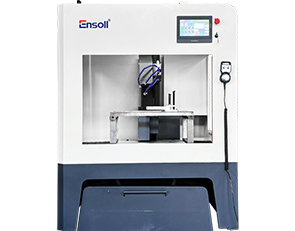
The answer is diamond wire loop cutting—specifically with the ESO-GM Diamond Wire Loop Cutting Machine. With an ultra-narrow kerf, cool cutting action, and smooth surface finish, the ESO-GM maximizes yield from expensive optical glass blocks.
If you arecutting optical glassworth hundreds or thousands of dollars per kilogram, every millimeter saved is money in your pocket. The ESO-GM delivers those savings—cut after cut, day after day.
자주 묻는 질문
광학 유리란??
A glass formulated for predictable optical behaviour — defined refractive index, dispersion and transmission, with tight limits on bubbles, striae and inclusions. Common families include crown glass, flint glass, lanthanum glass, phosphate glass and fused silica.
Why is optical glass expensive?
Mostly yield. Raw material purity, 백금 도가니, slow melting and long annealing cycles, low yields, precision cutting and finishing, and small batch sizes all add cost before volume economies can apply.
What is the best way to cut optical glass?
다이아몬드 와이어 루프 절단. The wire applies low, constant force with continuous coolant, so it avoids the micro-fractures of blade sawing and the heat-affected zone of laser cutting.
Can optical glass be cut with a regular glass cutter?
A wheel cutter scores and snaps straight lines in flat sheet, but it cannot produce the curved, internal or tight-tolerance cuts optical components need, and the snap leaves a stressed, uneven edge.
How do you cut optical glass without cracking it?
Keep cutting force low and constant with a diamond wire, run continuous coolant, and control the feed rate. Most cracks initiate at the exit edge, so supporting the workpiece through the end of the cut matters as much as the cutting parameters.
Why does optical glass crack when machined?
Thermal shock and mechanical shock. Laser cutting generates a heat-affected zone that stresses the glass, while blade sawing applies high-impact force; both initiate cracks that propagate through a brittle material.
광학 유리에는 블레이드보다 다이아몬드 와이어 톱이 더 나은가요??
정밀 작업에는 그렇습니다. 다이아몬드 블레이드는 고충격 절단으로 미세 균열을 발생시키지만, 다이아몬드 와이어는 거의 0에 가까운 내부 손상과 매우 좁은 절단 폭을 남기는 부드러운 연마 작용을 사용합니다 0.15 밀리미터.
광학 유리 절단에 냉각제가 필요한가요??
예. 냉각제는 열 충격 균열을 일으킬 수 있는 열을 제거하고, 절단 홈에서 연마 슬러리를 씻어내며, 후속 연마를 줄이는 거울 같은 가장자리를 만드는 데 도움을 줍니다.
엔솔 엔지니어링 팀이 검토한 기술 내용 — 다이아몬드 와이어 루프 제조업체 10+ 다년간의 생산 경험을 가진 회사.




 3. Lanthanum Glass (High Refractive Index, Low Dispersion)


 6. Colored Optical Glass