다이아몬드 와이어 루프절단 기술은 반도체 제조 및 재료 가공에서 정밀 절단에 혁신을 가져왔다. This advanced method utilizes diamond-impregnated wires to achieve unparalleled cutting precision with minimal material loss. The technology primarily exists in two configurations: single-wire and multi-wire systems, each with distinct advantages and applications. As industries demand thinner wafers and higher productivity, understanding the differences between these approaches becomes crucial for manufacturers seeking to optimize their cutting processes. This comprehensive analysis examines the technical specifications, operational mechanisms, and industry applications of both single-wire and multi-wire diamond loop cutting systems, 생산 최적화 및 기술 선택에 대한 귀중한 통찰 제공.
주요 요점
단일 와이어 다이아몬드 루프 기계는 한 번에 한 작업물의 영역을 닫힌 루프로 절단한다; 다중 와이어 쏘는 대량 슬라이싱을 위한 여러 평행 와이어 가닥을 돌린다.
다이아몬드 와이어 루프는 유연성 측면에서 우세, 윤곽선 절단과 낮은 기계 비용 측면; 표준화된 웨이퍼 생산에서 다중 와이어가 처리량 측면에서 우세하다.
배치 크기에 따라 선택, 재료 가치, 직선 절단 또는 성형 절단이 필요한지.
1 다이아몬드 와이어 루프 절단 기술 입문
1.1 기본 원리
다이아몬드 와이어 루프 절단은 반도체 및 정밀 제조에서 전통적인 절단 방법에 비해 중요한 진보를 보입니다. This technology employs a continuous loop of wire embedded with diamond abrasive particles to slice through various materials with exceptional accuracy . The diamond particles, firmly embedded in the wire’s surface, act as microscopic cutting tools that gradually abrade the material through a controlled process that minimizes mechanical stress and thermal damage .
The widest use of that principle is실리콘 웨이퍼 절단, where kerf loss is measured directly against ingot cost.
The fundamental components of a다이아몬드 와이어 루프cutting system include several critical elements. The diamond-impregnated wire itself is specially engineered with industrial diamonds uniformly distributed and bonded to its surface . A precision guidance system consisting of sophisticated rollers and tensioning mechanisms maintains wire stability and alignment during operation . Advanced control systems, typically Computer Numerical Control (CNC), manage cutting parameters with exceptional accuracy , while integrated cooling systems manage temperature and remove debris from the cutting zone .
1.2 Historical Development and Industry Adoption
The evolution of diamond wire cutting technology has been driven by the semiconductor industry’s relentless pursuit of higher precision and efficiency. Traditional methods such as mechanical blade sawing and laser cutting presented significant limitations, including microcracks, thermal stress, and substantial material loss . The emergence of diamond wire solutions addressed these challenges directly, offering superior cutting performance with reduced kerf loss and minimal thermal impact .
Blade sawing loses on the same count incutting alumina ceramics, where the subsurface damage layer has to be ground away afterwards.
The transition from free abrasive slurry wire sawing to fixed abrasive diamond wire sawing (증권 시세 표시기) marked a pivotal technological shift in the industry . This development was particularly crucial as wafer thicknesses continued to decrease while diameter sizes increased, creating more demanding requirements for cutting precision and material conservation . Today, diamond wire loop cutting has become the dominant slicing technology for silicon wafers and numerous other semiconductor materials .
The parameter set behind that shift is documented in our실리콘 웨이퍼 절단guide. (link 2 의 2)
2 Single-Wire Diamond Loop Cutting Technology
2.1 Working Principle and System Architecture
Single-wire diamond loop cutting machines utilize a single cutting wire to perform precision cutting operations . The fundamental working principle involves a continuous diamond-impregnated wire moving at controlled speeds while guided through target materials. The system maintains precise tension control to ensure cutting accuracy and prevent wire deflection or breakage .
The architecture of single-wire systems is characterized by relative simplicity compared to multi-wire configurations. Key components include a primary drive system responsible for wire movement, a comprehensive tension control mechanism that maintains optimal wire tautness, a versatile workpiece clamping system that secures materials during processing, and a sophisticated motion control system that orchestrates the entire cutting operation . This streamlined design prioritizes flexibility and precision over high-volume throughput, making it ideal for specialized applications where cutting accuracy takes precedence over production volume.
2.2 Technical Advantages and Performance Characteristics
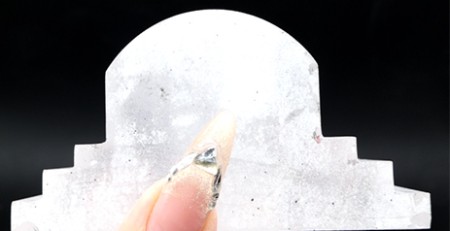
Single-wire diamond loop cutting systems offer several distinct technical advantages that make them indispensable for certain applications. Their exceptional flexibility enables the processing of complex shapes and contours that would be challenging for multi-wire systems . This capability is particularly valuable for prototyping and research applications where varied cutting paths are required.
The technology delivers superior cutting precision with accuracy levels reaching ±0.03mm or better, making it ideal for applications where minimal kerf loss and exact dimensional control are critical . Single-wire systems also demonstrate remarkable material versatility, effectively processing diverse materials including silicon, 갈륨 비소 (가스(GaAs)), 사파이어, and various ceramic substrates . The simplified operational workflow requires less extensive setup and calibration compared to multi-wire systems, reducing preparation time for smaller production runs . 또한, these systems feature a compact physical footprint that requires less facility space, making them suitable for laboratory environments and smaller manufacturing facilities with space constraints .
That versatility extends to the hardest common substrate, 어디 실리콘 카바이드 절단rewards low, stable force over raw speed.
2.3 응용 및 사용 사례
단일 와이어 다이아몬드 루프 절단은 소량 또는 복잡한 형태의 정밀 절단이 필요한 여러 산업 분야에서 광범위하게 적용되며. 연구개발 실험실에서, 이 시스템들은 샘플 준비를 가능하게 하며, 프로토타입 개발, 실험 재료 가공 . 의료기기 산업은 정밀 부품 제조에 단일 와이어 기술을 활용, 수술용 도구, 엄격한 치수 공차가 요구되는 특수 임플란트 .
이 기술은 빠른 설치 및 교체 능력이 상당한 운영 이점을 제공하는 특수 부품의 소량 생산에 특히 가치가 있다 . 전자 및 반도체 분야에서 , single-wire systems perform intricate cutting tasks for specialized substrates, compound semiconductors, and low-volume production runs where multi-wire systems would be economically impractical . 또한, the gemstone and precision optics industries leverage the exceptional accuracy and surface finish capabilities of single-wire diamond cutting for processing valuable materials where minimal kerf loss directly impacts profitability .
3 Multi-Wire Diamond Loop Cutting Technology
3.1 Working Principle and System Architecture
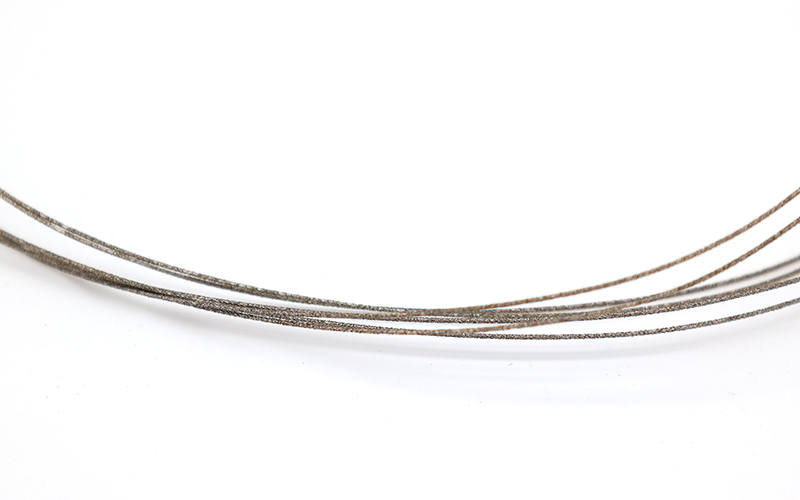
Multi-wire diamond loop cutting machines employ multiple cutting wires arranged in parallel to perform simultaneous cutting operations . This configuration enables mass production by processing multiple workpieces or large-area materials in a single operation. The working principle involves numerous diamond-impregnated wires spaced at precise intervals on a guidance system, 동시에 작동하는 조밀한 절단 네트워크 구축 .
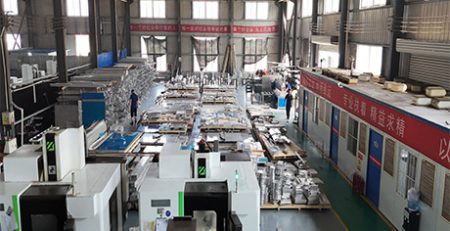
다중 와이어 기계의 시스템 아키텍처는 단일 와이어 구성보다 훨씬 복잡하다. 핵심 부품으로는 여러 와이어를 지지하고 구동하면서 균일한 분포와 안정적인 움직임을 보장하는 첨단 가이드 휠 시스템이 포함 . 정교한 장력 제어 시스템이 모든 와이어에 걸쳐 일관된 장력을 유지, 이는 균일한 절단 성능과 와이어 파손 방지에 매우 중요 . 포괄적인 작업물 클램핑 시스템은 가공 중 크거나 여러 작업물을 고정하며, 첨단 모션 제어 시스템은 여러 절단 와이어와 작업물 움직임의 복잡한 상호작용을 조정한다 . 이 통합 설계는 유연성보다 대량 생산 효율성을 우선시하여, 대규모 제조 작업에 이상적입니다.
3.2 Technical Advantages and Performance Characteristics
다중 와이어 다이아몬드 루프 절단 시스템은 대량 생산 환경에서 매력적인 장점을 제공합니다. 탁월한 처리 용량으로 여러 작업물 또는 대면적 재료를 동시에 처리할 수 있어, 생산 효율성이 크게 향상됩니다 . 이 기술은 모든 와이어의 절단 매개변수와 조건이 동기화되어 있어 배치 간 우수한 생산 일관성을 제공합니다 .
대량 생산 시 최적화된 비용 효율성은 단위당 처리 시간이 크게 줄어들고 산출량 대비 인건비가 낮아지기 때문입니다 . 다중 와이어 시스템은 단일 와이어 방식으로는 비실용적이거나 시간이 많이 소요될 대형 작업물을 가공하는 탁월한 능력을 입증한다 . 또한, 이 시스템은 최적화된 절단 패턴과 동시 가공을 통해 장비 관련 낭비를 최소화함으로써 원자재 활용도를 높인다 .
대형 광학 기판이 가장 명확한 예, 폐기물 산술은 우리 광학 유리 절단guide. (link 2 의 2)
3.3 응용 및 사용 사례
다중 와이어 다이아몬드 루프 절단 기술은 수많은 대량 제조 응용 분야의 산업 표준이 되었다. 태양광 산업에서, 이 시스템은 실리콘 잉곳을 태양광 전지용 웨이퍼로 절단하는 데 광범위하게 사용되며, 생산량과 비용 효율성이 중요한 경쟁 요소 . The semiconductor industry employs multi-wire technology for mass production of silicon wafers for integrated circuit manufacturing, leveraging the capability to process multiple wafers simultaneously with consistent quality .
Measured results for the rod-slicing step itself – TTV, roughness and chipping on a phi330 mm rod – are reported in our study onprecision slicing of silicon rods.
The advanced materials sector utilizes multi-wire systems for large-scale processing of technical ceramics, glass substrates, and composite materials where dimensional consistency across multiple components is essential . In the electronics industry, these machines produce multiple components simultaneously from larger substrate sheets, optimizing material usage and production efficiency . 또한, the optical industry benefits from multi-wire technology for processing large glass and crystal substrates used in display technologies and optical components, where consistency across multiple pieces is paramount .
The single-material version of that problem is treated in our guide tocutting alumina ceramics. (link 2 의 2)
4 Comparative Analysis: Single-Wire vs. Multi-Wire Cutting
4.1 Direct Performance Comparison
The selection between single-wire and multi-wire diamond loop cutting technologies involves careful consideration of their respective performance characteristics across multiple parameters:
– 절단 효율: Multi-wire systems significantly outperform single-wire configurations in terms of pure production volume, with the ability to process dozens of workpieces simultaneously . Single-wire systems, while slower in volume terms, offer greater flexibility for complex cutting paths and rapid job changeovers .
Where throughput is not the binding constraint, 실리콘 카바이드 절단shows how surface quality becomes the deciding metric instead. (link 2 의 2)
– 절단 정밀도: Both technologies can achieve micron-level precision, but single-wire systems generally maintain tighter tolerances for complex geometries and specialized applications due to their simplified mechanical structure and more direct control systems .
– Operational Complexity: Multi-wire systems require more extensive setup procedures, sophisticated tension management across multiple wires, and advanced maintenance protocols . Single-wire systems offer more straightforward operation with faster setup times and simpler maintenance requirements .
– Material Utilization: 다중 와이어 시스템은 최적화된 절단 배치를 통해 표준 패턴과 대량 생산에 우수한 재료 활용을 제공한다 . 단일 와이어 시스템은 불규칙한 형태와 귀중한 재료에 유리하며, 맞춤형 절단 경로로 절단 손실을 최소화할 수 있다 .
– 시설 요구사항: 다중 와이어 기계는 일반적으로 더 큰 물리적 공간을 가진다, 더 견고한 인프라 지원이 필요하며, 더 광범위한 유틸리티 연결이 필요하다 . 단일 와이어 시스템은 더 작고 유틸리티 요구가 적은 설계를 특징으로 한다, 다양한 시설 환경에 적합함 .
4.2 경제적 고려사항 및 ROI 분석
단일 와이어와 다중 와이어 다이아몬드 루프 절단 기술의 경제적 결정은 여러 재정 요인 분석을 포함한다:
– 자본 투자: Multi-wire systems command significantly higher initial purchase prices due to their complex mechanical systems, advanced control technology, and larger structural components . Single-wire systems represent a more moderate capital investment, making them more accessible for smaller operations and specialized applications .
– Operational Costs: While multi-wire systems have higher ongoing maintenance costs and more expensive consumable components, their superior throughput typically results in lower cost per unit in high-volume production environments . Single-wire systems generally have lower ongoing maintenance expenses but higher labor costs per unit produced .
– Return on Investment Timeline: Multi-wire systems typically justify their substantial capital investment through massive production volume, 고활용률 시나리오에서 ROI 기간이 놀라울 정도로 짧을 수 있음 . 단일 와이어 시스템은 운영 유연성을 통해 종종 긍정적인 ROI를 보여준다, 다양한 작업에 대한 설치 시간 단축, 최소한의 낭비로 고부가가치 자재를 처리할 수 있는 능력 .
– 생산 확장성: 다중 와이어 시스템은 예측 가능한 수요 패턴을 가진 기존 제품 라인에 탁월한 확장성을 제공 . 단일 와이어 시스템은 순수한 대량 용량보다는 변화하는 제품 요구사항에 대한 유연성과 적응성을 통해 확장성을 제공 .
5 현재 산업 현황 및 기술 동향
5.1 시장 채택 및 응용 동향
다이아몬드 와이어 루프 절단 기술은 여러 산업에서 상당한 시장 침투를 경험했으며, 특히 반도체 및 태양광 제조에서 지배적인 위치를 차지한다 . The transition from traditional cutting methods to diamond wire solutions has accelerated as product thicknesses continue to decrease while quality requirements become more stringent .
태양광 산업에서, multi-wire diamond loop cutting has become the established standard for silicon wafer production, with manufacturers aggressively pursuing wafer thicknesses below 150 micrometers while simultaneously adopting finer diamond wires with diameters under 35 micrometers to maximize yield per ingot . The semiconductor industry continues to leverage both single-wire and multi-wire technologies, selecting based on production volume, material characteristics, and precision requirements .
Emerging applications in advanced packaging technologies such as 3D IC stacking and heterogeneous integration are driving new requirements for diamond wire cutting capabilities . The compound semiconductor market for materials like silicon carbide (원문대로) and gallium nitride (질화 갈륨) represents a growing application area where both single-wire and multi-wire technologies are being adapted to address specific material characteristics .
5.2 Technological Innovations and Future Directions
The diamond wire loop cutting landscape continues to evolve through ongoing technological innovations across multiple domains:
– Wire Technology Advancements: Recent years have witnessed significant improvements in diamond wire construction, including enhanced diamond distribution patterns, advanced electroplating techniques that improve diamond retention, specialized coatings that reduce friction and extend wire lifespan, and increased wire lengths now reaching up to 3,000 meters for continuous operation .
– Machine Control Systems: Modern diamond wire cutting systems incorporate increasingly sophisticated control features including real-time tension monitoring and adjustment, vibration damping technologies that minimize vibration-induced imperfections, intelligent parameter adjustment systems that optimize cutting conditions based on material feedback, and integrated metrology systems that enable immediate quality verification .
– Hybrid Processing Methods: Research and development efforts are exploring assisted machining methods such as ultrasonic vibration-assisted DWS (UV-DWS), electrical discharge vibration-assisted DWS (ED-DWS), and electrochemical-assisted DWS (EC-DWS) that enhance cutting performance for challenging materials .
– Automation and Industry 4.0 Integration: Both single-wire and multi-wire systems are incorporating higher levels of automation, including automated loading/unloading systems, 공정 중 품질 모니터링, 예측 유지보수 기능, 공장 디지털화 플랫폼과의 원활한 통합 .
6 구현 고려 사항 및 선택 지침
6.1 기술 선택 프레임워크
단일 와이어와 다중 와이어 다이아몬드 루프 절단 기술 중 선택하려면 특정 생산 요구사항과 운영 제약 조건을 신중하게 분석해야 합니다:
– 생산량 평가: 다중 와이어 시스템은 표준화된 절단 요구사항을 가진 대량 생산에서 경제적 이점을 제공합니다 . 단일 와이어 시스템은 중소량 생산, 다양한 제품 혼합, 및 빈번한 전환이 필요한 응용 분야에서 더 적합합니다 .
– 재료 특성: 고경도, 취성 소재, 예를 들어 단결정 실리콘, 첨단 세라믹, 및 광학 결정은 단일 와이어 시스템의 정밀 제어 및 조정 가능한 매개변수의 혜택을 받습니다 . Softer materials and standard semiconductor substrates typically process efficiently on multi-wire systems .
– Geometric Complexity: Complex shapes, contours, and specialized geometries are better suited to single-wire technology due to its flexibility and programming capabilities . Standard geometric patterns, straight cuts, and repetitive shapes align well with multi-wire system strengths .
– Quality Requirements: Applications demanding the highest levels of precision, minimal kerf loss, and superior surface finish often benefit from single-wire processing . Applications where consistent quality across multiple pieces is paramount align well with multi-wire capabilities .
– Comprehensive Operator Training: Both single-wire and multi-wire technologies require specialized operational knowledge, particularly regarding wire tension management, cutting parameter optimization, and preventative maintenance procedures .
– Maintenance Protocol Establishment: Multi-wire systems demand more extensive maintenance schedules due to their complex guidance systems and multiple wire management components . Single-wire systems require less intensive but equally critical maintenance focused on precision components and guidance elements .
– Supply Chain Planning: 다이아몬드 와이어 루프have finite service lives, requiring proactive inventory management to prevent production interruptions . Multi-wire systems typically have higher consumable costs due to multiple simultaneous wire replacements .
– Process Validation Procedures: Implementing comprehensive quality assurance protocols is essential for both technologies, with particular emphasis on consistency monitoring across multiple wires in multi-wire systems .
7 결론
The diamond wire loop cutting landscape presents two distinct technological approaches, each with compelling advantages for specific applications. Single-wire diamond loop cutting technology delivers exceptional flexibility, superior precision for complex geometries, and reduced operational complexity, making it ideal for specialized applications, lower volume production, and research environments . Multi-wire diamond loop cutting offers unmatched production throughput, optimized mass production economics, and exceptional consistency for high-volume manufacturing of standard components .
As material technologies advance and manufacturing requirements evolve, both single-wire and multi-wire diamond loop cutting systems continue to develop through technological innovations that enhance precision, 능률, and operational reliability . The ongoing development of advanced wire formulations, improved guidance systems, and enhanced control technologies ensures that both approaches will remain relevant and valuable for precision manufacturing across diverse industries.
Manufacturers seeking to implement diamond wire loop cutting technology should base their selection on comprehensive analysis of production requirements, material characteristics, quality expectations, and economic considerations rather than presuming universal superiority of either approach. With careful technology selection and proper implementation, diamond wire loop cutting delivers exceptional value through superior cutting quality, reduced material waste, and enhanced production efficiency across countless industrial applicatio
자주 묻는 질문
What is the difference between single-wire and multi-wire diamond cutting?
A single-wire (다이아몬드 와이어 루프) machine drives one closed loop of diamond-coated wire to cut one kerf at a time. A multi-wire saw guides dozens of parallel wire strands so many slices are cut in one pass.
Which is better for R&D or small-batch production?
Single-wire diamond loop machines: they cost far less, change over quickly between materials, and can do contour cutting that multi-wire saws cannot.
When does a multi-wire saw make more sense?
In high-volume standardized wafer production (예), photovoltaic silicon bricks), where dozens of identical slices per pass justify the higher machine cost and setup complexity.
Can a diamond wire loop do contour cutting?
예. CNC-controlled single-wire loop machines cut curves and irregular shapes, which is a key advantage over multi-wire saws limited to straight parallel slicing.
엔솔 엔지니어링 팀이 검토한 기술 내용 — 다이아몬드 와이어 루프 제조업체 10+ 다년간의 생산 경험을 가진 회사.


 3.1 Working Principle and System Architecture