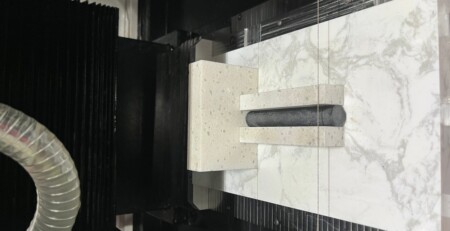
Precision ZnSe Cutting: The Diamond Loop Wire Advantage
- Zinc selenide (ZnSe) is a soft, brittle infrared optical crystal that cracks easily under conventional machining.
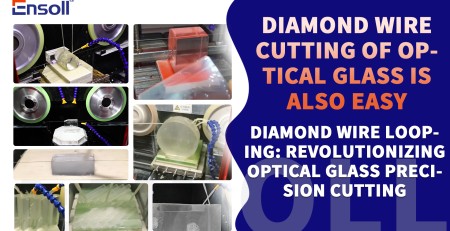
- Diamond loop wire cuts ZnSe with low force and water cooling, avoiding thermal and mechanical damage. The closed-loop form is what separates a 다이아몬드 와이어 루프 from a spooled saw.
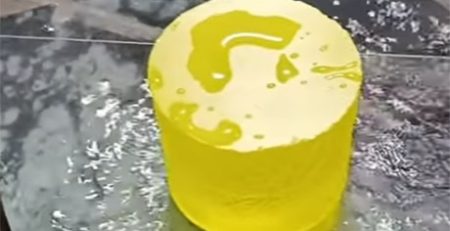
- The process delivers smooth surfaces on ZnSe lenses and windows with minimal chipping.
In the demanding world of infrared optics, laser components, and high-power CO₂ laser systems, Zinc Selenide (ZnSe) stands as a critical material. Prized for its exceptional transmission properties in the mid to far-infrared spectrum and its durability as a laser window or lens, ZnSe enables technologies from thermal imaging to industrial laser cutting. 그렇지만, for engineers and manufacturers, this invaluable material presents a formidable paradox: it is relatively soft but notoriously brittle. This combination makes the machining and, in particular, the precision cutting of ZnSe one of the most significant challenges in photonics manufacturing.
Traditional cutting methods often lead to a cascade of quality issues: unacceptable edge chipping, latent micro-cracks that compromise structural integrity, and inconsistent surface roughness. These defects are not merely cosmetic; they can severely degrade optical performance, introduce scattering losses, create stress points that lead to failure under thermal or mechanical load, and drastically reduce production yield and profitability.
This blog delves into the science behind these challenges and explores a transformative solution: Diamond Loop Wire Cutting with intelligent, multi-segment speed control. We will examine why ZnSe is so difficult to cut, how conventional methods fall short, and why the advanced kinematics of a continuous, vibration-minimized 다이아몬드 와이어 톱, guided by adaptive speed algorithms, represents a breakthrough in achieving high-quality, reliable cuts for this delicate material.
The ZnSe Conundrum: Softness Meets Brittleness
To appreciate the cutting challenge, one must first understand the material properties of ZnSe. Unlike ductile metals that yield and deform, brittle materials like ZnSe, germanium, and silicon have a crystalline structure that absorbs energy elastically up to a point, then fails catastrophically through crack propagation.
- Softness (Low Knoop Hardness): ZnSe is soft enough to be scratched. During mechanical cutting, this softness leads to plowing, tearing, and increased friction, which generates heat and often results in a poor surface finish if the tool or method is not precisely suited.
- Extreme Brittleness (낮은 파괴 인성): This is the core of the problem. Brittleness means ZnSe has very limited capacity to absorb energy by plastic deformation. Any stress concentration—from tool impact, vibration, or uneven force—exceeds the material’s fracture toughness, initiating micro-cracks. These cracks then propagate rapidly through the grain structure, leading to chipping or complete fracture.
The primary failure modes in poor-quality ZnSe cutting are direct results of this property conflict:
- 엣지 치핑: This is the most visible defect. It occurs at the point where the cutting tool enters or exits the material, or at points of high stress concentration. A chip isn’t just a missing piece; it creates an irregular light path, can be a source of further cracking, and often requires costly additional polishing to rectify, adding non-value-added process steps.
- Subsurface Micro-Cracks: Often invisible to the naked eye, these are the “hidden killers” of optical components. Induced by excessive mechanical or thermal stress during cutting, micro-cracks weaken the component structurally. Under the high-power density of a laser or thermal cycling, these cracks can propagate, leading to catastrophic failure in the field. They act as light-scattering centers, reducing transmission efficiency.
- Surface Roughness Variability: An inconsistent cut leaves a surface with varying degrees of roughness. For an optical element, this variability causes non-uniform scattering and wavefront distortion. Achieving a predictable, fine surface finish directly from the cutting process is essential for reducing subsequent polishing time and cost. Transparent substrates set the same requirement, and the numbers are listed under 광학 유리 절단.
The Shortcomings of Conventional Cutting Methods
Manufacturers have historically grappled with several methods, each with significant trade-offs when applied to ZnSe:
- Abrasive Grinding/Sawing: Using diamond-impregnated blades or grinding wheels generates substantial mechanical force and heat. The aggressive contact often causes massive chipping and introduces deep subsurface damage layers, requiring extensive post-processing. The blade-versus-wire version of that trade-off is quantified in our guide to cutting alumina ceramics.
- 초음파 가공: While useful for shaping, it can be slow for through-cutting and may still induce micro-fractures around the periphery of the tool due to percussive action.
- 레이저 커팅: Although a non-contact method, the intense localized heat from a laser can create a Heat-Affected Zone (헤이즈). For ZnSe, this can lead to recast layers, stoichiometric changes, thermal stress cracking, and even vaporization of selenium, altering the material’s optical properties at the edge. We compared the two methods directly in our analysis of 레이저 절단과 다이아몬드 와이어 쏘.
- Reciprocating Wire Saws (예), using a piano wire with abrasive slurry): This has been a common method. 그렇지만, the back-and-forth motion of the wire creates inherent vibration and allows for wire bowing. The repeated reversal at the end of each stroke introduces an impact load, which is a primary trigger for entry and exit chipping in brittle materials. Slurry management is also messy and can lead to inconsistent cutting rates A 다이아몬드 와이어 루프 removes the reversal entirely by cutting in one direction. (link 2 의 2)
It was clear that a paradigm shift was needed—a method that minimized dynamic instability, applied force consistently, and could intelligently adapt to the most critical phases of the cut.
The Diamond Loop Wire Cutting Revolution: A System-Based Solution
The Diamond Loop Wire Cutting system transcends being merely a new tool; it is an integrated system designed from the ground up to address the fundamental physics of brittle material failure. Its advantages are systemic:
1. The Continuous, Joint-Free Diamond Loop Wire:
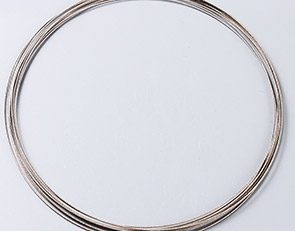
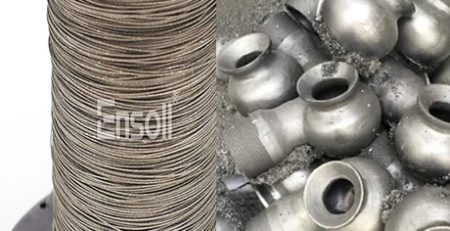
Imagine replacing a reciprocating saw blade with a perfectly continuous, seamless band. The diamond-impregnated wire in this system is precisely that—a closed loop. This single feature eliminates the micro-impacts and vibration spikes inherent in reciprocating systems when the wire changes direction. The absence of joints or connection points ensures perfectly uniform cutting abrasion and diamond distribution along the entire wire length, leading to exceptional stability. The wire runs on precisely guided sapphire or diamond grooved rollers, maintaining consistent tension and a true cutting path, which is vital for achieving straightness and minimizing kerf loss.
2. The Genius of Multi-Segment Speed Control:
This is the true “brain” of the system. Recognizing that the cutting stress is not uniform throughout the material’s thickness, the system’s software allows for programmable speed profiles. This is a critical advancement for managing brittle fracture:
Entry Phase (Low Speed): As the wire first contacts the pristine edge of the ZnSe workpiece, it is most vulnerable to spalling and crack initiation. The system is programmed to engage at a reduced speed. This low-speed entry minimizes the initial mechanical and thermal shock, allowing the diamond grit to begin cutting cleanly without overwhelming the material’s fracture toughness.
Steady-State Phase (High Speed): Once the cut is fully established and the wire is engaged along its full diameter within the kerf, the system intelligently ramps up to an optimized high speed. This maximizes cutting efficiency and throughput through the bulk of the material without sacrificing quality, as the cutting process is now stabilized.
Exit Phase (Low Speed): The moment before breakthrough is another critical point of failure. As the supporting material behind the cutting front diminishes, the unsupported edge becomes fragile again. The system dynamically reduces the speed once more just before exit. This gentle finish prevents the wire from “plucking out” a final chunk of material, which is the primary cause of exit-side chipping.
This intelligent, three-stage speed management directly targets and mitigates the root causes of chipping at both surfaces.
3. Constant Wire Tension & Coolant Integration:
The system maintains ultra-stable wire tension via servo-controlled mechanisms. Any slack or variation in tension would translate directly into waviness or chatter marks on the cut surface. 더욱이, a precisely filtered coolant is delivered directly to the cutting zone. This serves a dual purpose: it efficiently removes debris (swarf) from the kerf to prevent recutting and drag, and it provides critical thermal management, dissipating the minimal frictional heat generated to ensure a truly cool-cutting process that leaves the material’s properties unchanged.
Quantifiable Benefits for Photonics Manufacturing
Adopting a Diamond Loop Wire System with multi-segment control translates into direct, measurable operational and product advantages:
- Dramatically Reduced Edge Chipping: Chipping can be reduced to sub-10 micron levels, often making the as-cut edge suitable for final application with minimal or no edge preparation. This directly boosts yield.
- Elimination of Subsurface Damage: The cool, stable, low-vibration process minimizes the introduction of micro-cracks. This results in components with higher intrinsic strength, longer service life, and superior laser damage thresholds—a critical metric for high-power applications.
- Exceptional & Repeatable Surface Finish: 표면 거칠기 (Ra) values of better than 0.5 µm are consistently achievable directly from the cut. This repeatability reduces dependence on operator skill and ensures every batch meets specification. Harder substrates reach similar repeatability, which is why 실리콘 카바이드 절단 has moved the same way.
- Material Savings and Design Freedom: The thin, consistent kerf of the diamond wire (often comparable to a human hair) minimizes material waste—a crucial factor when working with expensive substrates like ZnSe. It also enables the precision cutting of complex, delicate shapes that were previously considered too risky or impossible. Kerf economics are even tighter at production scale, as our 실리콘 웨이퍼 절단 guide shows.
- Streamlined Production Flow: By delivering a near-net-shape part with excellent edge and surface quality, the system drastically reduces or even eliminates costly and time-consuming secondary processes like rough grinding and extensive edge chamfering. This shortens lead times and lowers total cost of ownership.
결론: A New Standard for Precision
The cutting of brittle infrared materials like Zinc Selenide is no longer an art reliant on trial, error, and extensive rework. With the advent of Diamond Loop Wire Cutting systems equipped with adaptive multi-segment speed control**, it has become a precise, repeatable, and predictable engineering science.
This technology directly attacks the failure modes of brittle materials by replacing impact and vibration with stability and intelligent control. For manufacturers of infrared optics, laser components, and advanced semiconductor devices, it represents more than just an equipment upgrade—it is a strategic investment in higher yields, superior product reliability, and the capability to push the boundaries of optical design. In the quest for perfect cuts, the continuous, smart wire has set a new standard.
자주 묻는 질문
What is ZnSe used for?
Zinc selenide is an infrared optical material used for CO2 laser lenses, IR windows, and thermal-imaging optics thanks to its broad infrared transparency.
Why is ZnSe difficult to cut?
It is soft yet brittle and sensitive to both mechanical stress and heat, so conventional sawing and laser cutting easily cause cracks, chipping, and thermal damage.
Shops specifying equipment for optical crystals can compare architectures in our 다이아몬드 와이어 톱 절단기 개요.
How does diamond loop wire cutting help with ZnSe?
The continuous diamond-coated loop cuts with very low, uniform force under water cooling, producing smooth surfaces with minimal chipping and no heat-affected zone.
Can ZnSe be machined dry?
Dry machining risks overheating and micro-cracking; water-cooled diamond wire cutting is strongly preferred for dimensional parts.
Continuous coolant delivery is standard on the 광학 유리 절단기 range for exactly this reason.
엔솔 엔지니어링 팀이 검토한 기술 내용 — 다이아몬드 와이어 루프 제조업체 10+ 다년간의 생산 경험을 가진 회사.